

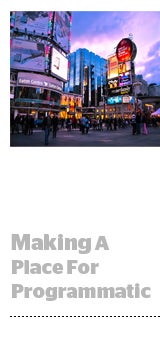
 Digital place-based (DPB) media – screens with digital content placed in malls, offices, taxis, airports and other locations outside of the home – surpassed $1.02 billion in revenue as an industry in 2015.
It is expected to grow at a rate of 10-12% annually, according to new research from the Digital Place-based Advertising Association (DPAA) in partnership with Prohaska Consulting.
The DPAA and Prohaska Consulting also estimate that 30-40% of DPB ad sales will be conducted programmatically within the next three years, which will generate $15 million-$20 million in incremental revenue yearly for DPB networks.
A combination of smarter screens, better data and dynamic digital video content are all bleeding together, which could help fuel programmatic advancements.
This prediction is the result of a perfect storm: While television still nets the bulk of ad spend at $70 billion a year, eyeballs are moving elsewhere, said Barry Frey, president and CEO of the DPAA.
Consumers in the US spend on average 70% of their time outside the home. That factor plus the growth of outdoor screens and digital video will contribute to the growth of programmatic in DPB media.

Like traditional television, many DPAA members were initially cautious about programmatic when chatter about the opportunity picked up at CES last year, said Frey.
Many members worried about the commoditization of inventory, but Frey argued otherwise: “It will make the space more automated and easier to transact, which will shift share of wallet into our space,” he said. “And with private marketplaces, it would ultimately generate more value for their advertising.”
The DPAA wanted to study whether these predictions might bear out and to develop a strategic road map for the industry. It hired Prohaska Consulting for a several-month engagement in conjunction with a joint task force consisting of association members VeriFone, WPP’s DOOH agency tenthavenue, NEC, Ayuda, Broadsign and DOOH network Captivate.
A team of five at Prohaska Consulting conducted in-depth interviews with 20-plus parties across the ecosystem, including publishers, DOOH buyers and related ad tech companies.
“On the buy side we not only talked to the traditional out of home buyer, but also the quote-unquote ‘programmatic buyer’ at agencies who were also buying video and digital channels in a trading desk environment,” said Matt Prohaska, principal and CEO of Prohaska Consulting.
He identified “four potential buying groups who could, should and, in some cases, are placing dollars programmatically into DPB media:” traditional out-of-home buyers, local and spot TV buyers, national broadcast buyers and digital/programmatic teams.
Many media agencies will evolve toward planning and buying video and TV from a single bucket, particularly as multi-screen campaigns become more of the norm, Prohaska predicted.
This shift creates more overlap among buyer roles as the ad industry reworks its infrastructure to connect more out-of-home channels. Therefore, digital place based media is increasingly being considered. Rubicon Project, for instance, struck a deal with UK-based digital out of home network BITPOSTER to automate more DPB impressions and AOL is exploring private marketplaces for cinema-based inventory.
The DPB media industry has tried before to automate the sale of its inventory. Vistar Media and others, for instance, connected OOH inventory to digital demand sources in an exchange. But the DPAA’s Frey said a number of macro forces are positively impacting the growth of DPB programmatic into a scalable space.
“You need a lot of parts to get the car running and now we’ve got scale,” he claimed. “We saw DPAA member Captivate buy the Wall Street Journal Office Network a few years ago and VeriFone add [geotargeted digital displays to taxi tops].”
“There’s a lot of money going into mobile and location-based targeting,” he added, “but we always say, ‘We offer location targeting, but on big, powerful screens.’”
While phase one of the DPAA/Prohaska’s research focused on identifying the opportunity for programmatic in DPB media, future phases will include tactical recommendations for member companies, followed by the creation of early guidelines and standards to ensure DPB developments meet other industrywide specs, such as VAST.









