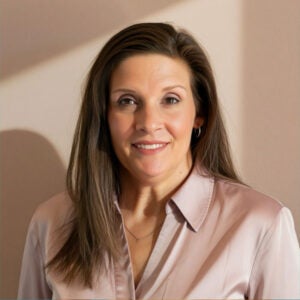
This is the third installment in “PII,” a series featuring the talent that makes the wheels turn in our data-driven advertising world. Read previous interviews with Nazanin Jazayeri and Andrew Klein.
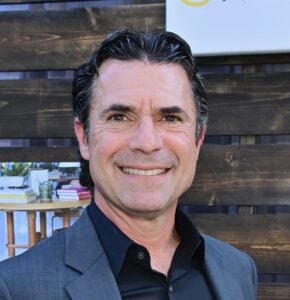
Data is a vehicle for great storytelling, according to Ella Chinitz, group vice president of data science at Razorfish.
“[It’s about] deriving insights out of data, finding hidden trends and telling a good story out of it,” she said.
Chinitz, who has a computer science and psychology background, never planned to work in advertising. While employed at an online usability testing company, an old co-worker told her about Razorfish, where she would have the opportunity to work on long-term clients with tons of data.
“I didn’t know enough about it,” she said. “It became very appealing to me.”
At Razorfish, Chinitz works collaboratively across all media teams, including programmatic, search and social to share insights that guide the planning and buying process.
“We’ll do the mining and consumer research to get the insights we need,” she said. “Then we’ll say, ‘Is this an audience segment we can purchase? How can we engage these people? What’s the right creative message?’”
Chinitz spoke with AdExchanger.

What problem are you trying to solve for clients?
Whatever business questions [the client] has. It might be how to find and engage with a hard-to-reach segment. It’s always about how to deliver the right experience to the right consumer. There’s questions of scale vs. targeting and how much they’re willing to pay for an audience. We’re doing a lot of customer segmentation and understanding lifetime value. It’s not just the spray-and-pray quantity reach plays, but also [looking for] quality consumers that we can have stronger loyalty with.
How does your role tie into media planning and buying?
We derive insights out of data to help inform our media strategy, understand the consumer better and understand the right message, [the] right time aspect. We have access to all cookie and log-level data for clients. That enables us to observe patterns, get really deep consumer insights and build a program around that. Then we’ll look at what types of tools we have. Sometimes that might be third-party data [or] more holistic, rolled-up media research data. We’re building out universal IDs for clients to enable us look at the consumer more holistically.
Do you work with programmatic teams?
Our ability to mine data on a very granular level means we have access to a lot of programmatic data. We can help select the right partner. We can make the campaign even stronger by accounting for things like seasonality and synergistic variables. A normal, automated environment may not pick up things that will happen in the future. If their focus is to optimize toward variable A, but that’s at the expense of some other things, we can start to look at how to optimize to meet the broader goals of the program.
How have you built out your team over time?
A few years ago we had a hard time hiring within the industry. We hired most people, especially at the junior level, from outside industries – a lot of ex-bankers or people with really strong quantitative skills. They [don’t need to] have expertise with analyzing exactly this kind of data because we can teach the marketing piece. We’re looking for that combination of analyst plus strong communicator or storyteller. It’s not easy to find.
How well do you understand technology? How well do you need to at a digital agency today?
It’s very different than probably 10 years ago. I understand technology very well. There are many different aspects to that [because of] the pace of change we’re seeing. The ability to do things in a more automated fashion [and] deliver really personalized experiences – using data is powering that. Understanding how that data flows from tool to tool is really important.
Do you think the ad tech ecosystem is too crowded? How do you keep up?
Definitely. It’s a lot for us and our clients to keep up with. But we see a lot of cycles. A lot of companies do one particular thing and then they realize they can start doing other things and their capabilities change. It’s a very crowded space but everybody is working toward creating that more relevant experience. There will continue to be a lot of consolidation over the next few years.
How do you vet the best tools for your clients?
Companies come into the office on a regular cadence. There’s a lot of diversity in the work we’re doing and, because of that, we need to use a diverse tool set. It’s impossible for one person to be an expert on everything. We share a lot of points of view on vendors and new technology spaces on a regular basis. If I don’t know everything about a specific technology, I know the right person to tap into. The best way to learn about capabilities is to do a pilot. You can see how they work, the value they get, the efficiencies or challenges and so on.
What does data mean in your day-to-day life?
Whether it’s in the emails I’m receiving or the way I engage with my cellphone or apps, there seem to be lots of missed opportunities to deliver me a better experience. By nature, all of us are very predictable in terms of our patterns. We have an alarm clock go off, we do the same 10 things right after that, we take the same route every morning. It’s exciting for me to see how that information can be used in the future to make people’s lives more efficient and their experiences more relevant.
Is data-driven advertising creepy to you?
Yes and no. Our goals are to use a breadcrumb trail to give people the experience or information they’re looking for or are in-market for. That information is already available to the advertiser and it’s been presented in the right way back to them.
The part that scares me is in the future, when the data trail is so strong, we can each be given only the experience that’s most relevant to us, which prevents us from seeing other perspectives. It’s impossible to get a different viewpoint from a news source if it’s only giving you the news you’re looking for.
What advice would you give to someone looking for a career in digital advertising?
Volunteer for opportunities that will broaden your perspective. Question what you’re seeing. Bring new perspectives and opportunities to innovate. We shouldn’t be doing the same thing now that we did two years ago.
Update: Chinitz’s title is group vice president.