 “Data-Driven Thinking” is written by members of the media community and contains fresh ideas on the digital revolution in media.
Today’s column is written by Bob Gilbreath, co-founder and president of Ahalogy.
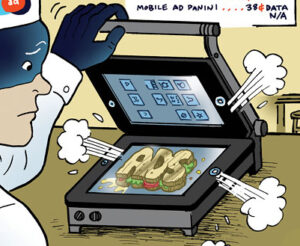
When Apple recently announced it would allow a downloadable ad-blocking extension in its upcoming iOS9 release, I clicked to read the coverage at PC Magazine. I waited several seconds for its ads and cookies to download, then waded through pop-ups to read the article.
This, dear reader, is called irony. I think we’re nearing the last straw in the banner ad business model for publishers, marketers and the good, bad and ugly ad tech players supporting it.
In the past few weeks, the world’s software leaders have begun competing to announce enhancements that leave banner ads behind. Facebook’s Instant Articles product, for example, aims to keep people on the app by bringing the photos and copy from any article into a pre-loaded, simplified layout. It includes only one, tasteful ad and splits the revenue with the publisher.

Meanwhile, Firefox took a page from tools like Instapaper when it added an independent app called Pocket to the top of its viewer. Find a website with too many banner ads and pop-ups? Simply click the Pocket button and find an alternative view with just the editorial photos and article copy, with zero ads.
Apple’s move to allow an ad-blocking extension is in some ways just an acknowledgement of what the market has already demanded. Already, 144 million people use Adblock software, including 41% of 18- to 29-year-olds, according to a report from PageFair and Adobe. This number grew 70% in the past year, partly due to increased use on Google’s Chrome browser and, more recently, Android.
No one wants to lose a fight for user share by ignoring this demand.
Mobile: The Game Changer?
The smartphones in our pockets are the tipping point for the breakdown of the banner ad marketing model. The screens are simply too small and attention spans too short. Their personal nature also means that we refuse to put up with things that get in our way.
You can accuse Facebook and Apple of trying to monopolize the advertising game and taking advantage of content creators, but that’s never been the game they are playing. These companies are ultimately in a fight to create the best user experience possible, and win the battle for mobile share of pocket.
Without Instant Articles, Facebook users may stop reading on the app. Without ad blocking on its iOS, iPhone buyers will grow weary of reading on their devices.
Publishers that try to maximize banner impressions will be punished by these platforms. On the other hand, device-plus-browser makers like Apple, which (ironically) don’t have their own content-reading apps, will be forced to make the browser experience more pleasant – and more ad-free – to keep up.
But Brands Have To Care For Change To Happen
Ad-blocking tools and habits have been around for years, but most marketers don’t lose sleep about it. Consumers have been skipping TV commercials for decades by switching channels. Today, they pick up their smartphones.
Marketers have always trusted that they are buying eyeballs, and use very broad and usually dated ROI models to trust that the dollars spent actually work. It’s been a “hear no evil, see no evil” nonissue for a long time.
Today we’re starting to see marketers take a second look, thanks to technology. They refuse to pay for videos that load but don’t play long enough, and demand refunds for any banner ads that fall below the fold. With every media both digital and trackable, it won’t be long before marketers demand proof of view across everything they buy.
The Future Is Apps, Subs and Native Content
I believe the future will belong to a combination of three trends that combine to improve the experience for both marketers and their consumers.
First, we will continue to see a rise in specific apps that people use instead of mobile web browsers. These apps produce a strong experience with their owned technology vs. relying on the lowest common denominator of the web browser. Their ability to get a one-to-one relationship with the consumer and his or her data is powerful.
Second, we will see the pendulum swing back to publishers that charge for access. The Wall Street Journal and The Week magazine offer two examples of properties that charge for access to valuable content that you cannot find in any other format. Both complement their subscription revenues with lighter advertising, and both are growing. LinkedIn is another subscription-based site with great content. Instead of cluttering the user experience with ads, LinkedIn encourages content creation, distribution and the reading experience because it wants you to return more often to do more profitable things, such as promote job openings.
Finally, in a world where interruptive advertising is finally recognized as too much of a risk to phone sales, app downloads and subscriptions, we’ll accept that the only option is to create content that adds value to people’s lives. It’s happening in fits and starts today, but many marketers are already going with their guts and getting into native advertising and content marketing. The years ahead will offer more tools to measure and scale.
I’ll bet that within 10 years we’ll look back at banner ads, and perhaps most interruptive advertising, as a quaint artifact of yesteryear. Interruption is an annoyance, and the fight to win smartphone and subscription dollars is both destroying the past and creating a new future. I can’t wait.
Follow Bob Gilbreath (@mktgwithmeaning) and AdExchanger (@adexchanger) on Twitter.