

 Oracle is rallying behind a product called Oracle ID Graph, announced Wednesday at Oracle Modern Marketing Experience in Las Vegas.
It’s not a cross-device ID – the enterprise cloud company recognizes big consumer platforms like Facebook, Google and Apple are up to the task.
Instead, ID Graph is designed to make the “unique identifiers” associated with email, mobile, CRM, desktop display and multiple social networks speak more succinctly to one another. BlueKai’s technology and Oracle’s Data Cloud formed the basis of the ID Graph, said Steve Krause, group VP of product management for the Oracle Marketing Cloud.
Similar to how Facebook Custom Audiences marries CRM, email addresses and mobile identifiers with media activations, Krause said Oracle is exploring more ways to combine CRM with ad or social network data. It will use its own statistical identifier along with third-party partners’ to help create cross-platform profiles of users.
The ID Graph will act as the translation layer (that’s a fancy word for data infrastructure) for that process.
“We aren’t trying to create a walled garden that combines technology and media,” he added. “BlueKai always stuck to, ‘We’ll help you manage your data, but we’re agnostic to how you want to activate it.’ We’re neutral plugging into ad networks and exchanges and we’re developing an identifier that works cross-channel.”

Most of Oracle’s higher ups preach this position of “neutrality,” particularly since it just acquired shopper data platform Datalogix, which invited some comparison to Acxiom’s acquisition of LiveRamp and the question around ongoing platform independence.
Mark Hurd, Oracle’s CEO, said the company is heavily invested in being an independent third-party data partner to marketers as well as ad tech companies.
Although he stopped short of calling the company “Switzerland,” a term Acxiom has used to describe its own aspirations, Oracle claims it will continue to provide data services to the ecosystem as whole – competitors and non-competitors alike.
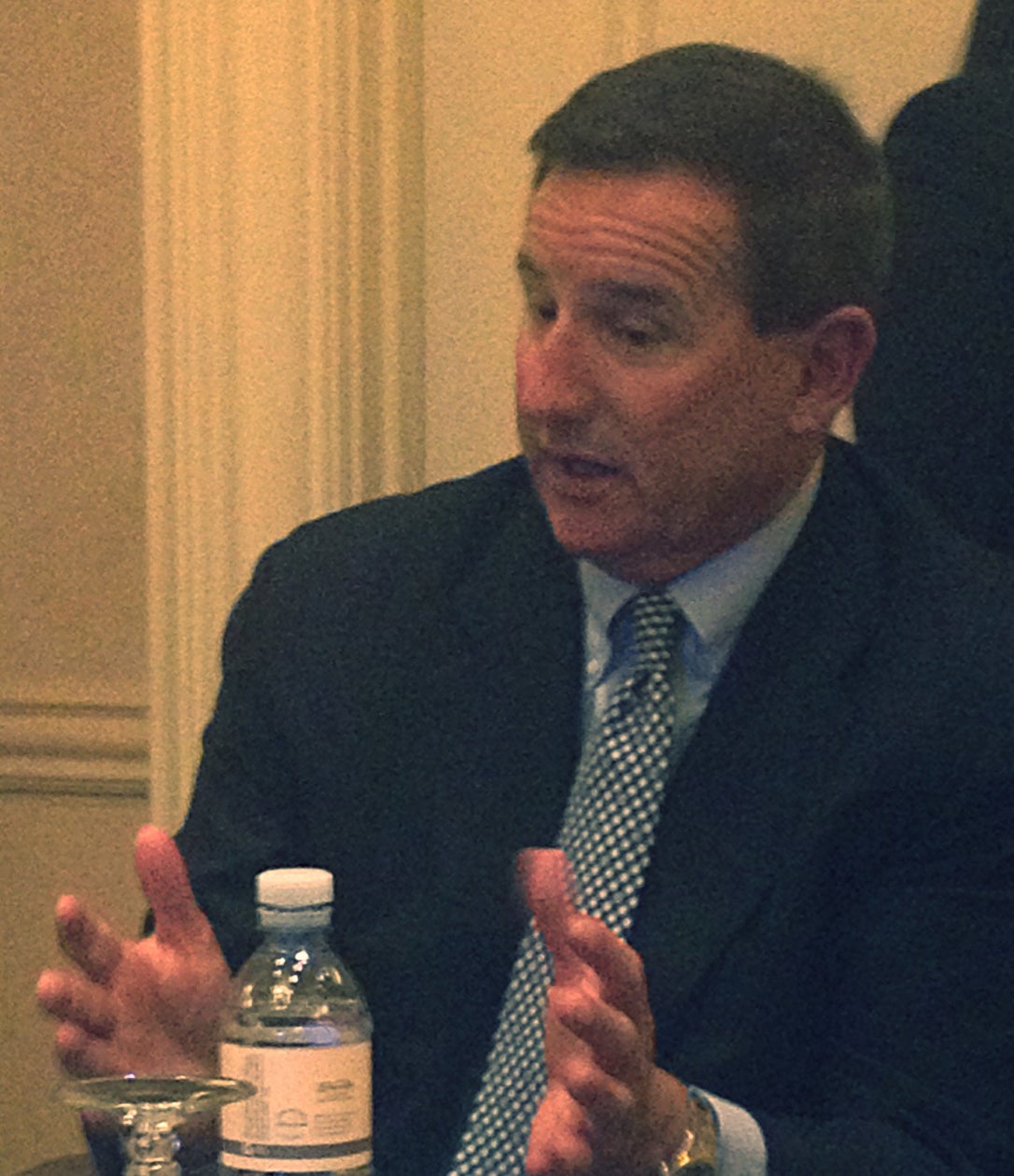
“We bet with our wallet and showed up and acquired company after company to invest in our Marketing Cloud,” Hurd said in an interview with reporters. “We bought Responsys so we could integrate B2C and B2B marketing processes, and we bought Datalogix and BlueKai to be this robust and neutral marketing data provider.”
“We’ll continue to be very aggressive building out our B2B and B2C portfolio, some of which will be organic growth with our own products,” he added.
In addition to the ID Graph, Oracle has integrated the Oracle Marketing Cloud with its commerce solutions (its big platform investment was commerce company ATG), which it productized through a new tool called Rapid Retargeter.
Oracle claims Rapid Retargeter helps marketers match new creative to retargeted messaging in real time. Although email is a common trigger following a cart abandonment, it doesn’t have to be constrained to this touch point, Krause said.
Rapid Retargeter helps a user determine, “which channel works better to follow up on this abandonment and how long should I wait to follow up and in what sequence,” Krause said. “Instead of focusing on a single action, you can enable a sequence of actions, where if someone opted in for push notifications, it might be better to retarget them in-app than with display.”







