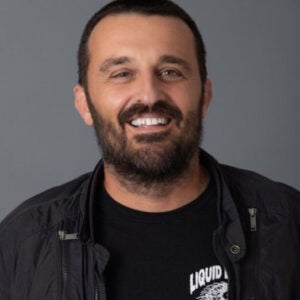
 Automated guaranteed will color direct deals in TV in a big way, not just in digital, predicts Scott Braley, GM of programmatic at Telstra-owned video platform Ooyala.
While traditional TV teams are accustomed to buying on a reserved basis, automated guaranteed deals could diversify the direct orders process.
Broadcasters could subsequently gain more flexibility around pricing controls and cross-screen packaging – particularly when programmatic TV matures and more IP-based video is eventually monetized.
And there’s more progress being made – Rubicon Project’s new alliance with AdMore, for instance, will rev up guaranteed orders for 1,700 national and local TV affiliates.
“One of the biggest challenges we’re seeing for broadcasters right now is figuring how much they should sell upfront and for what price point and how much they should reserve,” said Braley.
Braley, who joined Ooyala last fall from OpenX after a long stint with the Atlas ad server both at Facebook and Microsoft, spoke with AdExchanger about automated guarantees in TV and the future role of the video ad server.
AdExchanger: As a Telstra subsidiary, Ooyala acquired a video ad server, SSP and dynamic creative platform. How else has your product evolved to accommodate publisher demand?
SCOTT BRALEY: We have this vision culminating in 2016 where we really don’t think the ad server and SSP should be distinct businesses or platforms. The conflation of the two into one holistic platform makes total sense and the big broadcasters we talk to have validated that.

They get to kind of mash up the demand they’ve seen in the open marketplace or in the private marketplace through programmatic channels with whatever they book directly. From a yield management standpoint, you should get better returns because you can have more competition for the same inventory.
How is this materializing?
Giving better forecasting and reporting tools, because that’s obviously one of the big headaches. What are the right price points and right levels of reserve I should establish up front versus not booking it, letting it into open competition and maybe getting higher yield but maybe not. It’s bringing those two sets of demand together into a really robust, end-to-end reporting framework.
How is audience fragmentation changing buyer attributes?
It gets back to forecasting demand when buying is shifting so rapidly. When buyers come to the table with a “preferred audience,” that audience isn’t defined as a construct of the publisher’s inventory. It’s just defined as an audience list that’s not all “women 18-49 in these specific geos” and it’s getting increasingly fragmented.
This creates an amalgam of confusion among publishers to try and forecast their inventory supply against demand.
So you expect more growth in programmatic direct overall?
That’s been a big area of focus for us – trying to [account for the] different types of demand – programmatic vs. reserved – and combine the two into a forecasting mechanism that’s more beneficial to publishers. Today, most of the broadcaster deals we see in programmatic video are being done as direct deals or in private marketplaces.
It’s understanding the rate of the shift from reserved into automated guaranteed, where it’s still reserved, but bought in a different and more automated manner. We think publishers will want to work with one platform that solves for monetization across all channels, end to end.
What do you think about Facebook’s motivation for sunsetting LiveRail’s ad server? Are they moving away from the end-to-end publisher stack?
LiveRail and a third-party ad server (like Atlas) are very different businesses. Facebook is not in the business of providing tech platforms for other publishers because they want to monetize their own inventory. They need access to other inventory so they can monetize the one asset that’s richest, which is the data footprint. But you don’t need the ad server to do that.
[At Ooyala, we’re] more focused on providing value to those other publishers in a non-competitive way. If you look at AOL, Facebook, Google, they’ve got big ad tech stacks, but are they really looking after the best interests of these other publishers? I think we’ve seen the independence of our approach has resonated. There’s an interest in us developing this holistic stack as a countermeasure.
Some say Facebook is changing LiveRail’s model.
Or they’re just focusing and being clear about their focus because they’ve always been in the business of capturing more advertising dollars on the buy side. That’s what funds the actual passion project of the free Internet, and ubiquity in terms of … the social network – less so the ad tech piece they’ll get on the supply side.
Will Facebook be the TV app that rivals YouTube?
Whether they’re a TV app or not, they’re certainly a broad-based reach app. They can certainly stitch together audience from a targeting, reach, frequency and attribution perspective cross-device. Whether they’re a TV experience for long-form content is another question. They’re a long stream of short-form consumption.