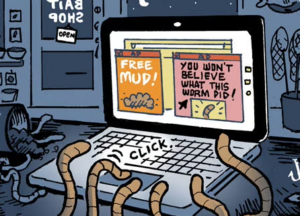
 Blood in the water brings sharks, and high CPMs bring bots.
And political spenders, who often outbid brands on targeted inventory, are uniquely vulnerable to digital fraud and bots.
“All the ingredients that typically happen for fraud are a part of the political marketplace,” said Mark Schlosser, senior sales director at the ad fraud security firm White Ops, who’s building out the firm’s political business.
Hallmarks of both fraud and political advertising include money being suddenly dumped into specific publishers on short flight campaigns, lots of first-party profile data and cookie-based targeting, according to Schlosser.
“The more demographic targeting there is, that’s where fraudulent activity and bots come in,” said Peter Pasi, Collective’s VP of political sales. “They’re responding to incentives. And keep in mind, the more targeting and first-party data there is, the more likely you are to have bots, because bots attach themselves to profiles.”

Fraudsters might not go public with the vulnerabilities and audiences they’re targeting (or imitating), but their intent is mapped clearly on the market. On programmatic deals, for instance, White Ops has found campaigns targeting Hispanic audiences attract about twice as much bot activity as other buy types.
As political buyers often note themselves, they’re willing to pay more than brands for the same audiences when it comes to potential voters. And even if DC spenders were the most sophisticated in the world, those CPMs would attract malicious actors.
And political buyers are a long way from being the most sophisticated.
The director role at, say, a CPG or auto brand, has likely gone through a major revamp to account for the intricacies of digital media and agency buying. But directors at the Republican or Democratic National Committee, or media directors on either side’s senatorial committee, are nowhere near that kind of expertise.
And education is an uphill battle. “A lot of people aren’t talking about it all. Digital stakeholders don’t want to bring it up,” said Schlosser.
For White Ops, an education gap represents a business opportunity, but other ad tech players agree that political buyers are often in the dark.
“We’re fighting for every dollar and every scrap from TV, and nobody’s going to go back to their client and say, ‘We couldn’t fill this buy,’ or give an accurate idea of fraud in the market, because political buyers are already this close to turning off the tap on digital,” said one ad tech executive who buys for partisan media agencies and asked to remain anonymous due to nondisclosure agreements.
Schlosser said he empathizes with the concern from digital media execs, who are burdened with far more toxic waste than other mediums. It’s accepted that some TV ads will play to an empty room or get fast-forwarded, but political spenders who are new to digital complexities hear the word “fraud” and are inclined to just shut down everything that isn’t necessary (aka Google, Facebook and some direct deals).
Collective’s Pasi noted the anonymity of digital audiences disproportionately impacts DC ad spenders – in part because this is the first election cycle where online fraud has been a public topic. There aren’t TV farms in Indonesia simulating millions of fake viewers or warehouses in China receiving mail for fake people. TV watchers and mail recipients are real humans at actual addresses.
“[Online advertising] is the only situation where we have anonymized profiles and data that can’t be tied to an individual physical destination,” he said.
There also aren’t millions of people breaking into homes and watching TV under the guise of actual owners, like bot malware that camouflages itself with a legitimate IP address.
The commercial market is essentially self-regulating, as brands have developed an itchy trigger finger when it comes to holding their agencies and ad tech vendors accountable for transparent results.
Political groups don’t have the same level of accountability, and don’t have the mechanisms to build adequate governance. Schlosser said the intense cyclical churn within political organizations – super PACs, party committees and other partisan groups – makes oversight almost impossible.
“In political targeting where third-party verification of audience segments is the exception, it is crucial to work with good partners who you trust,” said Pasi. “And to hold those partners accountable.”