 The promise of location data is one thing. The undeniable issues around scale and inaccuracy that come along with it are another.
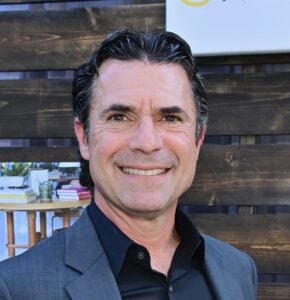
“No one disputes that the accuracy and quality of physical data is way below average,” said mobile tech vet Chris Cunningham, who on Wednesday took the reins as CRO of beacon and proximity data aggregation company Unacast.
Cunningham comes off a year-and-seven-month stint as head of US mobile for billion-dollar app discovery platform ironSource. He came aboard at ironSource as part of a classic acqui-hire from Appssavvy, the mobile ad company he founded in 2008.
Location on the open exchange is a big part of the problem. Publishers append latitude/longitude data or GPS coordinates to their bid request to drive up the price. Advertisers are often willing to pay more when there’s location data involved, but it’s a classic case of garbage in, garbage out.
Less than 1% of the location data from exchanges is accurate enough to create valuable marketing campaigns, said Unacast CEO and co-founder Thomas Walle.
Unacast’s approach is to corral the fragmented market of beacon and proximity solution providers under a single umbrella – a sort of brotherhood of beacons to give retailers, restaurants, stadiums and others a wider and more precise view of a consumer’s movements before they enter a store, what they do inside and where they go after they leave.
Beacons can be accurate to within a foot, but each proximity solution provider only has so many beacons in its network. Hence the scale dilemma.

The fragmentation is real. There are around 350 proximity solution companies around the world. Thus far, Unacast’s so-called PROX network incorporates 48 of them and counting, including Qualcomm’s Gimbal. ABI Research forecasts that 400 million beacons will be deployed globally by 2020.
Unacast aggregates and validates the offline customer behavior data it collects from interactions with beacons and partners with DSPs that use it as a single source for real-world proximity data, rather than partnering directly with the hoi polloi. MediaMath, Bluekai, Oracle, Lotame and Opera Mediaworks have all signed up.
A big part of Cunningham’s job will be to come up with new ways to monetize that data set.
Although Unacast doesn’t sell media, it’s seen early success with its retargeting solution. In a test with a Nordic cinema chain and Coca-Cola, moviegoers were retargeted with a push notification offering a free Coke a week after leaving the theater. Sixty percent of the recipients clicked on the offer, while 20% of the clickers went on to redeem it.
Rather than looking at other location companies as the competition, including Factual, PlaceIQ, xAd and the rest, Cunningham sees them as potential clients, with Unacast acting as a sort of Bluekai of proximity.
“If they have a media and sales team going after RFPs for location-based campaigns, we can provide the data,” Cunningham said. “Lat/long and GPS don’t tell you enough. You need to know that someone is in Aisle 7 buying Colgate.”
Of course, there are still limitations. For one, it’s a common misconception that beacons provide location data. They don’t. Beacons are dumb sensors, nothing more. In order to take advantage of beacons, a brand or retailer needs to integrate software into their app or work with a third-party provider. And although beacons can be highly accurate at a granular level, if they aren’t installed properly or maintained, they simply won’t work.
There are a lot of nuances to consider, said Neil Sweeney, president and CEO of JUICE and founder of beacon network Freckle IoT.
“On the surface, this sounds good, but if a DSP wants to activate beacons, the only way to do that is to have software inside of an app configured to speak to the beacons, because a beacon itself doesn’t generate any data – the software inside the app does that,” Sweeney said. “You can’t have one without the other.”
Cunningham first came across Unacast through C2 Ventures, his investment advisory, where he backs a number of different mobile-specific companies, including crowdsourced journalism start-up Fresco News and Zenrez, which allows users to book discounted same-day fitness classes.
Founded in 2014, Unacast launched at SXSW last year. In addition to its headquarters in Oslo, the company maintains offices in London, San Francisco and New York, where CEO Walle recently relocated from Norway. It’s raised $1.6 million in seed funding thus far and has a headcount of 13 with plans to make more than 15 new hires by Q2.