 The next billion weigh heavily on the mind of agencies and the brands they represent.
“There are roughly 1 billion people online on planet Earth. By 2017, the next billion will be there – and mobile phones are the primary means of making this happen,” said Mike Parker, McCann Worldgroup’s global chief digital officer. He was speaking to an audience of top-level marketing clients including Coca-Cola and Nestlé at a private McCann event at the Mobile World Congress Wednesday in Barcelona.
“If you’re a brand, what does this new connected reality mean and how do we think about connecting to these new billion consumers?” Parker asked, addressing the assembled execs.
McCann first started running educational programming for brand clients at MWC four years ago when the main event was still more of a B2B telecom trade show than a destination for marketers. These days, it’s de rigueur.
When a brand like Coca-Cola appears at MWC, it’s making a statement: Mobile matters, and budget is sure to follow. The brand, which doesn’t break down its ad spend by category or channel type, spent nearly $3.5 billion on its overall global advertising in 2014, up from about $3.3 billion the year before. [Download Coke’s 2014 annual report, released on Feb. 25.]
“When we come here, we get so energized, but there’s so much yet to be figured out,” Parker said at an IAB event held during MWC earlier in the week. “Brands like Coke look at the developing world and emerging markets and they understand that they have a new platform to use to connect with consumers – and a whole new set of consumers to talk to.”

Coke, for one, seems dedicated to the cause. As Tom Daly, Coke’s global group director for mobile, noted in a recent interview with Mobile Marketer, it’s been his goal to “use the phone in one hand to put a Coke in the other.”
“Nearly five years ago, the company elevated mobile from a series of successful and innovative local – e.g., country-level – initiatives to something recognized as strategically important to the long-term vision for the company,” Daly said.
It’s a statement that clearly points to Coke’s broader commitment to mobile and its desire to transcend an industry which is, in Parker’s words, “still largely set up to make ads and buy media.”
One recent example is Coke’s Happy ID campaign, created by McCann Lima for the Peruvian market in response to research which found that Peru was the unhappiest country in South America, according to the UN’s annual World Happiness Report. Peruvians are required to submit their own photos to the government for their national ID cards, so McCann set up 30 photo booths around Lima that only worked when a person smiled. The Happy ID could also be used as a rewards card to get discounts at certain shops and restaurants.
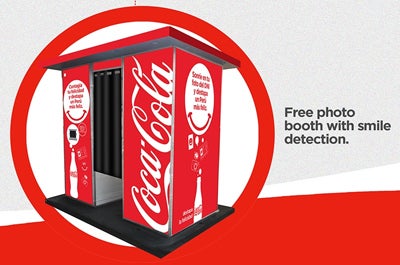 While not a specifically mobile activation, Happy ID, which won the media Grand Prix at Cannes last year, is part of the borderless trifecta of the new media.
“In the context of Mobile World Congress … I’ve seen lots of fantastic technologies and I’ve done some great tours with clients, but one of the things that’s most evident to me is the idea of mobile evolution,” said Jon Carney, McCann Worldgroup’s newly minted chief digital officer for Europe. “Digital evolution is mobile evolution is social evolution. You can interchange any of those words. Brands and marketers now need to consider the three as equal parts of the triangle.”