Oil changes are not slushies.
Even the most passionate car enthusiast isn’t going to buy motor oil more than two or three times a year – and that’s a challenge for a motor oil brand like Shell-owned Pennzoil, especially on the mobile front.
It’s a matter of figuring out what your consumers are looking for and creating an app to fit that need, said Doug Kooyman, global brand director at Pennzoil.
“Look at 7-Eleven – they’ve got one of my favorite apps,” Kooyman said. “If it’s cool outside, they send me a coupon for a hot coffee; if it’s hot outside, they send me a coupon for a cold [Slurpee] – but at Pennzoil, we need something that’s a little different from most other consumer apps.”
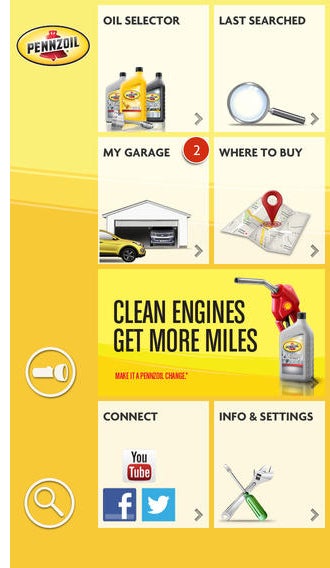
Right now, the Pennzoil app is all about utility and car maintenance. Users can save reminders about upcoming service and oil changes, get advice on what kind of lubricants work best with particular vehicles, search for nearby Pennzoil oil change and retail locations and access videos, photos and promotions.
“Our app has been basic so far, but we do answer the big three questions people have: Where can I find motor oil? Is there a promotion available? What is the best oil for my car?” said Kooyman.
But therein lies the rub – just because it’s possible to do cool things doesn’t mean it makes sense for a particular brand to invest in them.

“Every agency and vendor in the world comes knocking on our door to tell us to build another app,” Kooyman said. “It’s hard not to want to have the latest technology and the most advanced app, but we also need to make sure our app has a purpose.”
Take location. While geotargeting makes perfect sense for a convenience store like 7-Eleven or even an oil change franchise like Jiffy Lube, also owned by Shell, location poses a potential conundrum for a brand like Pennzoil.
“We don’t want to give someone an alert when they drive past an outlet because they might not be interested in hearing from us for another six or eight months. And if we miss somebody by just a week, then we might have missed the consideration window for an entire year,” Kooyman said. “That sort of application only works for the right product or service.”
 Which is why it might make sense for Pennzoil to put content in the driver’s seat. Users can access Pennzoil’s YouTube channel through its app, but Kooyman is looking to do more.
For example, a new automotive specification for car motor oil known as GF-6 will soon require manufacturers to produce lower-viscosity, more fuel-efficient oil. It’s a big deal for people in the know and auto aficionados will want to be fully informed about what this means for their cars.
Pennzoil could use its app as a way to position itself as an educational resource for its power users, aka the DIY set who likes to change their own oil as opposed to using a dealership or a getting a mechanic to do it. [Pennzoil refers to the latter group as the DIFM – for “do it for me” – crowd.]
The brand is also changing the way it thinks about advertising content. Pennzoil recently collaborated with its agency of record, JWT Atlanta, to create a high-octane 90-second film featuring stunt driver Rhys Millen burning rubber through the empty nighttime streets of Cape Town, South Africa, in a yellow Dodge Challenger Hellcat.
Rather than developing an ad for TV and thinking about how to parse it for digital after the fact, the spot was designed to live primarily on YouTube and Facebook.
“Historically, we’d make a commercial and then adapt it to to the Internet, but we’ve flipped that around,” Kooyman said. “We designed the spot as a long form piece for the web and, secondarily, we have 30- and 15-second versions to go along with it. It may sound obvious now, but it’s been a complete mindshift for us.”
There’s also been a mindshift among Pennzoil’s customers.
“We want to speak with our consumers in the mobile channel, because that’s simply where we are,” Kooyman said. “We have a solid team of people, including our agency partners like JWT, helping us meet that need, but we’re not all the way there yet in terms of our mobile capabilities as an organization. We want to lead with mobile, but we’re at an inflection point.”