

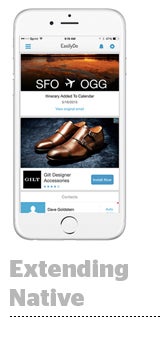
 Facebook’s mobile ad network seems to be a hit with developers. In the six months since it rolled out Audience Network globally, the number of apps participating has grown by a factor of five, a big jump even from Q4 2014 when the number had grown 3x. Basically, app developers are flocking to Facebook.
A big part of their enthusiasm can be chalked up to native ad support. Facebook said on Wednesday that more than half the money it pays out to developers comes from native ad placements. Furthermore, those native ads deliver 7x higher CPMs than standard banners – which Audience Network also supports.
But Facebook has more work to do around native ad formats. To that end, the company has released a slew of new features designed to make the native ad experience work better for app developers.
The enhancements include new native ad templates with granular control over the look and feel of a native placement, and a horizontal scrolling native ad called H-scroll that’s similar to multiproduct ad units that Facebook rolled out in its news feed in February. The H-scroll format is designed to increase the number of ads or offers on an app screen without increasing the ad load.
But perhaps most interesting is an “ads manager” feature encouraging developers to let Facebook handle decisioning of native ads according to which will deliver the best payout.

“Instead of designing a system to cache and deliver native assets, a publisher can pass control to the new native ads manager to handle this functionality, which will automatically optimize for highest performing ads,” Facebook said in a blog post. “With the native ads manager, publishers can pre-fetch up to 10 ads and deliver them in the best order ranked by yield.”
The language is similar to how a sell-side platform might describe its network mediation features. Except Audience Network’s native ads manager doesn’t handle ad decisioning for outside ad networks or demand sources. (Facebook’s LiveRail platform can serve that purpose.)
In a related blog post, Facebook shared some additional data from the marketer perspective. It said the reach and results achieved by its network campaigns are “comparable” to ads in the news feed, though it didn’t drill down on what those reach and results were.
Facebook also shared specifics from a couple customers. Audience Network extension helped the US Navy boost its campaign reach by 33%, and Rosetta Stone reduced cost per impression by 40% compared with other ad networks. Rosetta also reached customers that had 30% higher likelihood to transact.










