

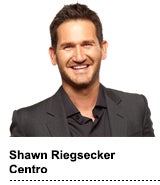
 Centro, which sells media management software, revealed $30 million in Series B funding on Wednesday. Neuberger Berman Private Equity Funds is the sole investor in this round, joining FTV Capital, which led a $22.5 million Series A round in 2010.
Founded in 2001, Centro initially focused on automating the guaranteed aspects of digital advertising, such as workflow, vendor contact management, RFPs, messaging and electronic insertion orders.
“We’ve grown up automating that aspect of the ad industry,” said Centro CEO Shawn Riegsecker. “But we have a fundamental belief, and others share it, that using multiple platforms in which to execute your digital campaigns isn’t something that’s good or will exist in the future.”

Riegsecker sees this investment as a way to continue Centro’s push towards becoming a centralized ad tech platform that can combine the more operational business automation with the programmatic RTB exchanges. “We believe the race is on to become the software provider of a single sign-on platform that automates 100% of your digital spending,” he said.
Following the company’s $40 million purchase of demand-side platform SiteScout in 2013, Centro aims to use this investment round to continue building on the company’s ability to manage campaigns across the exchange system. The first thing Riegsecker cites when asked about his intentions for the new cash on hand is, “an aggressive expansion of our engineering and product team for the platform.”
Much of those engineering resources will go towards enabling more rapid integration of client data partners and the capacity to provide back end attribution analytics. Though previously many observers expected Centro to move towards acquiring a DMP to fill that role, Riegsecker said that he’d rather empower clients to utilize their own data, as opposed to acquiring or building that technology themselves.
“As afar as a DMP goes, strategically, I fully buy into the idea of BYOD (bring your own data),” he said. “There are a lot of DMPs that have raised tens or hundreds of millions to build out sophisticated technology. We have some DMP capabilities … but we want to be the best DMP integration platform.”
Riegsecker emphasized that the new funding will lead to Centro’s next acquisitions, citing attribution analytics, cross-device targeting and an expected move into programmatic TV in 2016 as areas where the company is actively eyeing potential targets.
The move also gives Centro, which currently operates in North America, an avenue to expand internationally. “We’ve maintained rapid growth in the US and not focused on having offices in UK or Brazil, but at some point we need to take the product global,” said Riegsecker, adding possible 2016 global expansion could happen via acquisition, as opposed to building out a team.
Centro, which has 2,500 customers and expects to service over $400 million in digital ad spending this year, has long floated itself as a potential IPO candidate. This Series B makes those flirtations even more explicit. “Neuberger Berman falls into this public equity-private equity fund category,” said Riegsecker. “And we consciously wanted to find an investor who could not only support us privately but in a public offering in the future.”
Riegsecker noted that, “obviously we’re aware that the market has been choppy in the ad tech sector,” so for the time being the company sees no need to rush into an IPO.
This investment marks the first direct stake for Neuberger Berman in an advertising technology company. Michael Kramer, managing director at Neuberger Berman, said of the deal, “Centro presented us with a unique opportunity to be part of market transformation through a truly differentiated advertising technology solution that already has enormous scale in the sector.”
With the company expanding into the ad exchange – it expects to fully integrate SiteScout’s DSP product into its platform later this year and “there are product development plans underway” to build into the supply side – the company will encounter questions of media agnosticism for the first time.
“As long as the decision making and intelligence is happening separate to each other … there shouldn’t be an issue with both sides of the industry working off the reusable components,” said Riegsecker, who sees the benefits of efficiency and analytics as more than counterbalancing the somewhat superficial concerns over single-stop-shop media buying and selling platforms.







