 According to a study conducted by the ANA and White Ops in December, 83-89% of agencies and media vendors see fighting ad fraud as a requirement, but only 26-28% actually have the tools in place to accomplish those goals.
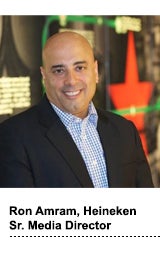
The latter may look like a discouraging figure, but Heineken senior media director Ron Amram sees an opportunity for brands to “take responsibility” by demanding accountability for their vendors and their media buys.
Amram enumerated some of the means of establishing accountability at AdExchanger’s Clean Ads conference Wednesday, such as guaranteeing the right to measure bids with validated third-party agencies and writing fraud guidelines into media contracts and insertion paperwork, formalizing a mechanism for insuring their media buys.

By making it common practice for brands and agencies to hash out their own terms on fraud standards, Amram sees market forces partially neutralizing the problem, without heavy-handed responses from industry groups at large.
“[Media vendors’ accountability standards] are very informal at the moment,” Amram told AdExchanger in an interview following his conference presentation. “But it’s changing, and we haven’t seen or experienced any pushback when brands make that demand.”
While vendors may not be dragging their feet on setting guidelines for make-goods and verification, brands are finding it more difficult to impose measurement and verification across the ecosystem. Kellogg’s, for example, recently pulled its YouTube budget because Google won’t allow third-party tracking of that data.
Amram listed companies like Kellogg’s, P&G and Unilever as being at the forefront of the movement – “the blunt hammer enforcing buys” – pushing for the rights of marketers in digital advertising.
Those three brands have all launched recent agency reviews, as have many of the biggest advertisers in the world. That power of the purse is catalyzing change, as Amram said that everyone from tech vendors and media agencies to DSPs and SSPs is adopting the policies brands need to open their coffers.
The issue is affecting more than contract discussions, though. Amram mentioned that TV’s outperformance of digital as an advertising platform may very well stem from these same viewability, fraud and verification issues. If digital traffic is inflated by bots by as much as 20%, as many studies and tracking firms have indicated, then that’s going to be reflected in the results, like trying to sail with an anchor down.
Heineken is dealing with this situation, in part, by blacklisting networks that aren’t allowing pre-bid verification or thoroughly addressing fraud. “Some of these vendors are going to get killed,” he said. “That’s what accountability means.”
There is no “centralized police force” in the community, and Amram said he doesn’t think there necessarily should be. Marketers, he said, have more power to produce change than they’re currently using.
“Fraudsters are becoming more sophisticated … and clearly this will be an evolving issue,” he said. “That means this will require multiple spotlights.”
Frustratingly, the more essential digital advertising becomes for brands, the bigger the problem grows. Bot fraud and the total amount of money siphoned from marketers to fraudsters grows with general digital traffic. Consequently, media budget increases that benefit agencies also benefit malicious actors.
“Heineken spends four times more now on digital advertising than we did in 2012,” Amram said. “But that means accounting for that spend is many times more important as well.”