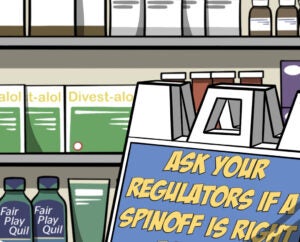
 Getting 2 million YouTube views on a video of Lindsey Graham smashing cell phones was a very good thing for political website Independent Journal, which orchestrated the stunt.
But it didn’t do much for Graham (who made the video after Donald Trump gave away his phone number publicly). The Republican senator from South Carolina is barely tracking in the polls.
That’s because improving polling numbers can’t be achieved just by reaching a large online audience. It’s about content with a message delivered to voters who actually are willing to change their minds.
“Views don’t mean votes,” said Vincent Harris, CEO of Harris Media, which is working with Rand Paul’s campaign. “Lindsey Graham was polling even better at the beginning of the video than after. Sure, he got his name in front of millions of people, but then he has to convert.”
“The Lindsey Graham video wasn’t connected to an issue,” observed Leon Levitt, the publisher of libertarian-flavored political website Rare. “The best content matches an issue.”
Harris’ approach for his clients is to narrow the field with extremely targeted advertising, a strategy deployed by the past two Obama campaigns.
“Now, with Google, we can match with AdWords to email addresses,” Harris said, citing the search giant’s new support for CRM data matching. Harris winnows down from the voter file, to just Republican voters, to the subsegment of people who may actually change their mind.
The Rand Paul campaign has succeeded in reaching millennials by choosing platforms that matter to them, like Snapchat. It’s “audience first, and using platforms as a means to reach the audience,” Harris said.

The campaign created 10-second Snapchat videos that showed entertaining but message-oriented content, like Rand Paul destroying the US tax code – again with the demolition – using different implements.
A “chainsaw” creative performed best.
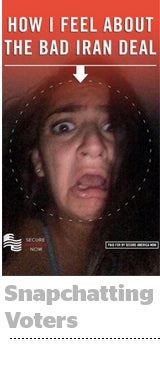
The conservative group Secure America Now sponsored a 24-hour Snapchat filter, “How I feel about the bad Iran deal,” which allowed users to add their own pictures to the filter. Among the 178,000 responses were a photo showing a pile of horse dung. The effort was deemed so successful that the campaign duplicated it in three more states.
Harris knows engaging people is just the beginning. “Being entertaining gets reach, but putting votes in a box wins an election,” he said.
“The conversion is what’s hard,” he continued, “turning a viral success into an email address or a sign-up.”