In acquiring Adelphic for an undisclosed price, Viant hopes to create a “people-based DSP” that combines media execution with deterministic data from parent company Time Inc.
But don’t think of what Time Inc. is building as a mini walled garden, said Viant CEO and co-founder Tim Vanderhook.
“Everyone wants the scale that Facebook and Google have, but they want it across the independent web of publishers out there,” he said. “The industry was hoping that AOL would deliver something like that, but it’s been some time since they were acquired by Verizon, and Time Inc. is stepping into that gap.”
The deal, as well as the integration between Viant and Adelphic, is expected to wrap up before the close of Q1.
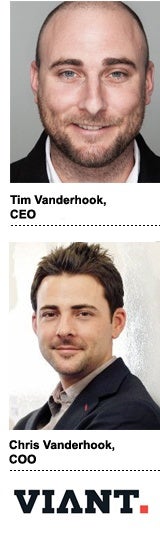
AdExchanger caught up with Tim Vanderhook and his brother, Viant COO Chris Vanderhook, to talk about how Time Inc. might bring its ad tech vision to life.
AdExchanger: There are a lot of DSPs out there. Why buy Adelphic?
TIM VANDERHOOK: Adelphic reaches more than 1 billion devices a month and that, combined with Viant’s more than 1 billion opt-in users, is a potential industry opportunity.
Agencies have two really big needs today – a universal ID that works across devices and self-service programmatic capabilities. Viant brings the universal ID and Adelphic brings the self-service capabilities.

CHRIS VANDERHOOK: Adelphic also has a good engineering team born out of Quattro Wireless, which was bought by Apple and became iAd. They have the pedigree and they have the technology platform.
What exactly does it mean to be a people-based DSP?
TV: The largest DSPs in use today are desktop-first and built on cookies, which leads to commoditization and outdated technology. But when you have a mobile-first approach, there is the ability to do cross-device reach and frequency with opt-in registered user data on top. It’s accuracy with significant scale.

And beyond media execution comes measurement and the ability to measure digital’s impact on in-store sales, which represents 90% of revenue for many advertisers.
Is it really possible for Time Inc. to take on the walled gardens?
TV: “People-based” doesn’t have to mean “walled garden.”
CV: The majority of the money, especially for Facebook, is driven by people-based data. But if you look at Time Inc.’s Q3 earnings last year, digital ad revenue was up 63%, and Viant was a big driver of that growth. That is the value of people-based data.
But whether we’re the antithesis of walled gardens or not, marketers are looking for an alternative and they’re looking for self-serve. With Adelphic, that is what we can give them.
The narrative Time Inc. and Viant are weaving is around openness, but what makes you not just a mini walled garden yourself?
TV: Can you third-party ad serve into an environment and can you do your own measurement? If the answers are “no,” then you’re a walled garden, and other people just have to trust you because there’s no verification.
But we allow marketers and agencies to third-party ad serve into our environment and we allow them to run auditing and verification services on top of it. We’re not trying to disintermediate the market. We’re trying to enable an open web so that marketing can be tracked overall.
Why is self-serve so important to your buy-side partners?
TV: Self-serve capabilities are in extremely high demand within the advertising agencies specifically. It’s become so that the managed service layer is actually the ad agency itself sitting on top of the technology platforms that they’re utilizing for clients to execute in a people-based fashion.