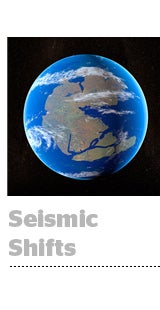
 The Guardian, CNN International, the Financial Times and Reuters have banded together to sell inventory programmatically through a program called Pangaea. The Economist also will sell inventory through Pangaea but is not a founding publisher.
Pangaea gives publishers something they don’t have on their own; scale. It marries that scale with the member publishers’ first-party data to provide additional value beyond a typical programmatic buy.
To further attract brand advertisers, Pangaea will offer custom and high-impact creative. Rubicon Project powers the technology platform.
“Advertisers have had to choose either quality and trust or scale,” said Tim Gentry, the project lead for the alliance and the global revenue director at Guardian News and Media.
The publishers in Pangaea reach 110 million deduplicated users across the globe.
In the beta phase, launching in April, the publishers will commit up to 10% of their inventory in their ad servers to Pangaea. Publishers will give Pangaea buyers the same priority for an impression as private marketplace deals, which will be above open marketplaces.
Because all the publishers sell programmatically already, Pangaea focused on bringing unique first-party data assets to bear. For instance, a quarter of the publishers’ audience falls into top income segments, and one-fifth are senior management or above.
By combining subscriber data and reading behavior, Pangaea will create and sell segments – like tech enthusiasts – based on demographics or user behavior.

“When you look at something like business travelers within APAC, Pangaea reaches more of those than any single publisher on its own,” Gentry said.
The collective hopes to increase the sophistication of the data assets, to the point where Pangaea could recognize the same user browsing across multiple publisher sites.
For now, it created a single data-management platform (DMP) that includes assets from each publisher’s own DMP.
Pangaea also will include premium creative units. The marketplace will launch with standard units but expand to include rich media units, expandable ads and custom ad units unique to the publishing group.
Publishers plan to distribute content programs or native advertising through Pangaea as well.
“The problem content programs have is not creating a great experience, it’s struggling to deliver that scale,” Gentry said. “A content program that created a series of videos can be put into custom formats Pangaea is developing and served across the whole alliance.”
Pangaea is creating seats that will ensure buyers get preferential access to the exchange, especially for larger spending commitments.
“As a trading model, we’re taking the approach of having dedicated seats available,” Gentry said. “During beta, we will have a certain amount of seats available to engaged with Pangaea, and once they’re gone they’re gone.”
When Pangaea fully launches in April – it will be visible on Rubicon’s storefront on Wednesday – a single sales team will sell across the entire platform. In the meantime, member publishers will offer supplemental resources to the central team.
Additional capabilities and offerings for the platform will roll out across the year as the publishers learn from the early going. And more publishers may join, provided they offer the same audience quality.
“The vision we have is that Pangaea should help us by being more relevant to more advertisers, with scale that none of us have individually,” Gentry said.