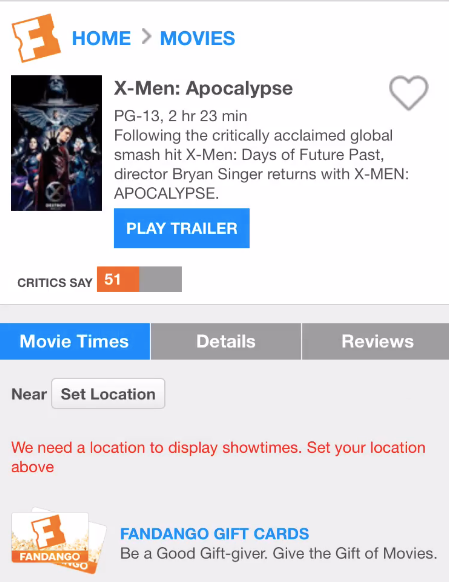
 A new Snapchat campaign from 20th Century Fox for “X-Men: Apocalypse” will drive awareness and ticket sales for the movie’s Friday premier.
Snapchat has run plenty of branding-oriented campaigns, but this new effort is one of very few forays that include a direct-response component (in the form of a Fandango e-commerce call to action), a Snapchat spokesperson told AdExchanger.
For 24 hours, Snapchat featured nine augmented reality (AR) lenses that superimposed images of “X-Men” characters on users’ faces. Users could capture images in photo or video format and push them out as direct messages to friends that disappear in less than 10 seconds, or as “stories” to their wider communities that vanish in 24 hours.
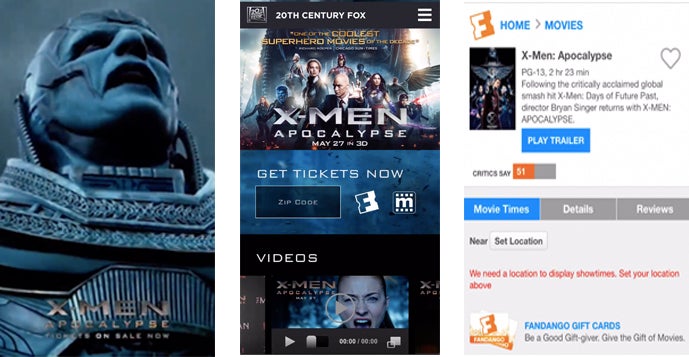
Also, Snapchat’s Discover platform, where publishers package bite-sized content, will include interactive vertical video ads that link to a 20th Century Fox site. The app will prompt users who engage with the ad to “swipe up” to enter their ZIP code, and then redirect them to Fandango to buy tickets for a showing at their local theater. The ads will run until Thursday.
The vertical video units, dubbed “Interactive 3V ads” in Snapchat’s lingo, will not contain a buy button in-app, but will maintain a native user experience when linking out to both sites, Snapchat’s spokesperson said.
Snapchat will charge 20th Century Fox for ads on a CPM basis, and will share metrics around video views, completion rates and reach.

Snapchat’s Ad Game
Snapchat announced its first slate of native ad products at last year’s Cannes Lions festival and has kept things relatively quiet as it ramps up. The platform, with its 10 billion video views per day and wide reach with the coveted 18-24 demographic in the US (60% of its users are 13-24 years old), is seen as strongly positioned to contend with Facebook and Google in mobile.
Snapchat offers three native ad products: 3V units, AR lenses and sponsored geofilters.
3V units of the sort employed to plug the “X-Men” film come in four formats: skippable vertical videos or creative, app install prompts, rich articles and interactive web views. Advertisers can place 3V ads on Discover or within its Live Stories platform.
Interactive 3V web view units mimic Discover’s “swipe up” feature to direct users to an e-commerce experience. Recent test campaigns from Target and Lancôme allowed users to purchase products from both retailers without leaving the app. The feature is still in beta.
Second, AR lenses impose 3-D creative on a user’s face, which he or she can then directly send to friends or broadcast to communities as a 24-hour story. Twentieth Century Fox was the first advertiser to tap the unit on Halloween to promote the premier of “The Peanuts” movie.
Branded AR lenses have drawn strong engagement. Users interact with the units extensively, in some cases for upward of 30 seconds, before pushing them out to friends directly.
Take Taco Bell, which raked in 224 million video views and saw average user engagement times of 24 seconds with its AR filter on Cinco De Mayo, turning users’ heads into giant tacos that exploded when they held their finger down on the screen. In a world where advertisers struggle for three seconds of consumer attention, such high engagement levels aren’t trivial.
Snapchat’s third ad unit is sponsored geofilters, which allow brands to target users with creative based on their location and proximity to a store, movie theater or other physical brand location.
Measuring Ephemeral Views
While its direct-response offering is undeniably nascent, Snapchat is beefing up its measurement capabilities in general – which could speak to a greater focus on performance-based advertising down the line.
The platform inked a partnership with Nielsen in February to measure its 3V video ads in the same way it does TV ads, under the researcher’s Mobile Digital Ad Ratings methodology.
Snapchat also partners with Millward Brown Digital, Sizmek and Innovid to gather metrics on views and reach. And it recently brought on comScore to measure traffic to its Discover platform.
Revised to reflect the correct names of measurement partner companies.