 The Federal Trade Commission (FTC) has sponsored content disclosures on the mind.
A complete lack of disclosure led to an FTC settlement with Lord & Taylor in March after the brand enlisted bloggers to post images to Instagram promoting one of its dresses.
As FTC senior attorney Robin Spector told AdExchanger at the time, “What we are asking people to do is not onerous. It’s just putting #ad in there. That doesn’t require that much space and effort.”
The type of disclosure matters – for example, FTC guidance from 2013 already called out #spon as an inadequate disclosure; Kardashian clan, take note – but it’s also about more than just tossing a hashtag in there and calling it a day.
The placement of the disclosure is key. Including #ad at the end of a post after a string of other hashtags is likely too subtle – others might say too sneaky – for consumers to notice.
But digital marketers like Victoria Belinsky of natural snack and granola bar brand KIND are taking notice. The brand has been ramping up its digital spend on influencer and social media marketing over the last couple of years as a way to reach consumers who aren’t engaging with more traditional forms of media, especially TV.

“It’s a challenge because we don’t want to be too promotional [but] we don’t want anyone to feel misled,” Belinsky said.
One way to avoid the FTC’s ire without sounding like a commercial is to use a more conversational tone, said Corbett Drummey, CEO of influencer platform Popular Pays, which has worked with KIND on a number of campaigns.
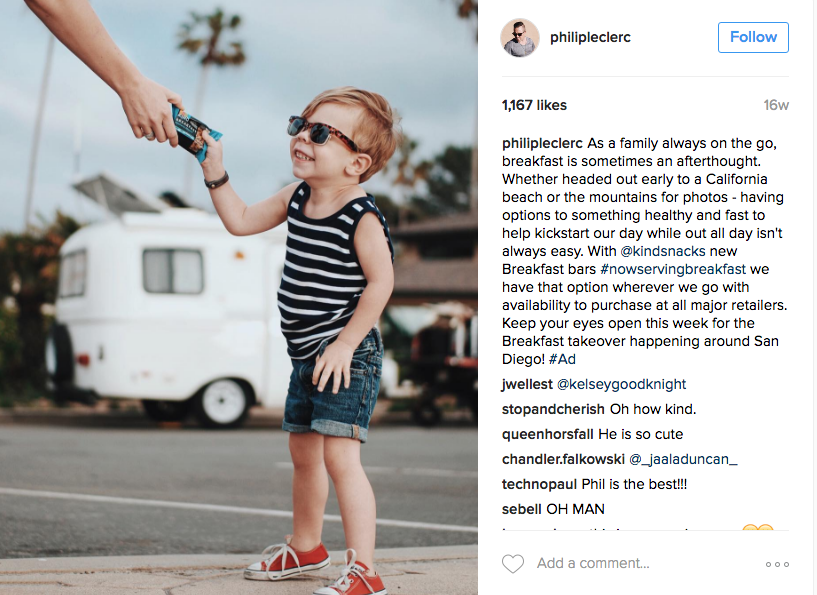 “It’s possible to include a disclosure using natural language that’s also in line with the brand,” Drummey said.
Something like “KIND gave me these bars to try” or “Hey, KIND paid me, but, seriously guys, these bars are delish.”
When KIND ran an influencer campaign on Instagram this spring to promote the launch of its new breakfast bars, the brand did include #ad at the end of the post.
But the FTC’s existing guidance suggests prominent placement for disclosures to ensure consumers realize what they’re seeing.
That’s why brands need to stay on their proverbial toes. Unfortunately, most aren’t doing the greatest job at labeling sponsored content.
More than 70% of native ads don’t provide adequate consumer disclosure and appropriate transparency, according to recent research by the Online Trust Alliance. The OTA suggests that websites use clearer, more consistent terminology to label their native ads and delineate native units from page content through the use of borders, horizontal lines or shading.
With social media influencer marketing representing is a far murkier space than native, brands need to navigate it in a way that doesn’t abuse consumer trust (or piss off the FTC).
The Commission is hosting a workshop in Washington, DC, on Thursday to dig into the effectiveness of opts-ins and consumer disclosures.
Updated September 14, 2016 to clarify the FTC’s position on the usage of #spons and the placement of disclosures.