
IAB’s New AI Regulations Give Advertisers A Starting Point – But Plenty Of Questions Remain
The IAB’s new framework aims to standardize when AI in ads should be disclosed, but a lot is still left up to interpretation.

The IAB’s new framework aims to standardize when AI in ads should be disclosed, but a lot is still left up to interpretation.

Marketers claim they want control over creative production, but the moment a new AI tool hits the scene, they’re suddenly all about convenience. AI video ad platform Airpost, which launched last month, does its best to find that happy medium. Today, it announced $4.1 million in seed funding. If your company wants to give up […]

Big Tech seems overconfident their ad revenue growth isn’t tied to the economy; Microsoft AI launches a publisher licensing program; and the unique security vulnerabilities of Moltbook’s social media for AI bots.

Big TV’s shift to programmatic brings in the performance brands; Meta rolls out premium subscriptions for Instagram, Facebook and WhatsApp; and Yahoo enters the crowded AI search market.
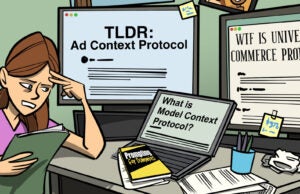
Enjoy this weekly comic strip from AdExchanger.com that highlights the digital advertising ecosystem …
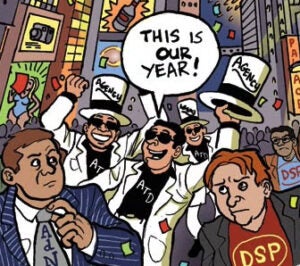
Retailers court luxury goods to compete with Amazon; indie agency Tombras acquires Opinionated; and talk of an AI bubble dominates discussion at Davos.

Ad industry experts call out trends to watch in 2026 and separate the real AI use cases having an impact today from the AI hype they heard at CES.

Meta cuts its metaverse investment by 30%; Netflix makes a renewed push in the gaming market; and the rush to slap an AI label on everything is placing existing ad tech under renewed scrutiny.

No brand safety? No problem. The Onion’s CMO Leila Brillson shares how the iconic satire site is expanding beyond pithy headlines into documentaries and also helping other brands find their snark – all while staying far, far away from generative AI.

What’s one data privacy shift or regulation that will most reshape digital advertising in 2026 – and who will be most unprepared for it?

As brand safety standards evolve and oversight shifts from platforms to third-party vendors, Brittany Scott, SVP of global partnerships at Zefr, explains what the rise of generative AI – and Meta’s decision to step away from MRC brand safety audits – means for the future of media quality.

The generative AI trend generated endless hot takes this year, but the ad industry also had plenty to say about growing competition between DSPs and SSPs. Here are AdExchanger’s top 10 most popular guest columns of 2025 and why they resonated.
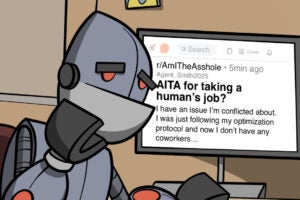
Private equity finds ecommerce publishers aren’t worth what they used to be; Salesforce rethinks its faith in agentic AI; and CBS News accidentally encourages people to pirate its content.

YouTube TV launches new skinny TV bundles; anti-ad Substack is testing ads; Google strikes new publisher licensing deals to feed its AI.

Almost everything in AI feels big. But are you looking at the next Gangnam Style or the birth of a new industry? Here’s how to assess whether an AI vendor is likely to matter in two years.

Instacart tried dynamic pricing for groceries; AI companies aim for an open-source agentic AI standard; and Tinder digs into users’ camera rolls for data.

The Economist is charting its own course in the age of AI, says Nada Arnot, the 182-year-old publication’s EVP of marketing. It’s steering clear of licensing deals and lawsuits and partnering with Claude on its own terms.

For years, MFA was a mostly web-based problem. Now, generative AI has supercharged the made-for-advertising model, and it’s infecting social media feeds and vertical video platforms.

There’s a paradox at play in how marketers are adopting artificial intelligence.
Eighty-seven percent of US advertisers say they plan to increase AI usage over the next 12 months. But only 45% feel confident in their understanding of how AI-powered technologies work. That 42-point gap is an indicator of early friction in AI adoption.

AI hype is everywhere, but Moloco CEO Ikkjin Ahn says the real winners in ad tech will be those who can move beyond flashy demos and harness AI at true hyperscale.

Generative AI is the new ad land obsession: a shiny promise of a fully autonomous world of self-driving advertising. But behind the hype lies the costly delusion that automation can replace judgment and more content somehow means better marketing. We’ve entered the age of machine-made abundance, where content can be generated faster than it can […]

After pulling back on moderation, Instagram gets flooded with antisemites; BidSwitch builds a programmatic way for AI bots to pay to crawl websites; and nearly half of Gen Z dislikes AI content.
Enjoy this weekly comic from AdExchanger.com that highlights the digital advertising ecosystem …

The real challenge is drawing a clear line between the AI-generated content that adds value and the kind that erodes trust and leads to significantly lower ad effectiveness.

As the pendulum swings hard toward 1:1 personalization, a critical question emerges: Just because we can personalize every interaction, does it mean we should?
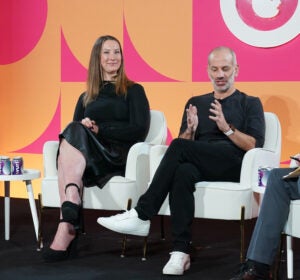
Advertisers are still having a lot of the same brand-safety problems today as he did years ago – and it’s pretty damned frustrating.

The fate of the open web will be decided on who controls the data that drives monetization and the AI that determines distribution. Google controls both, and proposed remedies to its ad tech monopoly do not address this imbalance.
Alvaro Bedoya shared his qualms with digital advertising’s more controversial targeting tactics and how kids use gen AI and social media.

The number and scope of U.S. laws that require advertisers to disclose the use of AI are limited. But there are some restrictions and guidelines that advertisers must follow to ensure their compliance.

OpenAI wants to be social media now; retail marketers need to appease the bots; and yes, even Peloton is pivoting to AI.