 Major League Gaming is changing up its strategy, focusing on programmatic sales over direct.
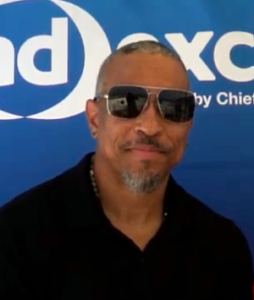
“We have consciously made the decision to focus 90% of our energies on programmatic for the year of 2015,” explained Don Reilley, EVP of MLG. “We can focus heavily on the programmatic side of things, and then layer two, three, four top-tier sponsors on top.”
It’s the third shift in strategy during the company’s evolution. Major League Gaming started out as an events company more than a decade ago, selling sponsorships to its video gaming competitions.
“That was difficult to scale,” Reilley said. “Then we moved into a media business, about chasing the RFP.”
But that shift hasn’t been as successful as the company would like: Digital buyers didn’t understand the value of sponsorship add-ons like a brand call-out or signage at Major League Gaming’s events.
The site’s inconsistent traffic further hurt its direct sales efforts.
“Our size was an issue,” Reilley said. “We average 3 million to 4.5 million uniques without an event. Each event adds 2 million-3 million uniques to that month. That kind of fluctuation hurt us from an RFP perspective.”
Those same traffic fluctuations led Major League Gaming to first realize the benefits of programmatic. The site started selling programmatically to fill in the gaps between direct sales, before realizing programmatic could be successful by itself.

As part of its switch to programmatic, MLG changed its technology stack, replacing PubMatic with OpenX, including both its ad server and SSP, during the fourth quarter of 2014. “We’ve seen higher fill rates of our inventory, and better selection of advertising partners” since the switch, Reilley said.
Since moving onto the platform, it’s seen fill rates of more than 90% on its video ad inventory.
“We have the hard to reach male 18-34 audience,” Reilley said, attracting advertisers in areas like food (soft drink companies, quick-service retail and snack food), entertainment (movie studios, game publishers, home electronics), auto manufacturers and telecom.
Display, at 40% of revenue, is now outweighed by video, which accounts for 60%. And on mobile devices, Major League Gaming only monetizes through video ads.
In addition to video content on its own site, for which it uses video SSP LiveRail, it distributes content on platforms such as Xbox, a YouTube MCN, Roku and Opera TV. Gaming consoles, connected TVs and social media bring its total monthly reach to 20 million, the company claims.
In some cases, such as YouTube and Xbox, a partner handles monetization and delivers a slice back to Major League Gaming. In others, like Roku and Opera TV (which it’s launching soon), it handles monetization on its own.
Unlike another streaming gaming site, Amazon-owned Twitch, MLG restricts who can upload videos. “We position ourselves as the NFL or ESPN of competitive gaming,” Reilley said.
As the site shifts to a programmatic-dominated media strategy, that means Major League Gaming will reallocate and downsize its sales force.
“Costs are lower, but we’ll still need bodies in place,” Reilley said. “We don’t see it as a way to cut costs on an ad sales team, but a smarter way to do business. There are still things we can do from a value-add perspective to make ourselves more attractive. Programmatic is not ‘set it and forget it.’”