
 “On TV And Video” is a column exploring opportunities and challenges in programmatic TV and video.
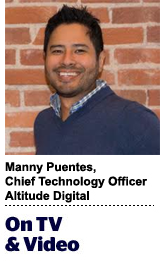
Today’s column is written by Manny Puentes, chief technology officer at Altitude Digital.
Programmatic has long promised to make interactions between publishers and buyers more scalable and efficient, but over the years the opposite has occurred. Now the landscape is littered with data providers, yield optimizers, ad servers, demand- and supply-side platforms and third-party verification companies, among others.
The emerging technology needs of brands and publishers drove the creation of these intermediary players. While these additions to the market may have incrementally increased yield and return on investment, with more dashboards and spreadsheets to navigate, they didn’t drive efficiency. Instead, they did quite the opposite.
If we chart its evolution, Programmatic 1.0 was about growth and scale. Programmatic 2.0 was about the explosion of new technologies and third parties. I believe the next chapter –Programmatic 3.0 – will be about the simplifying the complexity of the digital media landscape. This will carry big implications for the TV and video advertising space.

With its high value and limited supply, the emergence of video has driven much of the initial progress, while the lessons learned during the past decade are already being applied to the first stages of programmatic TV. Digital video is finally bringing content producers and advertisers closer together again.
With that, the promise of Programmatic 3.0 – more efficiency, transparency and control – is becoming a reality. I see a few of the the signs that this new chapter is already underway.
Direct benefits
Industry pressures, particularly quality concerns, have pushed publishers and advertisers back to striking direct deals. But both parties still want to transact through programmatic channels to reduce overhead and leverage more exact data.
This increasingly popular kind of offering, called automated guaranteed, programmatic direct or programmatic guaranteed, is not new. Now-acquired companies, including iSocket and ShinyAds, once specialized in guaranteeing programmatic deals between publishers and advertisers, allowing advertisers to buy inventory at a fixed price programmatically. Yet adoption lagged, and as of 2015 most programmatic buys still occurred in auctions.
That’s changing this year, and the growth of video advertising has been a major catalyst. The finite supply of premium video inventory has driven up demand and CPMs. Publishers find themselves frequently oversold. With quality and fraud concerns at an all-time high for brands, it makes sense for buyers to purchase and reserve the most premium inventory and its engaged audiences in advance via the programmatic pipes that already provide transparent reporting and data insights.
While guaranteeing publishers revenue, these deals provide benefits on the buy side, too. TubeMogul [PDF], for example, found pre-roll completion rates were as much as 10% higher on its programmatic direct sites compared to other sites.
The market has galvanized this year as well. In January, Google’s DoubleClick took its Programmatic Guaranteed product out of beta with 200 publishers and 300 buyers testing the system. The IAB also expects a significant shift from the open auction to programmatic guaranteed buying, and recently updated its OpenDirect specification in anticipation.
Cross-Screen Consolidation
Having the means to programmatically make direct buys will also ease the digital transition of television, a market accustomed to transacting up to 16 months in advance during the upfronts. Unlike in Programmatic 2.0 where we saw an explosion of format-specific companies, such as mobile SSPs or video DSPs, television will likely become just another screen within the cross-screen mix, through which advertisers can find their ideal audience.
Buyers and publishers now expect to have omnichannel and cross-screen capabilities in a single platform, not to mention the ability to layer on their own data across all of them. Companies falling into a format- or screen-specific offering will have to grow, merge with other platforms or risk becoming obsolete. This transition will reduce the number of spreadsheets, dashboards and other types of overhead, and no doubt simplify programmatic operations. In the end, this consolidation will create a less crowded, more efficient marketplace.
What’s Next?
While there’s still more consolidation and standardization that needs to occur, the industry has finally come full circle to a point where advertisers and publishers are finally transacting once again more directly, without the paperwork and overhead that initially drove the need for programmatic in the first place. Consolidating platforms, standardizing measurement metrics and growing data pools will only help mature these transactions.
As direct deals make interactions between buyers and sellers more transparent and technology companies reduce friction and simplify cross-screen interactions, Programmatic 3.0 may finally deliver an effective and efficient marketplace for both buyers and sellers.
Follow Manny Puentes (@epuentes), Altitude Digital (@AltitudeDP) and AdExchanger (@adexchanger) on Twitter.







