

 At face value, AwesomenessTV looks like your average YouTube multichannel network (MCN).
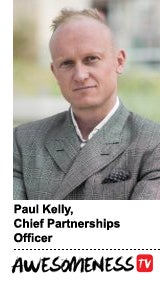
Except it’s not, according to Paul Kelly, AwesomenessTV’s chief partnerships officer.
AwesomenessTV has amassed 160 million total subscribers and now boasts nearly a billion monthly video views across platforms. A network of creators helps support its shows, but the company is also a media brand and production company in its own right, said Kelly.
As such, AwesomenessTV is building clout with the video services like Netflix, Verizon’s mobile video service, Go90, and Hulu. Hulu recently acquired exclusive streaming rights to Awesomeness’ 10-part original horror series, “Freakish.”
“The fragmentation of consumer platforms has helped fuel and power our own business,” Kelly said.
Similar to other early MCNs such as Maker Studios, which sold for $500 million to Disney in 2014, AwesomenessTV has had several backers.
Parent DreamWorks sold a 25% stake in the video network to Hearst in 2014, followed by a $159 million investment from Verizon – also for 25% ownership – in early April. Then, in late April, Comcast-owned NBCUniversal acquired DreamWorks in a deal valued at $3.8 billion.
Kelly spoke with AdExchanger about Awesomeness’ strategy and future direction for advertisers amid its new investments.
AdExchanger: What did NBCU-Comcast see in AwesomenessTV?
PAUL KELLY: Comcast is a large media company which bears some similarities to Viacom, so one could surmise they bring with them obvious scale and a linear distribution platform. What Comcast or Verizon saw in us wasn’t an MCN, but more of an IP-delivered television network.

Whereas an MCN is more of a platform that provides services to creators, we’ve created premium formats we’ve been able to develop through traditional skill sets like expert storytelling and production. We’ve coupled that with, of course, the icon and influencer, which is the celebrity of the new generation.
We’ve essentially brought Hollywood and YouTube together.
How do you work with brands?
One clear example is something we’re shooting right now, the third season of “Royal Crush,” which is a scripted series franchise we’ve developed exclusively with Royal Caribbean. The finale generated 2.9 million organic views and that was about 300,000 more than “Pretty Little Liars.” The first two seasons have garnered 43 million views in aggregate. Having the stars of those series be passionate creators with audiences in their own right, and bringing that to the kind of promotion and marketing machine around the series, naturally confers a lot of value for the advertiser.
A different media company promoting a show with traditional talent might have to call up a company that provides influencer marketing services, but we partner and build relationships with creators that are already acting or musical talents.
Do you also have an agency?
We actually don’t make a distinction between what content we create with brands and what we don’t. That’s a very deliberate move, and particularly with our partnerships and sales team. It’s of critical importance that no production or creative people report through the partnerships or sales organization. “Royal Crush” isn’t branded entertainment for us; it’s one of our highest-rated shows. All of our output at Awesomeness goes through the same process. We don’t leverage a studio. We are a studio. Our success hinges on – are you a brand that can ensure trust and relevance through a new piece of IP?
How are Instagram and Snapchat changing your content output?
Going back just a couple of years, for an outfit like ours or anyone producing a long-form movie, what might be programmed on Snapchat or Instagram may just have been considered promotional, or that’s the way it was executed. We’re all adjusting to the fact that those channels require programming. We’re creating a model that creates content on behalf of brands. It’s time to move beyond a traditional campaign planning cycle to a steady drumbeat of compelling content. It means we can’t look at those platforms as promotional platforms, but as sophisticated programming environments in their own right. That’s a creative challenge, and of course it’s been an attribution and measurement challenge.
What happens from a monetization standpoint?
We’ll see more platform-intentional creative being built and served within relevant ad formats, so that the user experience is better. That’s why there’s a reticence with the social platforms and ads, and therefore measurement, because they’re nervous about the adverse effect it could have on their ability to continue to grow their community. We saw this with Twitter, where they reduced the ads shown on their top celebrities’ platforms and Snapchat has obviously exercised clear restraint around the advertising they’ve allowed and what criteria should look like for RTB.
How are you working with Verizon and Go90 right now?
Go90 [Verizon and AOL] manage the ad sales, but of course we talk to each other and identify synergies where we can build better solutions for advertisers. Verizon and AOL have data services that we could deploy in partnership with them or technology we could license from them as we grow our ads-based business.
We’re LA-based with a very small team in New York. A big priority for us is to go into the large agency and help them with their existing business and to win new business. Agencies know they need to diversify between 30s and 15s, and are also beginning to acknowledge millennials are not so young anymore, and they need to begin to program for that new audience.
This interview is edited for clarity and length.







