 Cross-device data company Crosswise wants to broaden its horizons.
The Tel Aviv-based startup, which announced $3 million in Series A funding on Tuesday, will use most of it on sales, marketing and breaking into new markets beyond the US and UK, with China and Western Europe at the top of its list.
The round, which brings Crosswise’s total funding to $5 million, was led by Nielsen-backed private equity fund Pereg Ventures, with participation from ZhenFund, Emerge, Giza Venture Capital, OurCrowd and Horizons Ventures. Crosswise raised $2 million in seed funding in January 2014.
Although $3 million is a relatively modest sum when compared to the competition – Tapad and Drawbridge, both founded in 2010, have collected $33.8 million and $20.5 million thus far, respectively – Crosswise is a far newer addition to the cross-device scene.
Founded in 2013, the company, which makes its money on data licensing rather than selling media, only opened its doors for business toward the end of last year.
That’s why, rather than agencies and brands, Crosswise’s client list includes DSPs and data companies, such as Neustar, The Trade Desk, Undertone, Turn, RadiumOne, Marin Software, Eyeview and Digilant.
Nielsen has a roughly $10 million minority stake in Crosswise’s lead investor Pereg, which lends a certain reflected glow of credibility in the cross-device space, where more established players have used Nielsen numbers as a tool in a game of one-upmanship.

Both Tapad and Drawbridge commissioned separate studies from Nielsen this year to verify how accurately they can detect a relationship between two or more devices, with Tapad coming in at 91.2% accurate and Drawbridge at 97.3%.
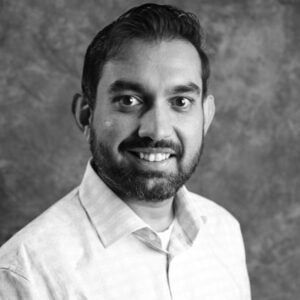
Although Crosswise CEO and co-founder Steve Glantz is pleased to have the Nielsen connection via Pereg, he’s a bit skeptical of the accuracy numbers being bandied about by its rivals.
“Everyone wants accuracy numbers, but the nature of the problem doesn’t even lend itself to one number,” Glantz said. “It’s always a trade-off between scale and accuracy.”
And for that, Crosswise has a formula. It takes Crosswise roughly 60 days to get up and running in a new country, Glantz said.
It’s a two-step process. The first step involves developing partnerships with regional players for access to a deterministic truth set. From there, it’s a matter of collecting and feeding observational data into the Crosswise algorithm and looking for patterns.
Crosswise runs independent models for every new market. It even ran a separate machine-learning model for each US state when it entered the country in 2014.
“We don’t have someone whose job it is to sit down and think about how people in New York behave differently from people in Texas, but we are always looking for signals about what correlates one device to another and that may be different in different states and certainly in different countries,” Glantz said.
Crosswise’s bread and butter is data, not media, so once the models are trained the operation pretty much runs itself with just a few people on the ground, Glantz said.
It’s a model Glantz believes should translate fairly smoothly to countries like Germany and France, Crosswise’s top two European targets.
China, however, is a different beast altogether. Among the many challenges: the need to build local relationships – but not always with whom you might think.
Partnerships with data juggernauts like Baidu or Alimama, Alibaba’s data and marketing services arm, might make sense, but so could potential partnerships with “companies that don’t want to see Alibaba and its login account data dominate,” Glantz said.
Glantz and team will look to one of Crosswise’s new investors, Beijing-based ZhenFund, for advice on which hands need shaking.
Crosswise plans to enter Germany and France this year, with China on the docket for early 2016.
Crosswise has 18 employees, 14 are whom are in technical and engineering roles. Glantz wants to grow the company’s employee headcount and diversity with an infusion of sales and marketing talent. A New York office is on tap, with plans to open a field office in each new country the company enters.