 “Marketer’s Note” is a weekly column informing marketers about the rapidly evolving, digital marketing technology ecosystem. It is written by Joanna O’Connell, Director of Research, AdExchanger Research.
I read the recent news about Yahoo!’s opening up guaranteed inventory to Demand-Side Platforms (DSPs), including MediaMath, Doubleclick Bid Manager and The Trade Desk, with enormous interest, but perhaps for a different reason than you’d think.
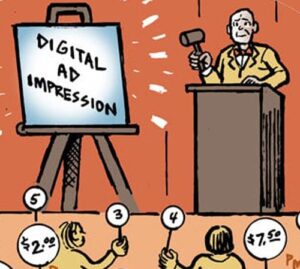
There’s the obvious reason: it’s a big step toward a more scaled programmatic reality. It means programmatic buyers can instantly access more quality inventory. It likely means they can now transact on parameters that typically only came through traditional sales transactions (read: excel-based insertion orders). And it adds further weight to AOL’s recent programmatic upfront song and dance in demonstrating the portals’ commitment to programmatic. It’s interesting for all these reasons (though, I find it noteworthy that AOL chose to make its programmatic guaranteed available only through its own buying platform, where Yahoo! is taking an open ecosystem approach).
But for my part, it’s the DSPs’ participation in this that makes this news really interesting. I’ve been watching the leading DSPs’ efforts to move “upstream” from classic exchange-based bid management tools to media buying platforms for a while now. And this deal, giving MediaMath and the like direct access to guaranteed inventory from one of the largest publishers in the world, is a big step toward their desired future. Just a few short years ago, DSPs were viewed simply as the place for managing auction-based RTB; then it was universal tracking on both DSP-managed and non-managed inventory for more global reporting and better frequency management; then came the rise of Deal IDs for direct programmatic buys. Now, it’s a direct line into guaranteed inventory on one of the largest supply sources in the world.

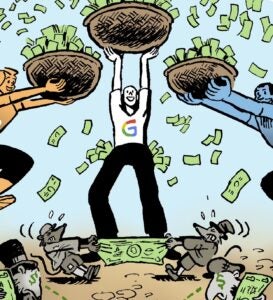
Certainly, Google came to the conclusion long ago that ad serving is just one piece, and not a very glamorous, or strategic, one, of the ad tech stack – they’ve since wrapped around it most of the other pieces, making the whole proposition that much more attractive, and sticky. But if you’re a buy side ad server like Atlas (sorry Facebook, but has anyone heard anything at all about what’s happening with Atlas since it became a part of the social media giant?), MediaPlex or MediaMind, you have to be wondering, how much longer will my ad server’s entrenchment outweigh the value marketers see in having an ad server that’s at the core of their next gen media decisioning platform (and by the way, paid for as part of the platform fees)?
I know we are a long way from the DSPs managing all the media flowing through the leading ad servers today, and that unraveling an ad server relationship is no easy feat when these systems are hooked into everything from creative to billing. But in light of announcements such as Yahoo!’s, I for one have my eye on this.
Thoughts, questions – send them my way!
Joanna
Follow Joanna O’Connell (@joannaoconnell ) and AdExchanger (@adexchanger) on Twitter.