 AppNexus laid off 150 of its 1,125 employees on Thursday and Friday, a 13% reduction of its workforce.
Internally, the company is telling employees the cuts are part of a reorg that will unify its buy-side and sell-side product groups, which have operated separately until now with distinct engineering, sales and service teams.
The company’s expected IPO, which could come as early as Q1 2017, might also factor in, as any cost reduction will make AppNexus’ balance sheet look stronger.
Investors look at factors like revenue per employee when evaluating companies. The Trade Desk, for example, employed 387 people and posted $113 million in 2015 revenue when it filed its S1, averaging nearly $300,000 per employee.
AppNexus spokesperson Josh Zeitz declined to comment on plans for a public offering, consistent with Securities and Exchange Commission restrictions on companies planning IPOs.
Another possibility: Could the layoffs reflect a weakening business at AppNexus?
“The actual business has been very strong,” Zeitz said, citing a healthy client roster and recent wins like News Corp., which signed a master service agreement and invested in AppNexus in September.
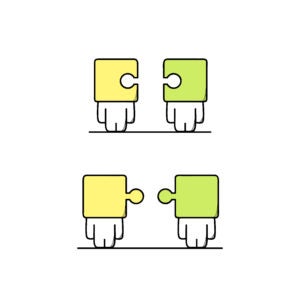
AppNexus explained the reorganization as a case of two becoming one – again.

Two years ago, the company divided into an “Advertiser Technology Group” and a “Publisher Technology Group,” with separate account management, engineering, product and service teams.
The separation came as AppNexus made big investments in the publisher side of its business. In October 2014, it purchased publisher ad server Open AdStream, followed by yield management tool Yieldex six months later.
AppNexus said the publisher side of its business is performing strongly, but the imperative to build holistic, compatible technologies means the two product groups should no longer function separately.
Header-bidding technology, for example, focuses on the sell side, but buyers need their own header strategy. Similarly, viewability measurement begs for consistency between buy-side and sell-side technology.
Plus, many AppNexus clients use both sides of the business. Wayfair, for example, both buys and sells advertising through AppNexus, and other big clients like Yahoo Japan, Figaro and News Corp. can do the same, according to AppNexus.
So AppNexus decided to bring the two sides of the business back together.
Although all teams will be affected, sales and account management are bearing the brunt of the layoffs. Layoffs will be concentrated on the East Coast of the United States.
AppNexus said that the reorg wasn’t in response to negative feedback from clients. “We don’t think most customers will notice a difference,” Zeitz said.
Update: This article has been changed to reflect an updated number of layoffs.