

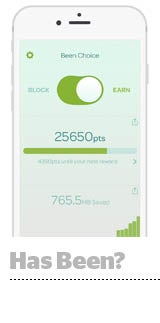
 David Yoon is having an interesting week.
It started out on Oct. 6 when Apple’s App Store gave its blessing to Been Choice, the ad-blocking app he developed along with his co-founder and CTO Sang Shin.
The mini–media frenzy that ensued was immediate because Been Choice said it could do something that other content blockers like Crystal, Purify and Blockr don’t – namely, blocking ads in mobile apps, including native mobile apps like Facebook and Pinterest. Even Apple’s own News application wasn’t immune.
Been Choice claimed to accomplish this by combining a Safari content blocker with a VPN (virtual private network) service in order to filter out ad traffic and block trackers using deep packet inspection.
The app was downloaded more than 10,000 times in less than 36 hours before Apple pulled the plug on Oct. 8, citing privacy concerns around deep packet inspection and Been Choice’s use of root certificates, which can, in theory, be used to monitor everything users do on their phones.
Yoon was baffled by the turn of events, considering that Apple initially approved the app with no problem and that he was more than happy to share details about how the app worked when interviewed by the press.
According to Yoon, Been Choice was using the root certificate to unpack the data stream for the sole purpose of removing ads from five apps: Facebook, Yahoo, Yahoo Finance, Google and Pinterest. In light of Apple’s new requirement around end-to-end encryption for all the apps in the App Store, Yoon and his team removed the root certificate capability and submitted the app again for reapproval.
Although Yoon said he tried to ask Apple for explicit guidance around blocking ads in Apple News – Been Choice doesn’t need to use a root certificate to filter iAd traffic – he got no specific answers. If Apple gives the rejiggered app the go-ahead, it still includes the ability to block ads in Apple’s native News apps.
“We want to provide users with choice under whatever the guidelines are,” Yoon said. “It’s Apple’s platform, and if they decide this is safer, our response is, ‘Absolutely, we agree. Let’s do what we can to get the app back up.’”
AdExchanger caught up with Yoon as he awaited Apple’s verdict.

 AdExchanger: What was the crux of the misunderstanding with Apple?
DAVID YOON: I wouldn’t say that there was a misunderstanding with Apple. If there was any misunderstanding, it was our misunderstanding that Apple wouldn’t change the requirements.
There are two components to this: blocking apps in apps and using a root cert in the VPN. Both of those things are really clear as soon as you download the app. But we went ahead and took out the pieces of technology that Apple newly objected to. At the end of the day, we agree that it’s safer, but we don’t think it was unsafe in the beginning. It was only on Thursday night that Apple deemed it unsafe. Safety can be a spectrum.
It seems like Been Choice was a victim of all the recent hype around ad blocking.
Obviously, we wouldn’t have gotten as much press if it weren’t for the hype around ad blocking, but the ad-blocking message was helpful to us because it helped us publicize our broader message around choice and data ownership for users. We think that choice is the answer – because it’s only going to get more difficult to extract privacy and ownership of your identity as data collection becomes more voluminous.
What’s the primary purpose of Been Choice?
We don’t care about the block side so much. We care about what users can do when they give consent – but they can only do that when they have the option not to give consent. If consent is implied, then there is no consent. Our goal is to convince users to give the companies they trust consent and to get something in return for that. That will also allow advertisers to become more efficient.
People say they care about privacy, but they don’t always show it with their actions, possibly because it’s difficult to opt-out or because they don’t like the value exchange. A startup called Enliken, for example, tried to give users more control over their data, but there wasn’t enough consumer interest, and the company folded early last year.
The idea around giving people more control over their data dates back to before Enliken. In the early 2000s, AttentionTrust.org also asked, “Who owns user data? Who has a right to this data and who should have the right? Is there a way for users to get paid for their attention without advertisers and publishers having to use a surreptitious third-party tracker?”
As we move more and more into mobile, privacy becomes a different animal, and people are going to become much more aware. The issue is becoming more acute as the device you carry around in your pocket all day becomes a font of behavioral data, and that’s only going to increase.
Is ad blocking a moral issue, a legal issue or neither?
We think that no one can collect or produce better data than you when you actively say, ‘This is the type of stuff I want to see.’ If we gives users a choice between no ads and ads that use their preferences to show the right messages – that is advertising at its best.
Why bring moral arguments into this unless it really is violating some sort of moral right beyond the economic and business rights of corporations? There are business rights that are being unnecessarily trampled on – but, at the same time, consent is being forced because people don’t want to read reams and reams of legalese.
Commercial organizations have an understandable need to find out who their best customers are and to show them messaging in a targeted fashion so that they can sell their services and offer their products. People have data and companies have services, and it’s good to have an information exchange between them. But right now, that relationship is broken.
What do you think of ad blockers accepting payments to show Acceptable Ads?
That’s not a model for us. It just creates another intermediary. The Acceptable Ads approach is not something we think we can contribute to. What we’re saying is that users should get the option to choose. It’s a way to mediate their direct relationship with advertisers.
Now it’s up to Apple. Where do you go from here?
This was perhaps a blessing in disguise because we want to work within clearly defined requirements. But it’s only a blessing in disguise if Apple lets us back in. We weren’t the only VPN-based ad blocker in the App Store, so we are a little flabbergasted.
But hopefully, the idea is out there that, rather than breaking through ad-blocking technology, publishers and advertisers can just ask for consent. It’s as simple as that, and it gives some economic share to the user. It also gives the user a clear choice to opt out.
It’s not that technically complicated. You just need a switch. If that idea gets out, then maybe this was worth it and we walk away. But we would love to be the ones to help provide that choice.






