

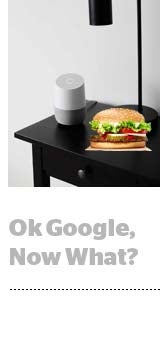
Burger King’s stunt to activate Google’s Home device with a 15-second TV spot is the first deliberate attempt by a brand to tie paid media with voice-activated search, raising questions about how brands should approach advertising on smart home devices.
On Wednesday, the quick-serve restaurant ran a commercial in which an employee asks, “Okay, Google, what’s a Whopper?” causing Google Home devices to route to Wikipedia’s definition of the signature burger.
Google programmed its devices to stop responding within hours of the ad’s release, but Burger King retaliated with a workaround, triggering Home devices once again when the ad aired Wednesday night on “The Tonight Show” and “Jimmy Kimmel Live!”
The incident, however, shows that smart home device manufacturers need to develop best practices around advertising, said Scott Linzer, VP of owned media at iCrossing. For example, they could program their devices to ignore triggers from TV or video content and penalize advertisers who don’t comply.
“There have been no guidelines about how these opportunities should be governed,” Linzer said. “It’s incumbent on platforms to put in place best practices with their advertising partners, so that it’s a seamless consumer journey as opposed to a stunt.”

Burger King, known for offbeat marketing campaigns, like its black burger bun for Halloween in 2015, saw a cheeky opportunity to capitalize off voice-activated triggers, and it succeeded by generating tons of earned media around the commercial, including a segment on the “Today Show” Thursday morning.
But to prevent advertisers from hijacking their devices, platforms must develop best practices that consider consumer sentiment, protect their privacy and ensure home security.
Linzer, for example, wonders what might happen if his eight-year-old child watches a YouTube video that says something like, “Okay, Google, shut off the lights” or “Okay, Google, turn the heat to 90 degrees.”
“That can cause some challenges in the connected house, which shows that these devices can be hijacked to a certain level,” he said.
More than half of consumers are okay with receiving advertisements on internet of things devices as long as there’s a value exchange, like a coupon or access to exclusive content, according to a study by the Interactive Advertising Bureau. But the Burger King ad manipulated Google Home in a way that its customers didn’t expect or invite. Voice-activated devices are still nascent, and there are multiple instances of their accidental activation through TV-broadcasted content.
In January, a news story inadvertently triggered viewers’ Amazon Echoes to order a dollhouse. Google Home’s Super Bowl ad caused devices to go haywire during the game, responding to lines like “Okay, Google, turn off the lights,” and “Okay, Google, what sound does a whale make?”
Google itself also needs to figure out how to position advertising on Home, as it faced backlash in March when its Home device, while reading the weather forecast and calendar events, sneaked in an ad for the release of Disney’s “Beauty and the Beast.” (Google claimed this wasn’t an ad, but it was certainly a message promoting a product.)
Finally, advertisers need to figure out how they want consumers to react to ads placed on automated home devices. After Burger King ran its ad, consumers changed Wikipedia’s Whopper definition to “the worst hamburger product ever made,” including cyanide as an ingredient, according to The Independent.
Google did not reply to requests for comment.









