

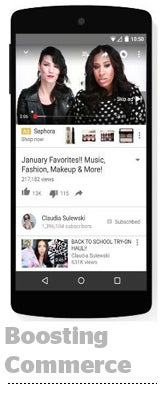
 Google debuted a number of shopping and travel ad products on Tuesday, including dynamic price alerts for flights based on Google search queries.
But first, YouTube.
When Google rolled out TrueView for shopping last spring on YouTube, it claimed the units generated three times the revenue of standard TrueView video ads – and the volume of advertisers using them has shot up 50% since January.
But the products weren’t always relevant to the videos they were served against, so Google rolled out a feature called Product Picker, which lets advertisers prioritize TrueView cards based on specific items, throwing less caution to the wind of Google’s algorithm.
“Today, the way we make connections between video and products in those videos is largely machine-driven, but [we heard from] retailers that they wanted to choose the products that were most relevant,” Jonathan Alferness, VP of shopping and travel products for Google, told reporters at a news event on Tuesday.
Google also released other updates meant to improve recommendations and surface more relevant listings around shopping and travel. For instance, interactive companion banners run adjacent to TrueView video ads and offer information around featured products.
Google’s commerce updates aren’t limited to YouTube. It also rolled out something called Showcase Shopping ads, aimed at improving product discovery in Google searches.

Google found 40% of product searches are based on broad parameters – such as “women’s athletic apparel.” For these less defined searches, Google typically would surface generic product items like yoga pants. But retailers wanted to give consumers a way to drill down to more specific products.
So Showcase Shopping ads, still in beta, let consumers navigate to a landing page and scroll through a limited catalog of curated products. Advertisers pay for click-throughs and conversions on their retail site.
Google is also testing the way Shopping ads (formerly Product Listing ads) appear after the initial search.
Google uses a carousel for merchants with three or more product images and allows those merchants to add information around store locations and local discounts and offers.
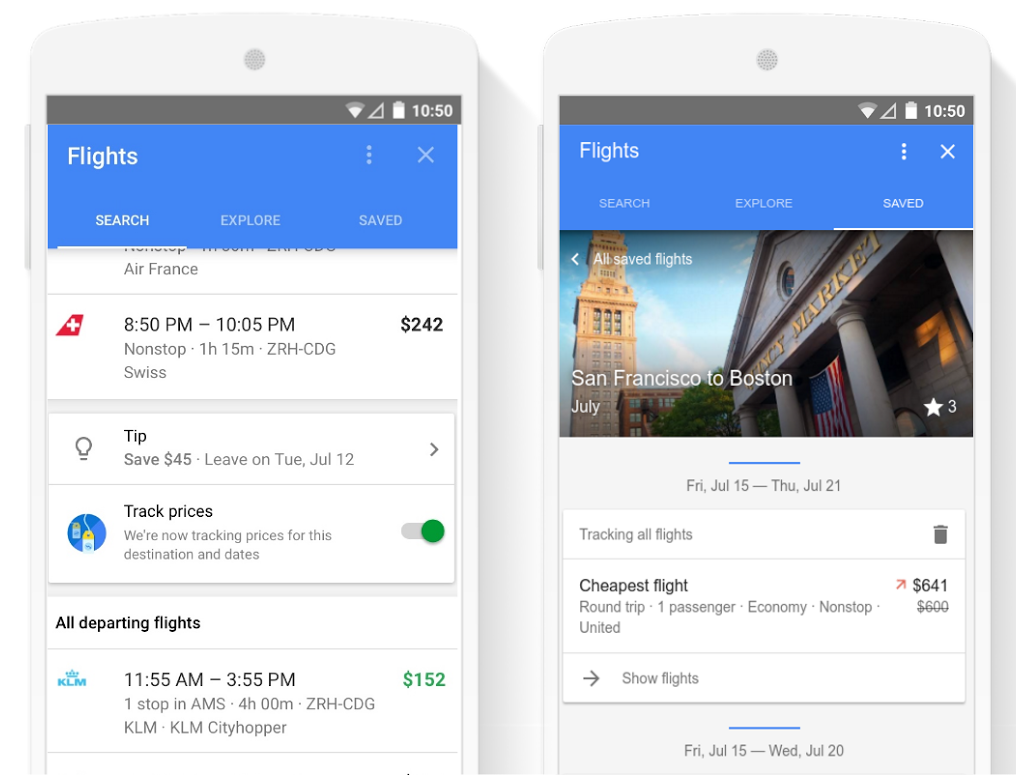 For the travel vertical, Google is rolling out price alerts.
Consumers can track pricing info on Google Flights when they opt in and will either receive email alerts with listings or Google Now notifications when they’re using Google’s native mobile search on Android devices.
This feature basically retargets consumers who search for flights but don’t book by bringing them back in when there are price reductions.
Google also released a similar feature for lodging. Hotel Deals automatically flags hotels that reduce their prices, and that match consumers’ search criteria.
Lodging and accommodation providers pay when a consumer uses Google to book, according to Richard Holden, VP of product management for Google’s travel vertical. In other words, search listings (and price alerts) are organic.
“We don’t own the transaction,” Holden said. “We are the pass-through. This is making it easier for [a consumer] who may have their credentials stored already in their Google account” to transact.







