

Being proficient at programmatic means nothing if an advertiser can’t nail the ad-delivery basics, such as proper frequency caps.
But the reality is that advertisers rely on myriad solutions, including DSPs, DMPs and ad servers, to execute a single campaign, and the lack of consistency in KPIs can hurt frequency management – the main culprit behind irrelevant or oversaturated ad experiences.
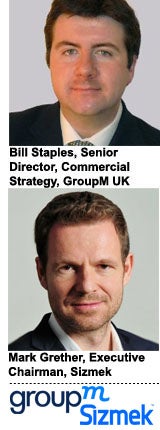
“One challenge we see is clients sometimes use multiple DSPs or have a bunch of disparate I/O buys hitting the market, so it’s not uncommon for DSPs to go head to head with one another, which can add delays or extra workflow,” said Bill Staples, senior director of commercial strategy for GroupM in the UK.
GroupM, which already uses Sizmek for general ad serving, rich media and dynamic creative optimization, is evaluating its new cross-DSP frequency capping solution that aims to improve frequency capping across multiple DSPs.
“We see an opportunity to do what we call universal frequency management, which addresses, can you accurately count and manage pacing for your campaign?” Staples said. “And, if one feature is not working particularly well, does that mean you end your campaign or you swap it out and try different creative?”
One barrier to effective frequency management is the disconnect that can occur between disparate systems.
For instance, while DSPs connect to supply sources, deduplicate impressions and ensure impression volumes are properly set, sometimes those pre-bid capabilities happen in isolation from campaign analytics or post-bid reporting.

However, insights into viewability and engagement, such as time spent, percent of video completion or conversion rate, sometimes sit with the ad server or third-party verification vendor and don’t influence campaign planning as much as they should.
“The biggest challenge is the lack of consistency,” said Mark Grether, executive chairman of Sizmek. “Each player has its own KPI definitions, which leads to inconsistencies in post-campaign analytics.”
So Sizmek sees an opportunity to reduce fragmentation by aggregating pre- and post-bid data more centrally given its position as an independent ad server.
Like most agencies, GroupM uses its owned data and tech stack to help alleviate some of these integration issues.
Similar to Havas, which built its own “meta” DSP called Affiperf, GroupM has Proteus, a meta DSP whose tech it acquired through its purchase of The Exchange Lab.
While the purpose of a meta DSP is to simplify some of the rules and logic for different DSP integrations and ultimately allow buyers to port data more seamlessly across multiple DSPs, they, too, can lack insight into campaign performance across a wider variety of tools.
The goal is to integrate at the server level across all DSPs to meet advertiser demand.
GroupM sees its data and tech infrastructure, mPlatform, as well as Proteus, as viable integration points for cross-DSP frequency capping.
“We’re actively working on shrinking the gap between [planning and reporting], which can lead to data integration challenges,” Staples said. “You really run into a data integration engineering issue when some reporting tools run overnight, some are batch-file jobs and some are API-based.”
And the faster its reporting analytics, the more effective its pre-bid optimizations and message cadence will be.
“What we come back to time and again is frequency management and messaging is absolutely key to brand integrity,” Staples added.
Correction: An earlier version of this story named DSPs Sizmek is integrated with. While Sizmek works with most third-party DSPs, it is in talks to finalize integrations for its frequency capping solution.







