Here’s today’s AdExchanger.com news round-up… Want it by email? Sign up here.
Spam And Regs
Google submitted a proposal to the Federal Election Commission earlier this month for an idea to allow authorized political emails to go directly to Gmail inboxes without the risk of its filters putting the message into spam.
Google’s attorney said in the FEC meeting on Thursday that the proposal isn’t related to a recent bill by Republicans called the Political Bias in Algorithm Sorting Emails Act, which would punish Google and other inbox services with disparate filter rates on political messages. But … c’mon.
An academic study released in March found that conservative fundraising campaigns were filtered more often, sparking interest in the subject among lawmakers. But other factors could be at play, including the content in the emails themselves – like a reliance on violent imagery, for example. User submissions to the FEC regarding Google’s proposal overwhelmingly call for continued, if not increased, filtering of spam political messages, The Register reports.
Those messages to Google and the FEC were seemingly channeled straight to spam, however.
The Gmail proposal was approved by the FEC late last week and will go into testing during this year’s election.

Location Mavens
The Federal Trade Commission is coming out of its corner now that it has its fifth member, Alvaro Bedoya, on board.
“There’s a large, unregulated market for geolocation data. Now, a lack of location privacy threatens people making deeply private choices about their bodies and families,” Bedoya said in a statement to the National Association of Attorneys General last week, clearly alluding to the recent overturn of Roe v. Wade.
The FTC has been stuck in a monthslong stalemate until May, when Bedoya was sworn in just as concerns (and violations) of sensitive data protection started ramping up – specifically, health and location data.
State laws are following suit by regulating “dark patterns,” any online interface that cons data from users with manipulative language. (Connecticut’s data privacy law, which also just passed in May, expressly prohibits the practice.)
Whether it’s the state AG or the FTC, publishers know regulators are scrutinizing them – heavily.
Google, for one, vowed last month to delete any location data tied to any “sensitive medical facilities,” including abortion clinics. But it still got hit with sanctions Friday for keeping device location trackers turned on by default, TechCrunch reports.
TikTok On The Clock
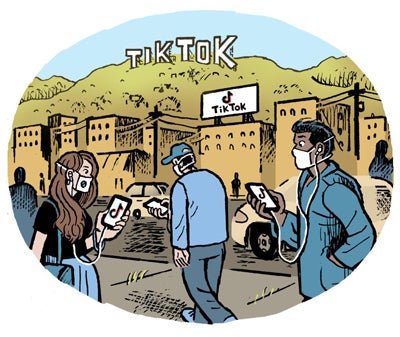
Agencies have always been fast followers of trendy platforms like Instagram, Snapchat and Pinterest. And now TikTok is no different.
But what is different is how TikTokers are becoming a part of the brand and agency world.
Greer Hiltabidle, a TikTok influencer, joined 360i earlier this year, and it was as if “the ‘working world’ was finally catching up to new ways of storytelling,” she tells Marketing Brew.
TikTok-specific content creation is becoming a lucrative asset for branding and even paid media agencies. It’s a specific style and kind of production that’s not easily captured by reusing something from another channel or a commercial.
It’s particularly compelling because an agency gig allows content creators to continue working on TikTok brand deals on the side. It’s just staying sharp, after all.
Unlike other channels, which are all about the paid media, TikTok is an organic beast. Brands and even general businesses like to invest in content because a post can take off with zero or minimal spend. There’s nowhere else that dynamic really happens.
But Wait, There’s More!
Clothing subscriptions like Stitch Fix were once hot – but now might be the victims of “box fatigue.” [CNBC]
Fake money loan apps in Mexico use doctored, X-rated photos and violent messages to extort thousands. [Thomson Reuters]
Cable news has a much bigger effect on America’s polarization than social media, study finds. [Nieman Labs]
What’s “Interoperable Private Attribution”? [Twitter]
How publishers drive traffic with rewards-based game ads. [Marketing Brew]
Microsoft’s LinkedIn lays off an entire team. [Adweek]
You’re Hired!
GroupM CMO Kelly named US CEO of EssenceMediacom. [MediaPost]