 In the summer leading up to the 2016 US presidential election, liberal political website ThinkProgress moved from WordPress to Medium. It abandoned its ad networks and programmatic banner ads and switched to Medium’s sponsored posts.
ThinkProgress made the change because it saw revenue from banner ads flattening, and it didn’t want to compromise the user experience to bring the revenue back up.
“I think that the ad network model is insufficient to support quality journalism,” said Judd Legum, editor-in-chief of ThinkProgress, which he founded in 2005. “The rates are too low, and there is constant downward pressure. And especially if you are a midsize publisher or lower, it’s harder to get major brands interested in just buying you, so [direct sales] is closed off to you.”
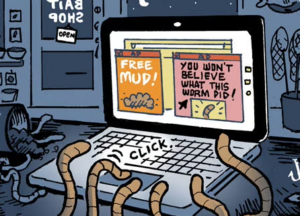
ThinkProgress could have added higher-value banner ad units to make up the difference but didn’t like how they affect user experience. And it already disliked how ads slowed down the page load and its inability to completely filter out low-quality ads.
“You can always add more units or make your units more annoying or use a lot of pre-roll video or interstitials [to boost revenue],” Legum said. “We really didn’t want to do that because we are a mission-driven publication.”
The site’s sister organization is the liberal think tank, the Center for American Progress.
Shifting to Medium also meant ThinkProgress didn’t have to use its limited development resources to optimize for mobile or make its pages compatible with Google AMP or Facebook Instant Articles.
“We found there were a lot of web standards, and it was hard for us to adapt to that,” Legum acknowledged.
ThinkProgress has been pleased with the transition to Medium.
After a blip in search and social results due to the transition, traffic bounced back and then some. Monthly traffic in November was the highest in its 11-year history, by more than 30%.
ThinkProgress expects revenue will be the same or better compared to when it relied on ad networks and programmatic. Legum called the results “favorable” so far.

“We hope that as Medium builds out its advertising model, which is nascent, we end up in a much better place,” he said.
Business operations manager Jonathon Padron, who used to spend his time optimizing the ad stack and reading header-bidding documentation, shifted to selling sponsored posts through Medium. Credo Mobile, a carrier that donates money to social causes, and Aspiration Partners, which bills itself as “a financial firm with a conscience,” have run posts.
“It’s nice to have a conversation where you don’t feel like a commodity to the person on the other side,” Padron said. “In the lead-in to the conversation, you are talking about audience, brand equity and identity, and how that aligns with the advertiser, versus click-through rates and CPMs.”
Besides direct sales, ThinkProgress plans to experiment with Medium’s membership model next year. And it’s selling “Resist” T-shirts and allowing users to donate to its Trump Investigative Fund.
“We want to try to diversify the revenue streams and not have too many eggs in one basket,” Legum said.
ThinkProgress’ small staff and focus on quality journalism and user experience made it a strong fit for Medium, which aims to improve the user experience while helping sites monetize.
But Legum sees more midsize publishers approaching the same crossroads.
“There is always someone who can get someone to look at a website cheaper than you can,” Legum said. “We were looking for a way out, to grow our revenue and expand, but not create a bad experience for readers. You are going to see a lot of midsize publishers and smaller try to get out of that environment.”