 Here’s today’s AdExchanger.com news round-up… Want it by email? Sign-up here.
Calling Out Fraud Enablers… Or Not
Trustworthy Accountability Group (TAG), a joint anti-fraud venture created by the IAB, the 4As and the ANA, has yet to put any fraud offenders in the “penalty box,” as promised in November. According to a study by the ANA and White Ops, the industry stands to lose $6.3 billion to fraud this year if continued unfettered. But according to TAG CEO Linda Woolley, it’s too soon to tell who the offenders are. “In six months we’ll be able to identify pretty clearly who is doing what and whether they’re doing what they say they’re doing,” Woolley told Ad Age. In the meantime, TAG has launched an anti-piracy initiative and is building a registration system to bolster transparency between participating firms.

Recommending Rodale
Rodale and Outbrain struck a multiyear deal on Monday as part of a mobile-centric redesign of Prevention.com. The deal will also span Men’s Health, Women’s Health, Runner’s World and Bicycling. “As we pursue an aggressive digital strategy, launching new products and producing more content across our brands, Outbrain’s … products will enable us to provide an increasingly personalized experience to our users,” said Beth Buehler, Rodale SVP of digital operations. Across its owned properties, Rodale hosts a combined 50 million-plus monthly uniques. Read the release. As The Wall Street Journal points out, Rodale will focus on driving traffic to its own pages and steer clear of referring users to other sites.
2015: Media Spend Gets Spendier
Big brands will increase their overall media budgets in 2015 and spend more on digital, according to JP Morgan’s analysis. About 75% of the brands surveyed will boost their marketing budgets in the automotive, beverages, tech, software, health care and telecommunications sectors. “Native ads and video on smartphones should attract the most new online dollars, with Facebook, Google, and ultimately Twitter as key beneficiaries,” reads the report. “Twitter, whose advertising originated more from brand marketers than DR advertisers, will likely become an increasingly important form of engagement for brands given the ability to communicate with consumers in real time and now to utilize video more effectively on the platform.” Read on via MediaPost.
Superfish Cont.
Over the weekend, Facebook security researcher Matt Richard reported that the HTTPS-breaking tech uncovered in Lenovo’s adware fiasco can be linked to a dozen more apps. The malicious code used in the Superfish ad-injecting software preinstalled on a number of Lenovo computers originates from Israeli firm Komodia, and could pose additional security breaches, according to Richard. The presence of Komodia’s tech means attackers could “potentially obtain that CA file and perform ‘man-in-the-middle’ attacks on untrusted networks like public Wi-Fi, set up authentic-looking phishing pages, or sign software that makes people vulnerable to other malicious code as they browse the internet,” he writes. Read more.
Data Accuracy Doubts
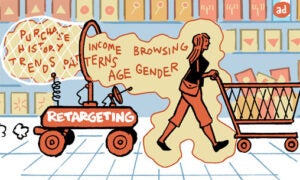
Marketers are questioning the accuracy of targeting data purchased from third-party providers, The Wall Street Journal reports. Targeting data is used more often for branded campaigns than for direct-response ones, according to Merkle’s Megan Pagliuca. That makes data tracking and verification more difficult. Varick Media President Paul Rostowski adds, “There are lots of disparities out there between providers. If you’re doubling your costs by adding in data, the performance has to be at least twice as good. Often the cost of the data won’t justify itself.” Still, marketers believe the quality of third-party data will improve over time as vendors add more data points to their segments.
Mobile Wallet Arms Race
Google Wallet payments will be preinstalled on Verizon, T-Mobile and AT&T Android devices beginning later this year, thanks to a deal inked by Google and Softcard Technology on Monday. In a blog post, Google said it will also acquire some unspecified tech and intellectual property from Softcard to improve its mobile wallet offering. Re/code reporter Jason Del Rey points out that, if successful, the move could help Google connect the dots between mobile payments and advertising potential. The deal, he writes, “could give Google data on brick-and-mortar transactions, which still comprise the vast majority of all commerce and could be used to better target advertising to consumers.” Read on.
You’re Hired!
- Vice Media-Owned i-D Poaches Ravi Amaratunga To Head Video Content – The Drum
- Amazon Hires Ex-ABC Marketer Mike Benson To Head Advertising for Original TV Series – Variety
But Wait! There’s More!
- Ad Sellers Not Equipped For Programmatic Fight: Adomik’s Shaevitz – Beet.TV
- Facebook’s Privacy Policy Breaches European Law, Report Finds – The Guardian
- Revmetrix Lands $2.2 Million Seed Round – Washington Business Journal
- Why Twitter Faves #NetNeutrality – Twitter Blogs
- Audioboom And Adlarge Launch “The Russell Brand Podcast” – press release
- Google Agrees To Spot Checks By Italian Privacy Regulators – WSJ
- Instagram Could Become As Valuable As Facebook – Seeking Alpha
- The Guardian To Prove Value Of Native Content To Appease ‘Nervous’ Advertisers – The Drum