 Here’s today’s AdExchanger.com news round-up… Want it by email? Sign up here.
First Price, So Nice
Next month, Rubicon Project will begin offering two flavors of first-price auctions, CTO Tom Kershaw shared in a blog post Monday. The exchange will select the winner of an auction on a first-price basis. From there, buyers will have two options. If the DSP bids a $7 CPM, for example, the buyer can choose to submit $7 to the final auction, where it would pay $7. Or, it could have Rubicon lower the bid to a price it still thinks will win – which could be anywhere below that $7 CPM mark. The latter product, which Rubicon is dubbing “Estimated Market Rate,” is designed to help DSPs and buyers who don’t optimize for first-price auctions compete in a first-price environment. More.
Transparency, Neat
Diageo is the latest CPG brand to announce it’s trimming digital ad partners who can’t comply with a strict set of media requirements. The spirits marketer will only pay for campaigns in cases with zero instances of ad fraud, when ads are 70% viewable as measured by Moat and when prices are transparent for each unit of inventory, says Chief Digital Officer Ben Sutherland, adding that media is one of the biggest line items for Diageo. “We have questions to answer to our investors and I think the Internet has some questions to answer about how we monetise impressions respectfully.” More at Videonet.

Breaking A Sweat
Companies with online businesses are shelling out big bucks to remain compliant under Europe’s General Data Protection Regulation set to take effect in May. Almost half of data compliance decision-makers at companies in the US, UK, France and Germany have set aside at least $1 million to meet privacy requirements, according to a Forrester survey. As companies hire new employees, pay legal fees and strengthen internal data governance programs, those costs will rise. “For the companies who rely on third-party data, there are real concerns about whether their current business model will continue to work,” Jessica Lee, a lawyer at Loeb & Loeb, tells AdAge. Tick, tock. More.
Tempest In A Teacup
Behind Amazon’s seemingly random deal-of-the-day offers is a ferocious competition to slash prices. The tea manufacturer Tea Forté was selected from some 2 million independent Amazon merchants for a Cyber Monday deal and rocketed to No. 4 in Amazon’s overall grocery rankings, up from No. 588 the day before, reports The Wall Street Journal. Tea Forté sacrificed 35% of revenue per unit on the deal. It’s a risky business for merchants. Amazon doesn’t give notice to featured manufacturers, so those that go all-in on price cuts also have to stock up on inventory – a tough blow if no windfall comes through. And even if a merchant wins a deal-of-the-day billing and sells out the product, it’s typically doing so at a loss with the expectation of earning loyal customers and making up the investment over years. If those sales turn out to be from one-off buyers, the biggest day in a seller’s history could also be its worst. More.
Stuck In Neutral
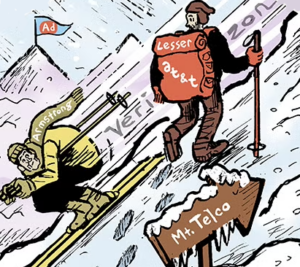
Nobody seems sure of the changes that could follow the expected repeal next week of US net neutrality regulations. In Europe, major mobile audience hubs are often packaged by telcos in consumer data deals. One case working its way through Swedish courts hinges on whether a carrier can offer unlimited access to Facebook, Instagram, Spotify and some blockbuster apps while excluding others. FCC Chairman Ajit Pai has already dismantled restrictions on this practice, known as “zero rating.” The US telco market is far more consolidated than in EU countries, where there have been few megamergers like Comcast-NBCU and Verizon-Oath. More.
But Wait, There’s More!
- Bloomberg’s Twitter News Network, TicToc, Goes Live Dec. 18 – Variety
- Audience Data: Where Marketers Are Investing Their Spend – eMarketer
- Podcast Advertising Charting A Course Similar To OTT – ExchangeWire
- Verizon To Pay NFL $2.25B For Five-Year Streaming Deal – Reuters
- Breaking Down The Privacy Concerns For Voice-Activated Speakers – Bloomberg
- Smart Only Presenting Bid Requests Containing Ads.txt-Compliant Inventory – release