

 Unilever’s open-door approach to data and technology are on display in the brand’s Foundry effort, a program that invites startups to pitch their wares and work on digital innovation with the consumer packaged-goods company.
Global Marketing SVP Marc Mathieu noted today’s data-obsessed marketing landscape has little to do with the French railway advertisements he remembers from his youth.
But the former VP of global brand marketing for Coca-Cola said that while technology has changed the vehicle for delivery, it doesn’t have to be considered in isolation from the creative message.
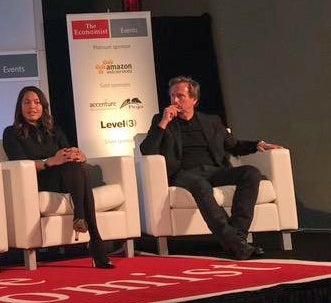
“More and more, I watch Uber and even more niche startups because they’re inventing new ways to build direct relationships with consumers and translating that into a loyalty that is incredibly strong,” Mathieu told AdExchanger following a panel discussion at The Economist’s Big ReThink conference Thursday in New York.
Mathieu spoke with AdExchanger about balancing the big idea while proving return on investment, the viewability imperative and the challenges of multiscreen planning.
AdExchanger: If “one-to-one” is Mecca for marketers, why is so much still allocated to the TV buy? Or are budgets moving away from TV?
MARC MATHIEU: It’s not that we consume less TV, it’s that we consume more things. The reality is, the time people spend with multiple screens is growing exponentially. And you may argue it’s not always a good thing, but the average number of devices per person in the US is high, and so the reality is if one of those devices is TV, there is naturally this divided attention because you have two other devices you interact with simultaneously.

That’s not accounted for in [traditional measurement] models, which is why we need to understand how they work holistically and not just individually.
Who will be responsible for budgeting for Roku? Is that TV or digital’s purview?
We’re trying to think in terms of multichannel planning as opposed to siloed approaches. We’re working hard to develop an understanding of how digital and multiscreen actually work together so we can integrate that into our channel planning and resource planning.
Unilever, among a handful of agencies and brands like GroupM and American Express, is a staunch supporter of a stricter viewability standard. Condé Nast has pledged to ensure 100% of ads placed are viewable, but is this scalable for publisher partners? And what’s driving this?
The more the share of digital becomes significant, the more sophisticated you become and the more you can understand what you’re paying for vs. what you’re actually getting. This is going to date me a little bit, but I remember going on tours to check the accuracy of a media buy on billboards when I was learning as an assistant brand manager.
I learned back then that buying media and knowing what you’re getting are two different things. The industry [has advanced in terms of measurement] and our share of media is so large that we need to [ensure] we get the proper value.
What’s the key performance indicator in Unilever’s marketing organization? How do you personally know you’ve moved the needle?
Marketing is still very much, on the one hand, growing the business and growing market share, but also doing it through the power of brands, so growing brand equity and driving successful innovations. More and more, we need to look at engagement metrics and build on that to develop longevity in those relationships.
 What keeps the SVP of marketing at Unilever up at night?
There is a changing model in how we create content. It’s not just creating content ourselves, but collaborating with people who want to create content for us and then share it. The paid, owned, earned model has changed what we do. And the way we use data to create content and bring those messages to people in a way that’s authentic, or relevant, has changed marketing.
What’s the associated challenge?
I’m a marketer and a passionate believer in brands, but the fact is that brands like Apple and Google are No. 1 and No. 2. There’s a reason for that. They understood that marketing is evolving from pushing messages at people on your own to pulling the brand into your life, whether it’s search, maps or email.
The brand becomes a solution that is extremely useful to you and your need at a certain moment in time. We want to understand how that model – which, of course, is fundamentally easier to do for technology brands – can be replicated or used to inform the way traditional consumer goods brands operate.
Every company needs to rethink itself as a technology company, because it’s changing the way you do business and the way you market. Data, technology, new ways of building our brands – that keeps me up at night.
What about the role of the agency in the planning process?
I think there’s a question of what you need to have internally in order to be authentic, relevant and develop your own marketing muscle.
You can choose to have people in agency networks that support the execution, but if you want to develop transparency and authenticity, I don’t think you can always externalize the things that are core to a person’s reason to believe in your company.
Can you describe an ad that was the perfect mix of data-informed and creative?
There was a British Airways ad at Piccadilly Circus called #LookUp, and on a huge billboard there is a video of a kid looking up and pointing to a plane. Data science tells you what plane [is flying overhead on the screen] as he points to it with his finger. This was a beautiful blend of creative and technology.
At Coke, it was the art and science of marketing. At Unilever, the magic and logic of marketing. I really believe in the blend of both and when you find a fusion, that’s when you can unlock something really powerful.









