

 Pirated content and ad fraud are like a nefarious version of peanut butter and jelly – but there’s not lot of awareness in the industry about their connection.
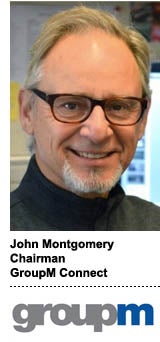
“The people who create pirate sites are the same ones who perpetrate clickbot fraud – they’re the ones who spread malware and create the armies of bots that generate most of the automated clicks in the business,” said John Montgomery, chairman of GroupM Connect, North America , and co-chair of the Trustworthy Accountability Group’s (TAG) antipiracy working group.
Which is why being worried about ad fraud without also being aware of the role piracy plays in its perpetration is like fretting over a flood in your apartment while neglecting to turn off the tap.
To that end, GroupM, which has not shied away from making its feelings about fraud and viewability known, has a new requirement for its media partners – get certified according to TAG’s antipiracy guidelines or work with someone who is.
To become a Digital Advertising Assurance Provider (DAAP) – that’s the new designation – vendors who provide antipiracy tools will have to undergo an audit by an independent third party to demonstrate that they can actually do what they claim, namely identify unsafe websites, determine the safety of ad placements and/or put the kibosh on payments to sites hosting pirated content.

Ernst & Young and Stroz Friedberg, who were named as the auditors working with TAG on this project, will charge vendors a fee for their auditing service.
Although TAG isn’t sharing which companies are going through the DAAP audit process until the end of the year, many of the same vendors who provide antifraud and viewability services also minister to the antipiracy side of the equation. It’s likely that players like DoubleVerify, Integral Ad Science, Moat and the other usual suspects are under audit. GroupM has said that it’ll start enforcing the requirement in Q1 2016.
The fight against ad-supported piracy, ad fraud and malware – what Montgomery called “the wicked web” – forms the trifecta of TAG’s remit.
“But there hasn’t been much awareness of the connection between those three things,” said Mike Zaneis, president and CEO of TAG, and EVP and general counsel at the Interactive Advertising Bureau. “When we first started TAG, people said to us, ‘You’ve got to solve fraud,’ but we recognized early on that all of these criminal acts are connected – piracy is just one link in a chain of criminal activity. It’s the seed that grows into ad fraud.”
It’s dirt cheap to buy a bunch of domains and populate them with stolen content from around the web to make the sites look legit. From there, fraudsters can create malware, using it to promulgate botnets that generate fake traffic. To most ad networks, the site seems like a well-trafficked site with lots of content. Why not serve ads there?
It’s an unvirtuous cycle that the Association of National Advertisers (ANA), in collaboration with White Ops, estimated would take advertisers for roughly $6.3 billion in 2015. Although pirate content sites only accounted for around $200 million in forfeited revenue last year, according to research conducted by Digital Citizens Alliance and MediaLink in May, they’re a wide open gateway to far more substantial losses.
 But the cost to brands cuts deeper than the bottom line – brand safety is at risk.
“There’s no brand in the world that wants their advertising to appear on a pirate site or wants to be seen as supporting piracy, even inadvertently,” Montgomery said. “A brand’s entire reputation is at stake – something that they’ve been nurturing for decades or, in some cases, centuries.”
Although the opacity of programmatic buying has in some way contributed to the problem, automation can also be the industry’s savior, said Zaneis.
“The complexities of the supply chain enabled criminals to infiltrate it, but it also creates an opportunity for us to leverage that sophistication in the fight against piracy,” said Zaneis, noting one popular methodology for combating fraud by vetting inventory in a pre-bid RTB environment.
Montgomery is hoping that GroupM’s endorsement of the TAG guidelines will encourage other agencies and brands to make a similar move.
“For this to take hold, the entire industry needs to get on board to make sure these guys don’t earn any money,” Montgomery said. “Because content is the fabric of the web, and piracy is bad for everybody.”
TAG was formed in late 2014 as a cross-industry coalition comprising the IAB, the ANA and the American Association of Advertising Agencies.







