This is the first installment in “PII,” a series featuring the talent that makes the wheels turn in our data-driven advertising world.
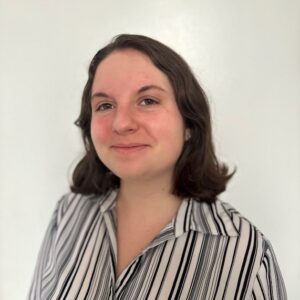
Nazanin Jazayeri is a translator.
As director of advanced analytics at Mindshare, she’s part of a team that bridges product developers, media planners and buyers by interpreting the massive streams of data that inform media buys.
“Previously, media agencies didn’t have a team of advanced analytics [pros] or a big data innovation hub,” Jazayeri told AdExchanger. “Most likely there wasn’t much of an internal measurement group. That’s changing drastically across the industry.”
At Mindshare, Jazayeri and her team work with media planning and buying teams, creating algorithms, discovering new data sets and merging them together to guide client buys. Then they measure the effectiveness of those buys to make incremental improvements for the next plan.
“We help these teams analyze data before they come up with a media plan,” she said. “Before we were coming in at the end, but now we are part of the whole planning process.”
Jazayeri, who has a statistics background and a master’s degree in economics, sat down with AdExchanger.
AdExchanger: What problem does your team solve for clients?
NAZANIN JAZAYERI: If a client comes to us with the right data, we could come up with a tool to analyze it in a matter of days. But sometimes we have to find new data sets and algorithms first. Getting the data from silos is one step, but looking at it in one screen is another. It’s not like 10 years ago when you could see it in a simple chart. Big data is changing that. We inform the planning team on moving money or changing their strategy. That’s where our creativity and innovation comes in.

Do you interface with programmatic teams?
Programmatic feeds into a lot of the advanced analytics we do. I’m fascinated by programmatic.
How did you end up at Mindshare? Was it intentional or did you see opportunities along the way?
After I finished my master’s I started coaching tennis. In the meantime, I took online courses and did meet-ups to understand what I liked about economics. I liked interpreting different data sets and understanding how humans behave. I was in the UK at that point and was hired by Mindshare UK. Advertising is really interesting to me. Agencies are exciting, fast and never repetitive. It’s fun to get access to data clients have never seen before.
What makes you thrive in this role? What personal qualities have led to your success?
I’m interested in data. I have a programming skill set and a statistics background, which helps me come up with new ideas and algorithms. I like talking to people, which makes it easier to actually sit with the clients, hear them and then come up with ideas.
How well do you think you understand the technology side? How well do you need to?
I am the bridge between the technology and the media plan. To do analysis, I need to be able to script. I need to be able to communicate with our developers, align that with media and connect it back to the industry. Before you could skip the technology part, but now you really need to understand what’s happening.
What does data mean in your daily life? How do you use it?
Let me put it this way: Even when I’m communicating with my husband about groceries we use data apps. If I turn on a light and turn it off after one minute I’m creating data. I can measure that and see the effect on what we are talking about right now. For me data is the world of the internet. My computer will lead an action to my phone, which will hopefully someday be connected to my fridge so I can order milk.
Is data-driven advertising creepy to you?
I look at it as science. I don’t specifically connect data to a person. It’s all ones and zeros and I’m interested to see how they move, what’s the correlation between them, what are the similar aspects between variable x and y and what are the new metrics I can apply on them.
What advice would you give to someone who is interested in a career in digital advertising?
If you want to understand analytics, big data and machine learning, digital data and analytics is a good place to start. You get a huge amount of data, a lot of individual-level information and it’s a really exciting place to be.
What would you have done differently in your career?
I would’ve taken more internships before starting a full-time job. I’m genuinely a curious person and I want to make sure that I cover all of my potential interests, and that I’m not missing anything.