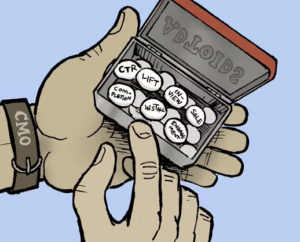

From AT&T buying Time Warner to Disney’s purchase of 21st Century Fox, there’s been no shortage of media mega-mergers in the market.
But those macro-deals overshadow smaller mergers and bolt-on acquisitions that made up the bulk of activity in the media and telecom sector for the first half of 2018, said Bart Spiegel, US media and telecommunications deals partner at PricewaterhouseCoopers.
“The focus right now has been on these really transformative mega-deals,” he said. “But a lot of volume is driven by other deals in the market that aren’t as headline-grabbing.”
While overall deal volumes for the sector fell 20% sequentially and 4% year over year for the first half of 2018, deal value increased 19% for the quarter and 197% in the first half of the year, according to a PwC report.
Growth in deal value was driven by mega-mergers, like Sprint’s proposed $26.8 billion tie-up with T-Mobile. But just three of the 10 deals announced in the first half of the year – the Sprint T-Mobile merger, AT&T’s $85 billion acquisition of Time Warner and Blackstone Group’s $17 billion purchase of Thomson Reuter’s Financial and Risk division – were over $5 billion, leaving smaller deals to make up the bulk of volume.
“So much of deal value in any quarter is driven by these multibillion-dollar mega-deals that it can sometimes skew the true results,” Spiegel said.
Among those smaller transactions, 63 occurred in the advertising and marketing subsector, where strategic acquirers are looking for “creativity, customer bases and technology or platforms,” Spiegel said.

“Some have got a collection of people that are really creative and successful,” he added. “Others have a compelling platform, technology or algorithm they think they can bring to the next level.”
And despite deal volumes being down in the quarter and first half of the year, there’s still a robust market for M&A in the sector.
“Make no mistake, there’s still a lot of volume,” Spiegel said. “I expect to see a continued robust deal market, encompassing not only mega-deals, but other deals that make up a majority of volumes.”
PE pockets
Big acquirers for the quarter were again private equity (PE) firms, which are becoming more active in the sector.
“Several years ago, there were very high multiples in the market, and PE firms may not have been as willing to play,” Spiegel said. “Now, there’s a lot of capital sitting on the sidelines and PE folks are a lot more comfortable in this space. They’ve bought into this shift to digital.”
As PE deal volumes grew from 20% to 25% in Q2, PE’s share of announced deal values dropped from 55% to 23% after a particularly strong Q1. Acquisitions of $100 million or less made up 70% of PE deal activity, according to PwC.
But that doesn’t mean PE firms aren’t willing to pay high multiples for companies in the sector, Spiegel said.
“The next quarter, there could be a big deal and all of a sudden the deal value will be up,” he said. “There’s a keen interest by PE right now in this sector because it touches so many other areas in the market.”