
James Hercher
James covers the intersection of commerce, media and advertising technology.

James covers the intersection of commerce, media and advertising technology.

OptimizeRx, which has software that plugs into the systems doctors use to prescribe drugs and maintain patient records, has taken its next big step into the world of programmatic through a new partnership with The Trade Desk.

Apple is coming for identity resolution. WebKit’s latest tracking crackdown targets the infrastructure behind post-cookie IDs – and switching to a first-party setup won’t necessarily spare vendors.

Most brands and businesses are trying to figure out how to improve their metrics when it comes to AI – and also what those metrics even are.

The Prebid Summit in New York City on Tuesday exceeded the event’s reputation for liveliness.

The ad industry has become a community of people who say things like “This is going to sound relatable” and follow it up with a sentence that may as well be Martian to 99% of America.

Against the backdrop of Advertising Week New York this week, the programmatic ecosystem has been buzzing madly like the inhabitants of an overturned beehive after the release of Apple’s iOS 27.

Apple’s WebKit crackdown appears to extend well beyond The Trade Desk, putting hundreds of ad tech, data and identity vendors on a mysterious, dynamically updated block list.
“When I talk to advertisers, they want a level of insight and transparency that helps them still have important levels of control,” says Paula Despins, VP of measurement for Amazon Ads, Amazon Marketing Cloud and ads trust.

The Trade Desk is unable to serve ads to the Safari browser for Apple device owners that have downloaded iOS 27. Apple has been investigating the issue since last week.

Amazon Ads has overhauled its DSP and the sponsored product and search-based ad console for on-platform ads, the company announced at its unBoxed event in San Francisco on Tuesday.

The agentification of Amazon Ads is underway. At its unBoxed ads industry event in San Francisco on Tuesday, Amazon announced a major ad tech overhaul, with its DSP turning into a default agentic chatbot experience.

The open web is done, stick a fork in it. Banner blindness is near universal, search traffic has run dry and publishers are struggling for oxygen. But what if that’s … not true?

A week ago, HBO MAX had its verified Reddit account overrun by a hacker group, which eluded notice for two days while it ran 108 different ad permutations targeting an unknown number of Redditors.
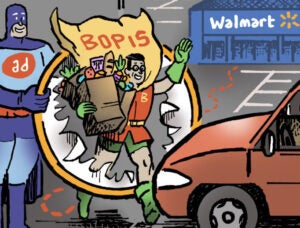
Walmart-owned Sam’s Club has a new AI-powered pitch for brands: Target the next purchase, not the last one.

The Trade Desk is less than a third as valuable as it was a year ago. It retains about one-tenth of its high-water market cap from December 2024, when the company was worth almost $70 billion. Why did investors lose the faith?
This week, the Commerce Media Newsletter catches up with a startup from outside the world of data-driven advertising, but with an interesting position when it comes to ecommerce advertising. That’s Clearco, a Canadian fin tech company founded in 2015.

Simon Property Group, the largest shopping mall operator in the world, is taking its biggest step yet into the world of data-driven advertising. On Thursday, the company launched Simon Media Network, its version of a retail media network.

Much like the ecosystem of life that surrounds a blue whale, a market of AI SaaS vendors is springing up around the biggest AI companies. And AI data startup Micro1 is emblematic of the shifting nature of these early-stage AI vendors.

Tuple is entering the DSP market at a strange and tense moment for third-party ad tech. “There’s just so much animosity” between the programmatic buy and sell sides, says Founder and CEO Doug Lauretano.
Two years ago, AppLovin launched an ecommerce beta program to bring in non-gaming advertisers. Now it’s launched a consumer ads segment with ambitions to take on the Big Tech platforms.

“Our revenue growth is below our expectations and below the standard we hold ourselves to,” The Trade Desk CEO Jeff Green told investors.

“We’re deemed a new bucket, so a testing category,” AppLovin CEO told investors regarding its nascent consumer and ecommerce ads business. “And to graduate up takes time. This stuff compounds over quarters and years.”

Cuisinart’s marketing team has been eager to take advantage of generative AI-based creative.
Amazon’s advertising businesses earned a total $19.8 billion in Q2, the company reported in its quarterly earnings on Thursday. That’s up from $15.7 billion in Q2 2025, and good for a 26% year over year growth rate.

Omnicom is halfway through a major sell-off of IPG agencies. Its future looks healthier as it prunes lower-growth firms, including eliminating certain specialist firms and overlapping agencies in certain countries.

Earlier this month, PubMatic shelved its Prebid integration wrapper, known as OpenWrap Web, and announced it would begin recommending Playwire as an offloading-onboarding partner for the 250-odd publishers that use its wrapper.
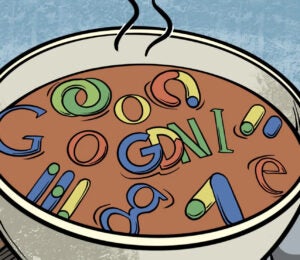
Investors didn’t bring up Google’s advertising business or ads in general once during the Q&A portion of Alphabet’s earnings report call on Wednesday.

Million Dollar Sellers, or “MDS,” is a group of Amazon sellers and specialists. And they’ve had it with Amazon’s advertiser and seller squeeze. But can they do anything about it?
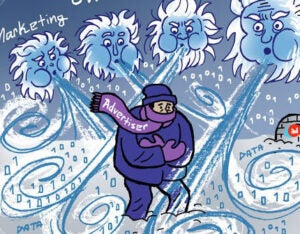
Google and Meta are quietly rewriting the rules of ad measurement, and they’re doing it with open-source marketing mix modeling tools that many marketers don’t even realize they’re using.
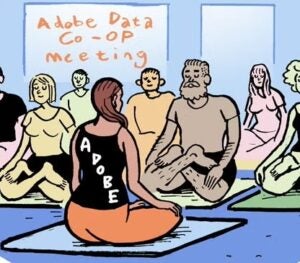
Last week, Adobe Advertising announced the general release of its own Custom Algorithms product, which is “a huge departure from the TubeMogul days,” Erwin Castellanos, GM of Adobe Advertising, tells AdExchanger.