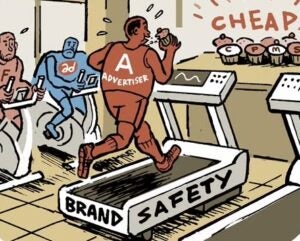
Programmatic advertising made media buying scalable but at a cost: Standardized impression auctions often obscure a publishers’ unique value, while a complex supply chain eats up nearly half of advertising spend.
Now, agentic AI promises something better: the speed and scale of programmatic combined with the customization and direct relationships of traditional media buying. And cutting out unnecessary intermediary fees is the cherry on top.
That’s the vision behind Optable’s new Agentic Marketplace, unveiled October 8 at Optable Connect 2026 in New York City. The platform connects buyer and seller AI agents, and their data, to automate the discovery, packaging and purchasing of publisher inventory.
“Programmatic solved the problem of scaling transactions, but in the process, we lost much of the context and collaboration that made direct advertising valuable,” said Bosko Milekic, Optable’s co-founder and chief product officer. “Agentic AI gives us an opportunity to scale those one-to-one conversations – and fundamentally rethink how advertising is bought and sold.”

Bringing buyers and sellers together – at scale and speed
Direct advertising deals traditionally require extensive back-and-forth between agency planners, publisher sales teams and ad operations staff to identify inventory, build audience packages, negotiate terms and execute orders. That manual work makes customized deals difficult to scale for publishers – and economically impractical for many advertisers.
Optable wants AI agents to automate the publisher-to-buyer conversations – preserving the customization of direct deals without the manual work that has historically limited their reach.

In the Agentic Marketplace, publishers package inventory, audience data, targeting options and pricing into advertising products that buyer agents can discover. Those agents interpret campaign briefs, connect to advertiser data and identify relevant offerings.
Buyers connect their own agents through a single integration, and those agents can then assemble media plans and submit orders directly to publishers, who retain control over pricing, buyer eligibility and deal approvals. Approved orders flow into existing ad servers for review and execution.
At Connect, Paul Frampton-Calero, CEO of independent media agency Goodway Group, described how agentic technology accelerated campaign execution: “We basically built the whole briefing, prompted it, and it went all the way through to the buying agent. The whole thing was taken from start to QA in the space of, I think, 30 minutes.”
The marketplace also gives publishers visibility into buyer demand, including briefs that don’t match their existing advertising products. Those insights could inform new offerings based on actual advertiser demand.
“It’s not about just throwing your inventory against the wall anymore,” said Amanda Martin, chief revenue officer at Mediavine, during a panel at Optable Connect. “It’s about merchandising your inventory and presenting it in different ways so that buyers can choose what they want.”
Making direct advertising accessible to more buyers and sellers
By automating dealmaking, agentic AI could radically expand which products get sold, which publishers can sell them and which advertisers can afford to buy them.
Premium sponsorships, homepage takeovers, custom audience packages and other products that don’t fit neatly into conventional programmatic workflows could become available for automated, on-demand purchase by buyer agents — without weeks of negotiation or setup.

This technology won’t eliminate the need for human judgment and relationships. Optable’s VP of Product, Andy Sharkey, highlighted that publishers will still need to articulate what makes their audiences valuable, establish pricing strategies and build trust with buyers.
But smaller publishers could reach more advertisers without building large sales and ad ops teams, and larger publishers could scale customized offerings beyond the major buyers that typically justify the manual effort.
It also changes the economics for buyers. With AI agents handling the work of building customized direct campaigns, advertisers could explore more publishers and assemble tailored campaigns without all the admin overhead. This would expand the market for direct advertising, giving advertisers practical access to premium inventory and publisher data no matter the size of their budget or media team.
Rethinking the ad tech tax
Optable is also challenging the economics of advertising transactions: According to eMarketer data presented at Connect, approximately 41% of US real-time bidding digital display spending goes toward programmatic fees in 2026.
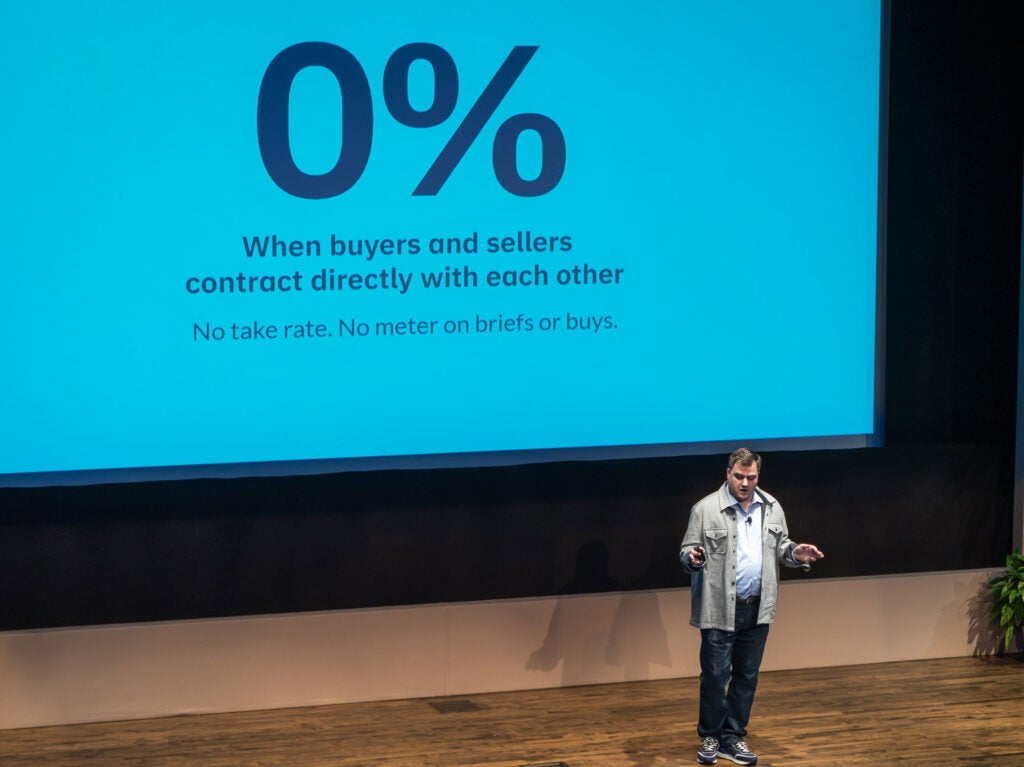
By scaling direct transactions, Optable aims to direct more dollars toward working media. To support this goal, the company won’t charge additional transaction or activation fees to Optable customers who contract and invoice each other directly. The Agentic Marketplace offers a separate paid option for buyers that want advanced targeting and measurement as well as centralized transaction clearing across publishers. But, critically, that cost is paid as a service instead of a per-transaction fee – and, either way, publishers pay nothing to sell through the marketplace.
Optable leaders framed this as a shift in incentives: Ad tech should be compensated for its technology rather than automatically collecting a percentage of advertising spend. “Software should be paid for as software,” said Optable Co-Founder and CEO Vlad Stesin during his opening remarks at Optable Connect.
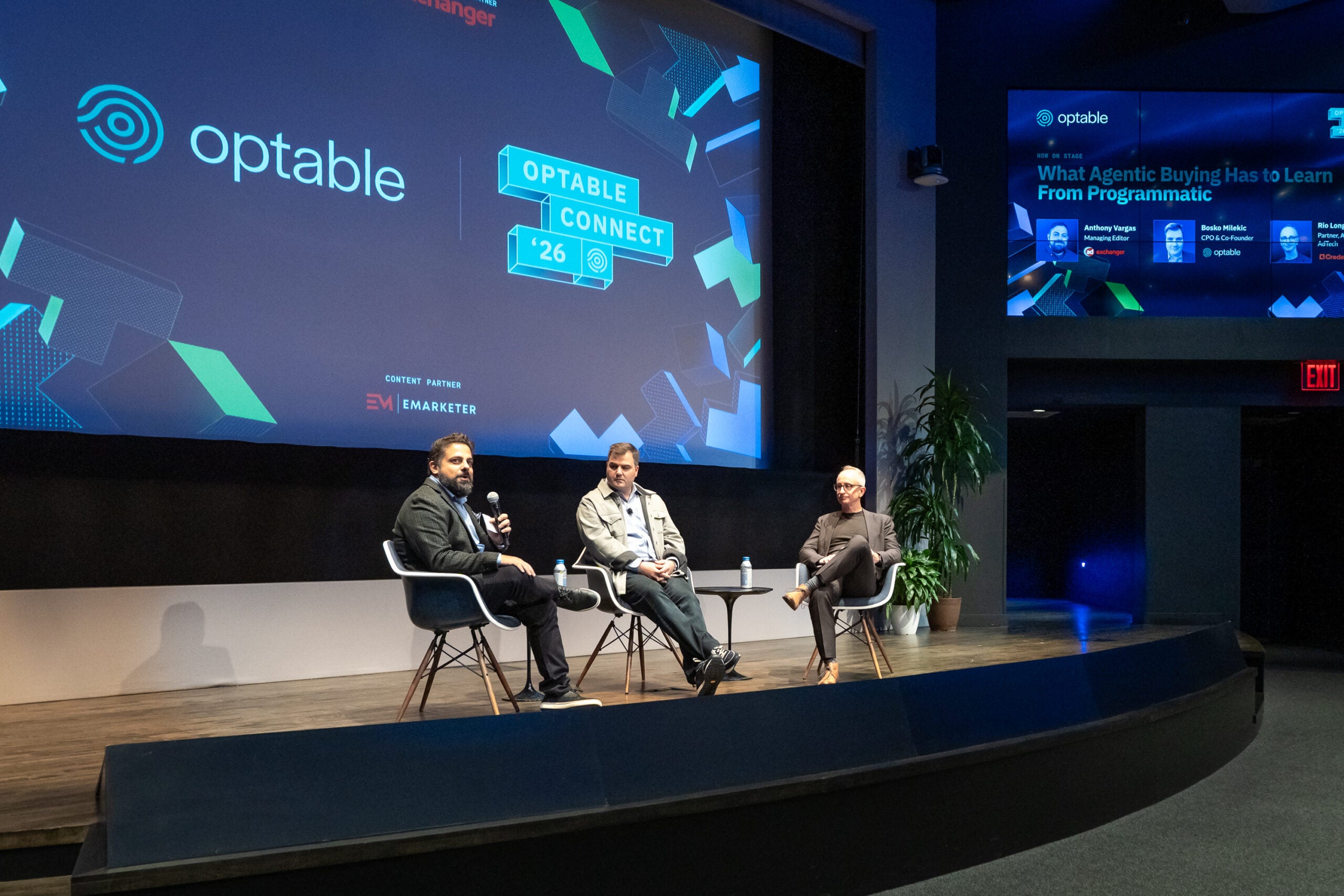
Stesin and other Optable leaders made it clear that disintermediation is not the goal, noting that DSPs, SSPs and other providers offer valuable services, including measurement, verification, targeting and optimization. But direct agent-to-agent transactions could let buyers decide which services they need and which fees are justified.
Moreover, Optable’s Milekic warned that agentic advertising could still evolve down a different path: If every intermediary introduces its own agent – and continues collecting a percentage of media spend – agentic advertising could recreate today’s complexity and inefficiencies at machine speed.
Proving the business case
For now, agentic advertising remains a tiny market. Emarketer projections shared at Connect put agentic media buying at $100 million in 2026, potentially growing to $3.9 billion in 2027 and $29.5 billion in 2028.
“There’s a lot of audience discovery happening, but not as much transaction,” said Dave Lundell, vice president of product development at Hearst, during a publisher panel.
That gap highlights a familiar tech adoption paradox: Both sides need a business case before committing significant resources, but each depends on the other’s participation to prove the model works.
Buyers and agencies need evidence that agentic buying delivers better campaign outcomes – an advantage they can use to win and retain advertisers. Publishers need confidence that incremental revenue will justify investments in organizing audience data and adapting their infrastructure to support automated transactions.
Of course, Milekic’s warning still looms: Whether the industry uses the capabilities of agentic AI to simplify advertising transactions – or merely adds another layer to the existing supply chain – remains to be seen.
For Optable, the new marketplace represents a bet that the industry is ready for more than faster transactions. It’s a new model of media buying that preserves programmatic scale and data-driven buying while addressing the friction, complexity and unnecessary costs of the status quo.
For more articles featuring AdExchanger Content Studio, click here.