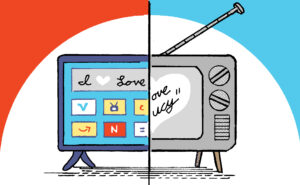

A report dropped last month from eMarketer that made me curious. Social networks will capture 27.7% of all US ad spend this year, despite accounting for just 12.5% of the time Americans spend with media. Convergent TV (linear and CTV), where consumers spend 38.5% of their media day, gets 18% of budgets. As Digiday put it, “The pendulum is swinging back to the feed, signaling that the crown of digital video dominance is going to social media.”
The instinct is to say social is outperforming every other channel. But I don’t think that’s the full story. What we might be seeing is degrees of measurement confidence, and it’s leaving opportunity on the table.
Why are advertisers buying into social?
Meta’s attribution infrastructure is clean, fast and easy to defend in a spreadsheet. A brand CMO can walk into a board meeting with an ROAS number, a cost per acquisition and a clear story. That’s not a small thing. Internal budget decisions rarely go to the channel that works best. They instead go to the channel that can be proven most clearly.
But much of it is an illusion.
When a platform owns the measurement, it is more likely to push the narrative that the ads are working. The measurement models make that easy to do. Last-click and view-through attribution routinely take credit for conversions that would have happened anyway. The number is precise, but that doesn’t make it true. The question that actually matters isn’t “What did the platform report?” but “What did the ad cause?” That’s incrementality, and it’s a fundamentally different measurement than attribution. A clean ROAS dashboard can coexist with very little incremental lift, and most brands never pressure-test the gap between the two.
The same gap explains what’s happening to television, just in reverse. The results are often there on TV. But the data ecosystem across the broader CTV landscape hasn’t caught up to the demand for accountability. That asymmetry is driving dollars toward social, not purely on merit but because of comfort.
Not all walled gardens are equal
The platforms winning ad dollars – Meta, Google/YouTube – are also walled gardens. They don’t share their data with third parties. But they’ve invested enormously in measurement infrastructure within their walls: brand-lift studies, multi-touch attribution, search lift, DV360. Advertisers can prove ROI inside those ecosystems, and so the money flows.
Streaming platforms are at different stages of that same journey. Amazon, for example, has made strides with shopping-signal enhanced attribution and multi-touch attribution across its DSP. The trajectory is right. Others are earlier in the process, still building the infrastructure that would allow advertisers to make the same case for streaming inventory that they can for social. The result is an uneven measurement landscape across CTV at exactly the moment streaming is winning the living room.
But here’s why we are stuck: Even the best in-garden measurement is still self-reported, and none of it is comparable across platforms. ROAS from Meta or Amazon or Netflix isn’t measured the same way against the same outcome. Even if every walled garden eventually builds world-class measurement inside its own walls, advertisers still can’t answer the only question that matters, which is this: Where is the next dollar most incremental? The fix isn’t waiting for each platform to grade itself better. It’s independent, cross-platform measurement that puts every channel on equal footing.
This plays out directly in the numbers. When you look at where conversions actually originate, TV is quietly doing work that social takes credit for. In a Tatari analysis of 100 brands measured on social-driven traffic, nine out of 10 got higher conversion rates from visitors who had seen a TV ad during the prior week. Sixty percent saw a lift of more than 50% and one-third saw conversions more than double. The customer converts on Meta, so Meta’s dashboard claims the victory. But the TV ad is part of what made that person take action.
Platforms with limited measurement transparency attract far fewer ad dollars relative to the time consumers spend on them. The gap between attention and investment maps almost precisely to measurement confidence.
Where the industry goes from here
Streaming now accounts for the majority of TV viewing time in the US, and walled garden publishers are an increasingly significant piece of that inventory. As they grow, so does the measurement gap, because each platform’s data lives behind its own walls, with its own methodology and on its own timeline.
The broader CTV ecosystem is starting to close that gap. At Tatari, it’s the problem we’ve spent nearly a decade working on, building measurement across a fragmented CTV landscape so ad dollars can actually follow the audience. The shift back toward social may be real, but it reflects where measurement stands today, not necessarily where the real media value is.
For more articles featuring Vicky Chang, click here.