If you plan media, you’re being asked to find new customers across more screens with fewer partners and to prove that what you’re doing worked. The IAB’s September outlook shows 63% of buyers say acquiring new customers is a top-three goal this year.
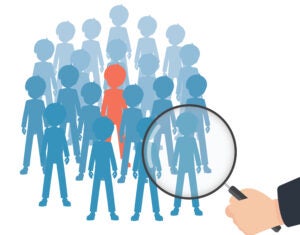
But the best media plan is only as good as the data behind it. The limiting factor is often not the sophistication of the targeting tools but what the underlying data can actually reveal. When advertisers rely on the same familiar signals, they risk overlooking valuable audiences that don’t fit their existing definitions.
That’s where carrier data can add a different perspective. By combining insights into mobile app activity with broader patterns of real-world movement, it can uncover connections between consumer behaviors that traditional audience strategies might miss.


When audience assumptions meet actual behavior
Consider a pizza chain trying to acquire new customers. Its media plan might start with people who order from competing pizza restaurants, use pizza delivery apps or exhibit other signals of interest in pizza.
That’s a logical approach to winning market share. But it also assumes that the most valuable prospects are already interested in pizza.
In reality, consumers aren’t always choosing between pizza chains. They’re deciding what type of food they want in the first place. Reaching the right people and understanding what they’re deciding are two different problems.
What happens when you build an audience around that broader decision? Instead of limiting the search to pizza-related signals, marketers can incorporate observed behaviors across restaurant categories, mobile apps and real-world locations. That broader perspective can help identify consumers whose habits and interests make them promising prospects, even if they weren’t included in the original audience definition.
It’s a different way to approach the same marketing objective. Rather than simply refining a model to find more people who fit the presumed target audience, advertisers can use additional evidence to reconsider who belongs in that audience at all.
A plan can’t ask the right questions without the right data
Advertisers are using T-Mobile carrier data to surface exactly these kinds of audience opportunities.
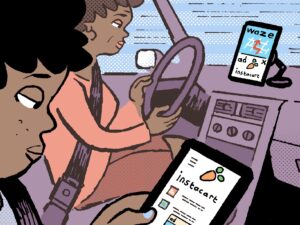
Take the users of one food delivery app. T-Mobile carrier data shows that this audience is 57% more likely than the national average to also use Gopuff. The audience overindexes on Grubhub and Uber Eats, too. That validates the competitive assumptions most plans start from.
But that same audience is also 45% more likely to be heavy streamers, and overindexes with fantasy sports fans, expectant parents and college students.
Together, these signals suggest an opportunity that a category-focused audience strategy might overlook, such as reaching people during a night in with a show queued up, a game on and dinner handed off to a food delivery app.
That doesn’t mean the data proves these activities are happening together. But it gives advertisers a new hypothesis to explore and potentially new audiences, messages and media placements to test.
A data set that only looks at one category can help find the next pizza order. But looking at data across apps and mobility patterns can reveal a broader range of behaviors and potential new occasions to reach consumers.
A model can extend an audience. It can’t add what was never observed
The effectiveness of audience modeling depends on the quality and breadth of the signals behind it. Carrier data provides a particularly useful foundation, combining observed app ownership and engagement with patterns of real-world movement and available demographic attributes.
Because consumers carry their phones throughout the day, these signals offer a perspective on behaviors that might otherwise be scattered across different apps, platforms and physical environments. Combining them at the audience level helps advertisers build a more complete understanding of consumer interests and activities without relying on individual-level tracking.
It’s also important to distinguish what’s observed from what’s modeled. Carrier data is observed and deterministic. The scale is modeled.
Platforms such as Blis and Vistar Media use carrier data as a starting point to model and activate audiences across connected TV, audio, mobile and digital out-of-home, including environments where traditional device identifiers aren’t available.
The modeling is only as good as what it starts from, which is why the breadth and quality of observed behavioral signals matter. And while identity still matters, strategies that don’t rely exclusively on any one identifier or platform provide additional resilience as advertising identifiers face continuing restrictions.
Your best customers may be outside your current targeting
For media planners, four questions are worth exploring:
- Are you reaching the right audience or the one your data happened to see?
- Is the plan driving incremental performance or counting what would have happened anyway?
- Are you reaching new customers or the same ones again?
- And how much budget is going behind a strategy built on too narrow of a view?
These questions expose a hard truth: A media plan can only be as comprehensive as the view of the consumer it’s built on.
Carrier data is a stronger starting point. Because it draws on observed behavior across apps and location patterns, it can inform more dynamic approaches to reaching customers. With Blis, carrier-informed audiences can be activated across omnichannel media. With Vistar Media, those same audiences can help identify relevant digital out-of-home screens by location, frequency and daypart. This approach can help brands strengthen existing connections and reach new audiences in relevant moments.
Tonight, people across the country will decide what to eat, with plenty of restaurants competing for their attention. Reaching them with a relevant message at the right moment requires more than knowing which restaurants they’ve visited or which apps they use. It requires understanding how their behaviors fit into a broader picture of their interests and habits.
The clearer that picture, the better equipped advertisers are to recognize valuable prospects, including the ones their original audience definitions overlooked.
For more articles featuring Vito Svans, click here.