In the oft-cited litany of “right message, right person, right time,” the creative is often given short shrift.
“Programmatic gives advertisers the ability to target infinite segments, but if they’re delivering generic messages to a targeted audience, they’re simply wasting their ad spend,” said Victor Wong, CEO of creative management platform PaperG, which announced $5 million in Series B on Tuesday.
The round, led by KLP Enterprises, Wavemaker Partners and WI Harper Group, with participation from AppNexus CEO Brian O’Kelley, brings the company’s total funding to $9.47 million. PaperG was founded in 2008.
PaperG, which has offices in San Francisco and Seattle, plans to use the bulk of the funding to swell its ranks from 70 to around 100 people next year, with most of the hiring happening in the sales and marketing departments.
The company also recently brought on a new chief revenue officer in the form of Joe Zahtila, fresh off a nearly four-year string as GM for North America at polling company Qriously, before which he spent more than a decade as CRO and chief operating officer at Millward Brown-owned digital research company Dynamic Logic.

Zahtila’s main focus will be to grow advertiser and agency adoption of the PaperG platform. Current clients include Meredith, Time Warner Cable, Tribune, Holiday Inn, Hearst, Intercontinental Hotels & Resorts and Anagram, a programmatic-centric agency founded by Hill Holliday vet Adam Cahill in May.
The PaperG tech works by helping brands, publishers or agencies scale their creative production by automating the creation and distribution of desktop and mobile display ads. The addition of social formats, including Facebook and Twitter, is slated for later this quarter.
Wong said he sees 2016 as an “inflection point” for programmatic creative, a year when programmatic media spending will rise – as will awareness that creative has been seriously lagging.
It’s a matter of math.
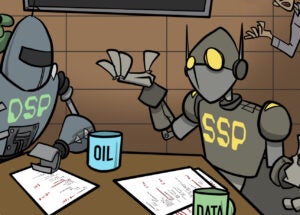
According to a forecast released by IPG’s Magna Global in late September, programmatic ad spend will hit $14.2 billion worldwide this year, a number predicted to reach $37 billion by 2019. And it goes to reason that marketers are also spending a pretty penny on the accessories of ad tech, DMPs, DSPs and the like.
But an internal study conducted by PaperG and AppNexus found that 97% of campaigns running through the latter’s system don’t have enough creative iterations relative to the number of segments being targeted.
The result? High-powered data-driven ad tech powering the distribution of generic creative.
“We’ve seen some large brands running 100 segments or more with the same creative,” Wong said. “If you have 100 segments, then you should at least have 100 ads.”
Of course, it’s not just about pumping out the volume. As Google’s VP of display advertising products, Neal Mohan, noted at the comScore Industry Summit in mid-September, “It’s incumbent on us as an industry, as publishers, advertisers and creative agencies, to make advertising useful, relevant and entertaining from a consumer standpoint.”
Mohan was answering a question related to the ad industry’s current idée fixe – ad blocking. But although display ads are directly in the ad blocker crosshairs, Wong doesn’t equate PaperG’s output with the type of disruptive advertising that motivates blocking behavior.
“Our goal is to focus on non-interruptive ads with a low file size, rather than fancy, splashy executions,” Wong said. “We don’t want to load 60-second explosions onto your screen.”