
The following post first appeared in Streamlined, our new twice-weekly CTV newsletter which is taking the place of our Thursday CTV Roundup.
From pause ads to home screen ads, new streaming ad formats represent ways for publishers to carve out ad supply from dead air.
Pause ads are “creating new ad space” where it didn’t already exist, said Scott Rossman, VP of product marketing at Warner Bros. Discovery, in an interview with AdExchanger. But these ads are more than just a way for publishers to monetize a paused screen, he said. When viewers divert their attention from a show or a movie, it’s an opportune moment to show them an ad.
Pause ads are promising because they are part of a user-initiated experience, which is arguably more user-friendly than interruptive commercial breaks. But in reality, many viewers did not appreciate pause ads when they first started cropping up. Users expressed annoyance with TiVo’s early pause ads, and some called the ads an obnoxious money grab. A quick Google Search inquiring what TiVo’s pause ads looked like prompted the AI Overview’s chatbot to ask me if I needed help disabling them.
But recent industry research suggests some consumers have become more receptive to pause ads over time. Roughly 67% of Gen Z and millennials prefer a pause ad over a frozen screen, according to a study by DirecTV and Magna. Rossman also cited a survey from the Video Advertising Bureau, with 51% of respondents taking some sort of an action after seeing a pause ad. Among the actions these respondents reported taking: searching an advertised product online (22%), saving information about an item for future reference (15%) or visiting a brand’s social media page (15%).
But for advertisers, consumer receptivity isn’t enough to invest. Buyers require programmatic standardization and more proof of performance first.
AdExchanger spoke with Rossman to discuss what the future holds for pause ads, both within and beyond WBD.
AdExchanger: When it comes to pause ads, why does advertiser adoption still lag publisher momentum?
SCOTT ROSSMAN: Pause ads have existed for some time, but as an industry, we are still in the early innings. Some challenges include difficulty in forecasting performance because consumers are in a different mindset when they initiate an ad break versus being interrupted by one. Plus, many publishers have different pause ad formats unique to their own platforms. The promising part is recent advancements in pause ad capabilities, such as targeting and shoppable features, which are helping advertisers drive and prove performance.
How does WBD approach pause ads?
On WBD inventory, pause ads blend into the programming with a softer gradient overlay so that viewers can still see the content, rather than having pause ads completely cover or replace what was on the screen. If ads look too different from what someone was just watching, the disparity can feel jarring and cause viewers to click away.
Behind the scenes, though, we are focused on making pause ads more sophisticated.
We first launched pause ads on HBO Max in 2022. Fast-forward to shoppable pause ads, which we announced during upfronts in May. These shoppable ads follow upgrades to contextual targeting capabilities, allowing advertisers to place ads in specific scenes with a relevant tone or atmosphere. For example, if a beer brand wants to align itself with content that captures the essence of travel and adventure, we will be able to help them show up in scenes that depict people outside on vacation, such as relaxing on the beach.
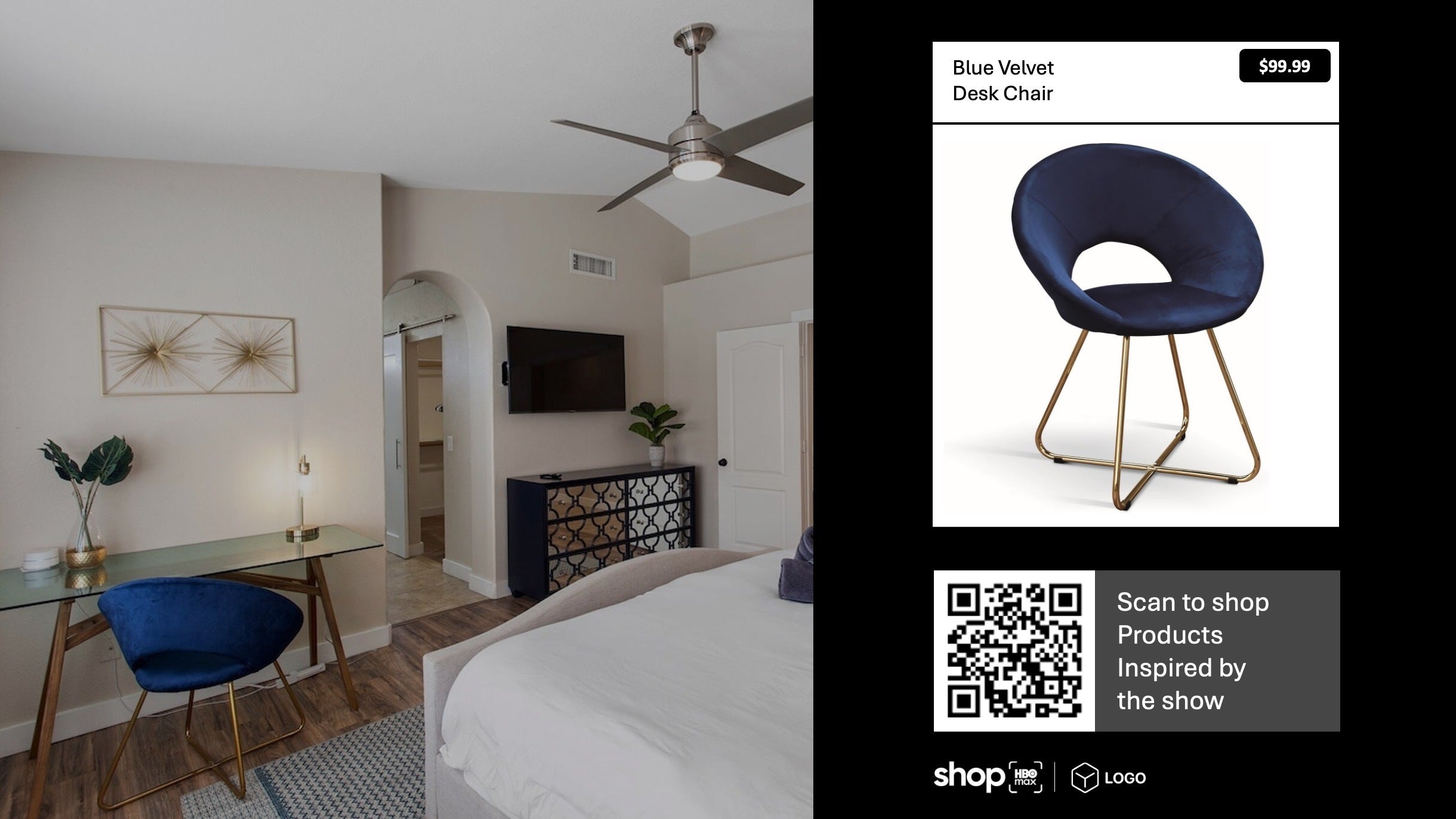
Wait – what makes pause ads shoppable, other than QR codes?
WBD’s shoppable pause ads are more interactive and much more relevant to what a viewer is watching at the moment they pause their content. If a viewer is interested in a shirt or other item of clothing that an actor is wearing on-screen, for example, they will be able to hit pause and enter an interactive ecommerce storefront where they can click through different products and proceed to checkout. We will display the exact item if a given advertiser is working with us, or, if not, we would suggest similar products. [Editor’s note: WBD expects its shoppable pause ads to be available later this year.]
How are agencies and brands actually buying pause ads?
For WBD, buyers are mainly securing our pause ad supply through direct deals.
As for programmatic, we are working on that. It is a goal of ours, but, as an industry, we have to first align on industry standards. Standardization must cover creative details from size and pixel count to programmatic signaling in the bidstream.
[Editor’s note: The IAB Tech Lab is working on that standardization now. It recently proposed programmatic spec and signaling updates that were open to public comment until last month. The organization is now reviewing the feedback with working groups and has not yet integrated the updates.]
How might standardization complicate WBD’s ability to sell shoppable or standard pause ads for direct versus programmatic buyers?
Interoperability plays a big role in whether or not advertisers invest in new formats or technologies.
Ideally, we would have two different types of pause ads in the future. One type would be a more standard pause ad that buyers can easily access programmatically for quick reach and scale across platforms. The other would be the more custom collaborations we create with marketers. For example, if a brand wants to sponsor “Game of Thrones,” we can help that brand create a custom pause ad integrating a product with our IP, which pairs well with classic commercial breaks throughout the show. Either way, another thing marketers really care about is having options.
Speaking of buyers, how are they treating pause ads: as more of an upper- funnel or lower-funnel investment?
Right now, marketers are looking at streaming pause ads as more of an upper-funnel play. But this may change as pause ad capabilities advance and advertisers see improved results over time. Pause ads perform: Some recent studies we’ve done at WBD suggest our standard [not shoppable] pause ads drive over 200% lift in website visits compared to industry benchmarks [according to data from Disqo].
After all, the more relevant a pause ad is to a viewer, the more likely that ad will be a performance driver for the advertiser.