Women’s sports are a lot more popular than they used to be.
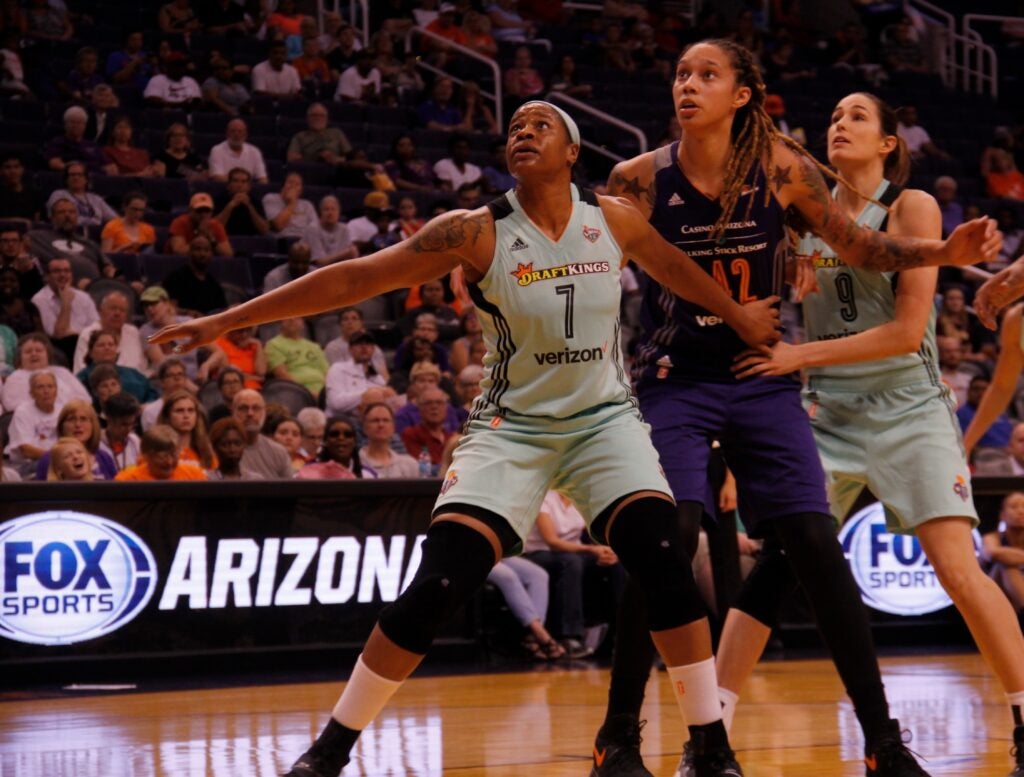
Last year, ESPN reported that the WNBA delivered its most-watched regular season in history. In 2023, the FIFA Women’s World Cup (which the US team won that year, by the way) routinely broke domestic viewership records despite games taking place overnight in most US time zones. And, in 2021, the US Open Women’s Championship scored higher ratings than the Men’s Championship.
As audiences grow, advertiser interest naturally follows.
But there’s a paradox at play. One of the reasons demand is so high is because inventory remains scarce, because women’s sports still gets way less mainstream media exposure. A 2023 report by The Team (formerly Wasserman) found that women’s sports only made up 15% of media sports coverage between 2018 and 2022. Prior to that period, research from USC and Purdue suggested that female athletes only got 5% of coverage.
“Women’s sports still suffers from a lack of pre-game, halftime and post-game coverage, which are standard in the men’s space,” said Laura Correnti, CEO of sports marketing agency Deep Blue. “When you start adding up all of those points of access and engagement, the limitation has created a lopsided environment.”
But it’s not just live game coverage. If you’re like me and watch more sports docs than you do actual sports, here’s another example of gender-based media bias. Since 2009, ESPN has produced more than 136 documentaries as part of its “30 for 30” series. By my count, only seven have featured female athletes.
And beyond the lack of inventory, there’s also a measurement gap. Advertisers don’t have access to the same kinds of benchmarking data for women’s sports as they do for men’s, which makes it hard to plan and optimize.
That means even though women’s sports campaigns are mostly bought on a CPM basis, Correnti said, they’re not actually set up to deliver strong reach.
What’s a sports advertiser to do?
What women’s sports lacks in terms of mainstream press coverage, however, it makes up for on social media with creator-led content and high fan engagement. Female athletes, teams and leagues rely on these channels to speak directly to their audiences and build brand awareness – and it’s working, especially for the athletes.
Atlanta Dream star Angel Reese, for example, has roughly 5.2 million followers on Instagram. The entire WNBA only has 3.7 million followers.
Planning media against fandom isn’t easy, though.
In June, Deep Blue partnered with data analytics platform Mondo Metrics to launch the Women’s Sports Index, a data intelligence platform to help advertisers understand and capitalize on trends in women’s sports fandom. The index is powered by MondoTrends, a product that filters through huge sets of publicly available data, including video content on TikTok and YouTube, to benchmark social media analytics in real time.
The Women’s Sports Index goes beyond basic social listening, said Nick Cicero, CEO and founder of Mondo Metrics. Instead of only returning content related to specific queries, it also measures engagement signals across a wider pool of posts to give brands more context.
MondoTrends also allows buyers to track brand lift and purchase intent on campaigns tied to creator partnerships.
“I like to think of it as air traffic control,” said Correnti, “directionally following the signals that the trends and analysis are telling us.”
Both Cicero and Correnti say they hope better measurement will help make women’s sports marketing easier to plan and buy, which, in time, will bring it more into the cultural mainstream.
If you build it, they will come
But Deep Blue isn’t only building tools like the Women’s Sports Index; it’s also helping produce women’s sports content.
The agency has an entire IP division that works with its brand clients to develop partnerships and content deals with women’s sports leagues, creators and media publishers. Rather than just coming in later as an ad buyer, Correnti said, brand clients are involved in every step of the content development process as a strategic partner. In some cases, they even create their own new series.
This new content still requires its own marketing and promotion, of course, but it does add more women’s sports-adjacent inventory, even if most of it is already spoken for by the initial brand sponsor.
Interestingly, most of the brands Deep Blue works with aren’t focused specifically on women’s products or female audiences, with some notable exceptions, such as the New York Liberty’s partnership with Vagisil. Which is good, because there are a lot of male fans watching the games, too.
However, this doesn’t mean men’s and women’s sports audiences are interchangeable. Brands that try to apply their men’s sports playbook to women’s sports are setting themselves up to miss, Correnti said. “You’ll likely find it’s not effective.”
Marketers need to understand how women’s sports fandom translates into engagement and purchase intent. That’s the point of the Women’s Sports Index.
Because the audience is there – they’re just not always reachable on TV.
“We’re seeing the rise of an entire new part of the media ecosystem in women’s sports that is not relying on the traditional model,” said Correnti, “that is focused on engagement and rabid fandom.”