Ads To The Rescue
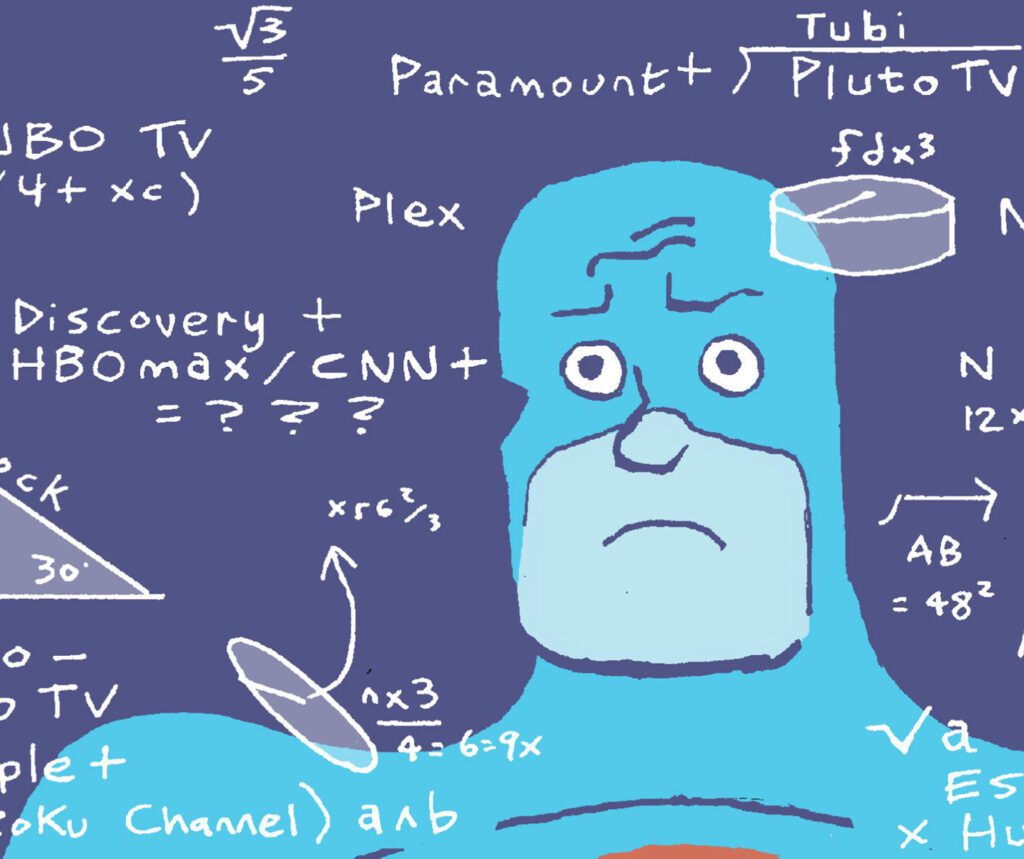
Investors and equity analysts took stock of the streaming TV market during the National Association of Broadcasters Show in New York City on Wednesday.
Their verdict? A little bleak.
Compared to linear TV, streaming doesn’t serve consumers as well as many had hoped, said Eric Menell, global head of media and communications investment banking at J.P. Morgan, during a session on the NAB show floor.
For one, people don’t love shelling out for multiple services, especially when that includes also having to pay to see commercials. The streaming platforms themselves see this as a simple value exchange. (That disconnect is why many platforms are now considering free ad-supported tiers.)
To retain subscribers, analysts agree that streaming services need to boost engagement with their original content and IP, especially live sports. They’ll also have to figure out how to balance their desperate need for ad revenue with the other imperative: a decent viewing experience that doesn’t piss people off.
Getting this right is no joke. Without functional ad businesses, streamers won’t be able to achieve profitability. Advertising is “such a high-margin, incremental” source of revenue, said Jessica Reif Ehrlich, managing director of media, entertainment and US equity research at Bank of America Securities, also speaking on the panel.
No wonder Netflix keeps boasting about how many people have been signing up for its ad tier.
The Windy Indies
Independent media agencies have been largely outpaced by the biggest holdcos (which, to be fair, regularly neuter the indie market by acquiring standout performers).
But don’t underestimate the indies. They’re not small potatoes.
One 15-person agency in New York City told Digiday that even though they clear The Trade Desk’s $100,000 monthly minimum, the platform’s slim profit margins make it hard to justify shifting more spending there.
Instead, the small agency sticks with a reseller, Mogl, which takes a 12% fee on media spend on top of TTD’s 17%, per an exec.
Meanwhile, another buyer at a 25-person agency in Washington state noted that while Amazon DSP claims to have no minimum spend threshold, committing to a specific budget is the easiest way to secure a direct account.
Um, okay.
At the root of this problem is the payment gap due to ad tech’s tortuous supply chain. DSPs can’t just credit advertisers with hundreds of thousands of dollars, and they sometimes have to wait months before an agency or brand actually pays for a campaign. But the DSP pays upfront. That’s why we see painful publisher clawbacks and SSPs left hanging (and holding the bag) when a DSP goes bankrupt.
Which is to say, don’t expect DSP fees to improve for small agencies anytime soon.
Subjugated By Substack
The AI search traffic apocalypse has legacy publishers turning to paid newsletters for revenue – but they aren’t the only ones struggling with this transition.
Even The Ringer, a new media org with the technological backing of its parent company Spotify, seems to be making its newsletter strategy up as it goes along.
At least, that’s according to Defector, which is a not-so-friendly competitor of The Ringer.
Defector’s Owen Lewis points out that several of The Ringer’s most popular writers and podcasters, including Sean Fennessey, Zach Lowe, Tom Pelissero and Bryan Curtis, have all recently launched newsletters on Substack, and all at different subscription price points. Meanwhile, another Ringer writer, Todd McShay, is publishing his newsletter on Beehiiv.
And here’s another interesting wrinkle: Although The Ringer has largely pivoted to video podcasting, newsletters are a way to get back to writing, which The Ringer’s Fennessey described to GQ as a more precise medium for news than podcasting.
Even so, Lewis wonders why The Ringer isn’t simply asking creators to do more writing for its own website and then putting that content behind a paywall. Perhaps this is just another sign that the traditional website-based digital publishing model is falling out of vogue.
Or, as Lewis puts it, “Have the executives in charge of The Ringer, like seemingly everyone else, surrendered to the idea that Substack is the only place where people will actually read things anymore?”
But Wait! There’s More!
Meta has been fined $25 billion by a New Mexico court. A jury found Meta liable for nearly 44 million violations of the state’s Unfair Practices Act for misleading users about how their personal data is handled and for failing to implement safeguards following the 2016 Cambridge Analytica scandal. [The Santa Fe New Mexican]
A new Comscore report says YouTube leads in streaming TV ad exposure, with Tubi a distant second. [Digiday]
Holiday shopping creep is officially out of hand: Consumers may be 30% of the way through their holiday budgets before the end of October. [Modern Retail]
TikTok is shifting its media budget en masse to YouTube after its ads were banned by Meta. [Business Insider]
Unfortunately for Amazon, it’s surprisingly easy to remove lockscreen ads from Kindle devices. [Mashable]
Two severe security vulnerabilities were discovered in PHP, a programming language that’s widely used by web and app developers. [Ars Technica]
Despite facing criticism from his own party, Ohio Republican gubernatorial candidate Vivek Ramaswamy is forging ahead with plans to spend $4 million on a controversial attack ad featuring his opponent Amy Acton’s estranged mother, who lost custody of Acton when she was 12 years old. [AP]
Remember when ChatGPT’s UTM links inexplicably disappeared? Turns out that was a mistake – but it’s fixed now. [Search Engine Land]
You’re Hired!
Diageo names Sebnem Erim as CMO for North America. [Ad Age]
Here’s today’s AdExchanger.com news round-up… Want it by email? Sign up here.