“Data-Driven Thinking” is written by members of the media community and contains fresh ideas on the digital revolution in media.
Today’s column is written by Lung Huang, vice president of digital advertising, global partnerships, at dunnhumby.
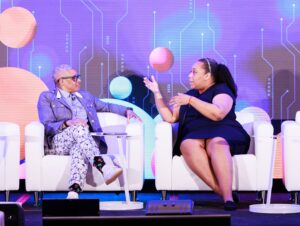
I moderated a panel last month at D2 Cincinnati, a digital marketing conference focused on customer centricity. The panel, “World War D: The Never-ending Quest for Data and Insights,” included an esteemed group from Pandora, Kellogg’s, comScore and Comcast.
The conversation ranged from what works and what doesn’t to their optimism about why this digital business will continue to grow at double-digit levels. The one commonality that links them all: their use of data for decision-making and as a competitive advantage for future growth.
None of the panelists’ companies collect data for the love of data; they collect data because they love their customers. Data is the key to their customers’ hearts, as it shows us what they want and how we can exceed their expectations.

Pandora, for example, pioneered a very crowded market in the music space, with the likes of Clear Channel and CBS Radio already catering to listeners based on genre. Remember there are 56 distinct programming formats in Arbitron’s classification system, according to Nielsen. Pandora uses information about the tracks and artists customers like and dislike to create entire formats on the fly, with innumerable, highly personalized programming that is completely data-driven.
I would be remiss if I did not mention other Pandora competitors, such as Sirius/XM Satellite Radio, the pure-play radio stations of Slacker and Spotify, or even Apple and Google. So with all of the competition in the space, and with most of the services carrying little to no cost, the stakes could not be higher for radio companies.
But what impresses me so much about Pandora is that it recently had one of its biggest months for listening with a total of 1.36 billion minutes, about a 17% increase over the previous year. Given all of the other music choices at everyone’s disposal, I find this staggering and applaud the tailoring to the individual. This is the radio that data built.
From the newfangled media player, the panel turned to Kellogg’s, a brand with a strong heritage and presence at the breakfast table for more than 100 years. While the products inside have improved and evolved over the years, at its heart, it is a box and cereal. In my opinion, the company’s only major misstep over the years was discontinuing the highly nutritious and engaging C-3PO’s cereal.
But some of its work now revolves around pioneering the world of addressable television. Kellogg’s uses data-driven insights to target households that fit its criteria for exposure to TV ads. So while the products are decidedly nontechnical, its approach to selling them is based on hard science and numbers.
When it comes to measuring advertising in the digital space, comScore has taken on the gargantuan task of bringing transparency from an audience perspective. It has released a major study revealing that 54% of online ads are not viewed.
This raises two questions: Does this even matter in the advertising world, since no other major media is held to the standard of what is viewed vs. what has the opportunity to be viewed? And why does comScore hate the Internet so much that it would report such findings?
Now, while my second question is a sarcastic point, it does make us think about the competitive landscape where one media is judged totally differently than another. I do believe that using data and insights can only help the digital industry and enable us to win a higher share of the budgets allocated for those media platforms with less transparency.
To that point, another company on this panel was Comcast, one of the largest cable providers in the country. It is remarkable that such a sizable company can still innovate the way Comcast does. This year it had a major acquisition with its purchase of NBCUniversal in full for the small sum of $16.7 billion. Additionally, its focus on data-driven decision-making has progressed its ability to reach consumers in a highly targeted way.
Last month, for instance, Comcast released the results of its multiscreen research with TiVo. This showed that TV is currently best at driving new customers, with 67% of the purchasing household uplift coming from those who were new to the brand or the category. Digital, meanwhile, secured more sales from existing brand customers. This type of insight shows definitively that there is no one-size-fits-all approach to advertising.
These are distinct cases of companies using data to make business decisions that will help them gain or retain a competitive advantage. Data keeps these enterprises alive, whether online, in the car, at the breakfast table or in the boardroom.
Are you doing the same? If not, you may be digging your own grave.
Follow Lung Huang (@Lung_Huang), dunnhumby (@dunnhumby) and AdExchanger (@adexchanger) on Twitter.