
 “Data-Driven Thinking” is written by members of the media community and contains fresh ideas on the digital revolution in media.
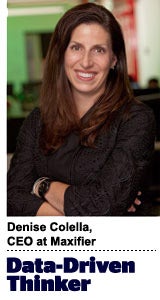
Today’s column is written by Denise Colella, CEO at Maxifier.
I recently listened to a great panel where marketers like Bank of America, Kraft and Dell discussed the big P (programmatic) and its impact on the media landscape. It was nice to finally hear marketers talking, as opposed to the usual vendor-populated panels.
But more importantly, there were only two – yes, two – acronyms used during the entire discussion. For the record, they were B2B and QSR (quick service restaurant). Any ad techies hoping to fill their Lumascape bingo card left sorely disappointed.
So, what in the world did they talk about if not RTB between SSPs and DSPs populated with big data from DMPs and their integration with DFP and PMPs?
Well, they talked about the four Ps – real, classical marketing speak (how retro) – and social. All of the brands expressed concern about competing with consumer marketers – in other words, the general public – who are now talking to large online audiences about their products. They also mentioned that they had to research programmatic before the panel to ensure they knew what they were talking about.

“Programmatic is just a phrase,” summed up Deanie Elsner of Kraft. “Addressability, regardless of medium, is what matters.”
As vendors living and breathing programmatic, it’s easy to forget who and what we are servicing: marketers and brands. We are quick to train our teams about ad servers and protocols, but are we making sure our new recruits understand marketing and the problems we are trying to solve? Are our sales teams and account managers prepared to speak the language of our clients and not the native tongue of the Lumascape?
The need for instruction in MSL (marketing as a second language) occurred to me when someone in the audience asked these marketers about a Deal ID and no one was familiar with the term. We are making it far too hard.
At the end of the day, the beneficiary of ad tech is the marketer, but the language we use and the messages we communicate are light years away from what they understand. While acronyms may speed up conversations, it is at the cost of comprehension. We simply confuse or, worse still, alienate those we are supposedly helping.
We’ve seen this happen with online metrics. For brands, they’re interested in KPIs around engagement and interaction, but up until recently have been served metrics that are appropriate for direct-response marketers.
As an industry, we are happy to espouse our ability to help marketers collect, interpret and use data to understand consumers and effectively target them while blindly forgetting we’re here to embrace a similar approach to our own clients and prospects. While ad tech and programmatic consume countless column inches and conference platforms, for client marketers the whole programmatic play is just a tactic: They’re interested in building brands. We need to remember this.
I think, ultimately, the language of technology will become part of the language of marketing. Last week, CPXi put out a great WTF programmatic dictionary to explain the terms and tools of programmatic advertising, which is useful for both the industry and client marketers alike. As a service industry, let’s make sure we put the same amount of effort behind educating our recruits (and frankly some long-term employees) on the core components of marketing.
Shouldn’t we be trying to speak the language of the clients we are trying to sell to (first rule of marketing: Know your audience)? If we want to make programmatic the fifth P, let’s at least know the original four first.
PS: They are product, price, place and promotion.
Follow Denise Colella (@decolella), Maxifier (@maxifier) and AdExchanger (@adexchanger) on Twitter.







