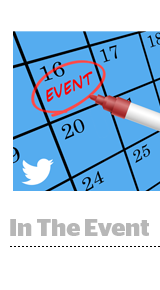
 Twitter is looking to capitalize on the when and the where by connecting advertisers with audiences interested in specific events.
The rather prosaically dubbed “event targeting” tool, announced Thursday, is separate from Project Lighting, Twitter’s reported upcoming dive into live event curation. But clearly the two are philosophically linked.
With event targeting, advertisers will be able to use a calendar to browse upcoming events – say the Grammys, the World Cup, the US Open, Mother’s Day, back to school or Halloween – and collect basic insights around each, including information about the audiences that had previously engaged with the event, as well as their size and scope.
Advertisers can use that data to target messages to users who are either present at or interested in particular events while those events are happening.
Gender, reach and device type are among the audience insights being provided, but the real meat comes from looking at the engagement signals around tweet consumption, said Ameet Ranadive, Twitter’s senior director of revenue product.

What people are tweeting about, which event-related accounts they’re following, the keywords and hashtags they include in their tweets, what content they decide to search for, click on, retweet or favorite – that all plays a role in audience creation, he said.
All of that can also be intersected with a brand’s own first-party data via tailored audiences.
“Clients want to reach an audience at the most relevant time, and the concept of live or real-time goes hand in hand with that,” said Ranadive. “We measure relevancy by looking at the engagement rates.”
Previously, if advertisers wanted to tap into an audience coalescing around an event, they had to go through a fairly manual process of selecting and targeting against a set of likely keywords and then hope for the best. Event targeting is meant to automate that process.
Whereas a big part of Project Lightning is about making Twitter more accessible to logged-out users – seemingly a bid to appease Wall Street’s now nearly quarterly demand for more user growth by creating chronological event-based feeds that can be embedded off-platform – the event targeting tool is geared more toward the existing Twitter user.
Larger tentpole events are the main focus for the time being, but Ranadive said Twitter plans to bring smaller events into the fold down the line. National Doughnut Day (the first Friday in June, for anyone who wants to mark their calendars for next year) may not be on par with something like the MTV Video Music Awards in terms of ad spend or potential reach, but it’s still something that certain advertisers could take advantage of.
Twitter’s event targeting beta partners include MEC Global, Mindshare UK and SocialCode.