
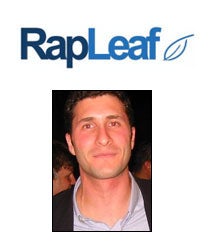
 Auren Hoffman is CEO of Rapleaf, a data company.
AdExchanger.com: It’s been an interesting past year for Rapleaf, to say the least, regarding the company’s strategy and online privacy. What have you learned?
AH: We definitely had our time in the spotlight and the publicity has been a factor in our fast growth in 2011. The privacy climate is very dynamic and companies such as ours need to be open to responding to the needs and demands of the industry and consumers on the fly. Let’s face it – we’re in an industry that gets a lot of feedback. If we all receive it openly and help consumers, everything improves. Companies in our space need to both ensure that consumers ARE safe and ensure consumers FEEL safe.
What’s your take on the data targeting business as it exists today in digital advertising?
We all know that data can make ads more personalized and more useful. It’s become clear over the last year or two that data has a powerful role in display advertising – the question is now about scale and performance. A lot of data providers that have the capability to bring scale and performance, but have sat on the sidelines the last few years, are now investing in making their data available for digital advertisers.

Broadly, what’s the strategy going forward for Rapleaf?
Rapleaf has two businesses:
- The “Rapleaf” core side of our business helps companies learn more about their customers: they use the information to give their consumers a much better experience through safely personalizing interactions. Companies easily access Rapleaf’s large and growing store of information to help their consumers. You can try out our product simply by uploading a list of people here.
- LiveRamp helps online offline data. We help data holders put their assets to work in the display world and create new revenue streams for online publishers.
What problem is LiveRamp solving?
Publishers are making use of display optimization services that are in serious need of more and better data coverage. Many data holders would like to participate in digital advertising, but are now on the sidelines. LiveRamp provides help to both of those groups with our mapping technology.
How does the new LiveRamp product work? Is PII in play with LiveRamp? If so, how do you manage this against privacy concerns.
LiveRamp works by mapping offline demographic data to anonymous cookies across a publisher’s online audience. Our integration is very simple and only requires a publisher to send LiveRamp a user identifier for an instant mapping. No PII is placed in cookies, we don’t sell publisher’s data, browsing behavior is not tracked or collected, and we have an industry leading anonymization technology.. Additionally, notice and choice to consumers is a requirement for publishers to participate.
Why will publishers like LiveRamp in your opinion? How are they paid – rev share? What should publishers expect monetarily?
LiveRamp has two monetization benefits to publishers. The first is that we increase data coverage on their audience, which amplifies the effectiveness of all their existing ad services (data management platforms, ad networks, SSPs, etc). The second is we pay the publisher a guaranteed monthly fee for enabling mapping, which scales based on their traffic. The fee is incremental recurring revenue, with no affect on existing revenue sources. Large publishers make 6-7 figure annual revenue from LiveRamp.
Does Rapleaf use a publisher’s data for its own uses?
No. We only use the data to help publishers gain additional revenue (and audience insight) without compromising their own audience data. For instance, we never sell a publisher’s user data.
With LiveRamp, aren’t you inviting more scrutiny as the Rapleaf unit looks to bring offline data to online ad targeting? How will you overcome it?
Many ad targeting industry players are bringing offline data online into cookies, so the industry has grown very familiar with that practice. We’re hoping to see a set of industry best practices for “onlining” of offline data in the near future. Clear guidelines would underscore the commitment that we (and our industry partners) have to practices like notice and choice, data security and deletion, and non-merger of offline data with OBA data. As for Rapleaf, as we move forward, we are very actively educating and getting feedback from privacy advocates, self-regulatory groups, and anyone else in the industry who has good ideas about privacy.
What’s the idea with InstantData and how does this fit with LiveRamp and Rapleaf’s overall plan?
InstantData is Rapleaf’s tool for CRM marketers (marketers who have their own email list) to easily gain free insight on their customers to give better and more personalized services. InstantData makes it easy for any businesses to better understand and serve their customers. Before InstantData, only people who could code could use Rapleaf. Today, anyone who wants to make their customer’s life better can do so.
Any need for additional funding? Is Rapleaf profitable?
We are not looking for funding and do not expect to ever raise additional capital.
A year from now, what milestones would you like Rapleaf to have accomplished?
Personalization will eventually touch every b-to-c interaction whether it occurs on or offline. We plan to be a driver of safe personalization as it unfolds, and to work with all the players to help make it happen in the right way. We expect to see continued growth of our LiveRamp platform as it is already a central resource for publishers, data holders, and display technologies working with data in digital advertising.
Follow Auren Hoffman (@auren), RapLeaf (@RapLeaf) and AdExchanger.com (@adexchanger) on Twitter.







