The US Senate on Thursday voted down Federal Communications Commission (FCC) regulations that would have required internet service providers to get users to consent to be targeted by advertisers.
The law would have required the providers (ISPs) to get explicit consent from users before allowing advertisers to buy or target against web browsing histories, geolocation, app activity or anonymized subscriber data like income and address.
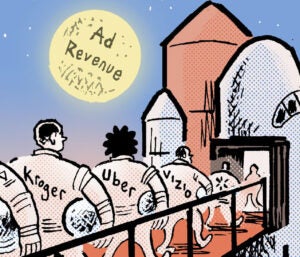
Telcos fiercely opposed the law, which the FCC passed in a 3-2 party-line vote with Democrats in the majority last October, claiming it skewed the market unfairly to companies like Google, Amazon and Facebook. Those platforms aren’t ISPs but still turn user data into serious ad revenue.
“There is no sound reason to subject broadband providers to a different set of rules than other internet companies,” wrote AT&T’s legal counsel in a brief submitted to the FCC at the time.

The FCC had already taken steps to blunt the impact of the regulations since Ajit Pai was appointed FCC chairman earlier this year, such as dropping the commission’s investigation into carrier zero-rating plans – which let telcos favor some media channels by providing data-free or more reliable broadband – and exempting ISPs with fewer than 250,000 subscribers from net neutrality rules.
Many ad industry trade groups, including the ANA, 4As, IAB and Data and Marketing Association (DMA) lobbied against the regulations.
The rules struck down by the Senate “would risk disrupting the hugely successful internet ecosystem that has developed under the existing framework,” said Emmett O’Keefe, the DMA’s senior VP of advocacy, in a release following the vote.
“Congressional action to overturn these rules will ensure that organizations can continue to responsibly leverage data to meet the needs of their consumers.”
Not everyone buys that line.
Some industry watchers, like Digital Content Next CEO Jason Kint, note that while the FCC reversal equalizes the playing field between ISPs and major digital platforms, neither side actually protects consumers.
And consumer advocacy groups argue the lack of oversight is evidence of irresponsible data use.
“The technologies we use to connect to the internet have holes and weaknesses that can put sensitive user data at risk,” said Drew Mitnick, policy counsel for the digital rights group Access Now, in a statement responding to the vote. “The last thing we need is companies that connect us to the internet threatening our security by doing nearly anything they want with our data.”
The Senate vote is likely to be seconded by the House of Representatives, where the bill is being submitted by Rep. Marsha Blackburn (R-Tenn.), chair of the House telecommunications subcommittee.