AT&T’s ad unit Xandr on Tuesday unveiled a publisher network called Community, which lets advertisers use Xandr data on video inventory across WarnerMedia’s O&O properties as well as a selection of outside publishers.
The WarnerMedia properties include CNN, TNT, TBS, truTV, B/R Live, Otter Media and Warner Brothers, and the video partner publishers include VICE, Hearst, Newsy, Philo, Tubi and Xumo. The inventory is available across channels: linear, desktop, mobile and OTT apps.
Inventory from the Community marketplace is available now, either as a direct buy customized and managed through Xandr Media, or programmatically via Deal ID. The cost of Xandr’s first-party data and technology is bundled into media buying and activation.
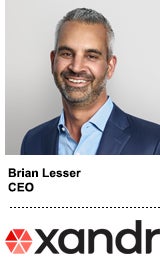
During the Xandr NewFront, CEO Brian Lesser touted how Community will let advertisers reach consumers at scale in a brand-safe environment.
Xandr also emphasized its ability to manage reach, target and frequency cap across multiple screens – capabilities that are available both within the Community marketplace, and within Xandr’s general addressable TV capabilities.

“We have insights into who was exposed to an ad and who was not exposed to an ad across all devices,” said Jason Brown, Xandr’s head of ad sales partnerships. “The capability of addressable is now available in 75 million households.”
Xandr placed particular emphasis in its ability to manage the frequency with which ads are shown to certain households. Not only is showing the same ad to the same person annoying, it’s wasteful and inefficient for advertisers.
For instance, Brown pointed to a campaign where 83% of the advertiser’s TV impressions went to 34% of households, most of which were concentrated around households with heavy TV watching habits.
As a result, CPMs were high against light and medium TV watchers. To counter that sort of situation, Xandr introduced at its NewFront the ability to target “light TV viewers.”
Xandr’s executives highlighted how it’s now possible to bring the precision of digital ad buying into television.
“We now have results,” said Donna Speciale, president of WarnerMedia ad sales. “We can prove that national television can have an ROI just like digital can. We now have the proof points.”
Added Lesser: “It’s smart to do business with Xandr in the upfront. If you commit to us in the upfront, you’ll get our best data, our best inventory, our best product and our best people as you work with us through the year.”